
When purchasing safety mats, many factories tend to focus on key specifications such as response time, IP protection rating, safety certifications, load resistance, and wear resistance. They repeatedly compare the protective performance of the mat itself, yet often overlook the seemingly insignificant edge fixing structure.
Some purchasing personnel even assume that edge trims are merely decorative accessories used to improve the appearance of the installation. Whether the mat has reinforced edges or which edge-fixing method is used may seem unimportant. In reality, a properly designed and reliable edge-fixing system is a critical detail for ensuring the long-term stability and continuous safety performance of a safety mat.
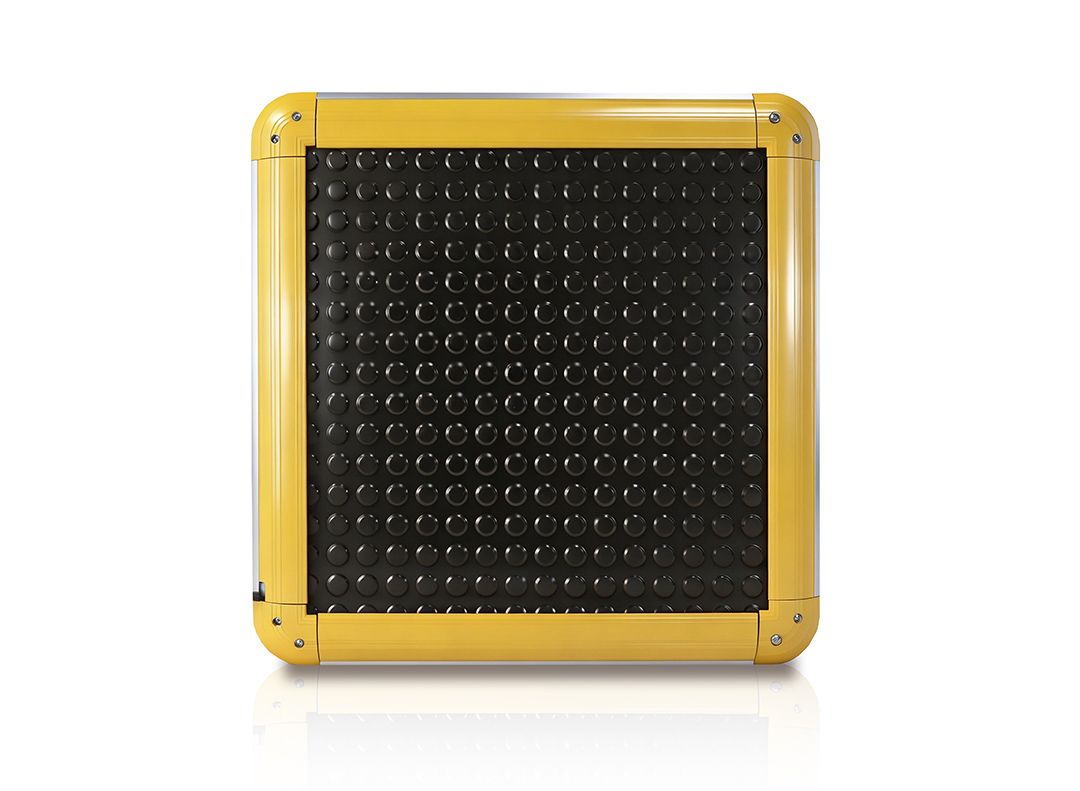
Safety mats are commonly installed around hazardous equipment such as robot workstations, tube bending machines, production lines, and injection molding machines. During long-term operation, the mat is continuously subjected to external forces from compression, pulling, and foot traffic. Without dedicated edge fixing, the four corners and edges of the mat can easily curl upward or deform over time, while the entire mat may shift back and forth or from side to side under repeated loads.
Once a safety mat develops curled edges, lifted edges, or overall displacement, several safety problems can arise.
First, it creates a trip hazard in the workplace. Raised mat edges can cause operators to stumble and fall, potentially resulting in workplace injuries such as falls and collisions.
Second, once the mat shifts from its original position, the predefined safety sensing area also moves. This can create gaps in the intended protection zone, meaning personnel may accidentally enter a hazardous area without triggering the machine's emergency stop function. In less serious cases, this may cause unnecessary machine shutdowns and reduce production efficiency. In more serious cases, it may lead to major industrial accidents involving crushing, impact, or mechanical entrapment.
At the same time, repeated friction and vehicle or foot traffic over lifted edges can accelerate surface wear and cracking, shortening the overall service life of the safety mat and increasing replacement and maintenance costs for the company.
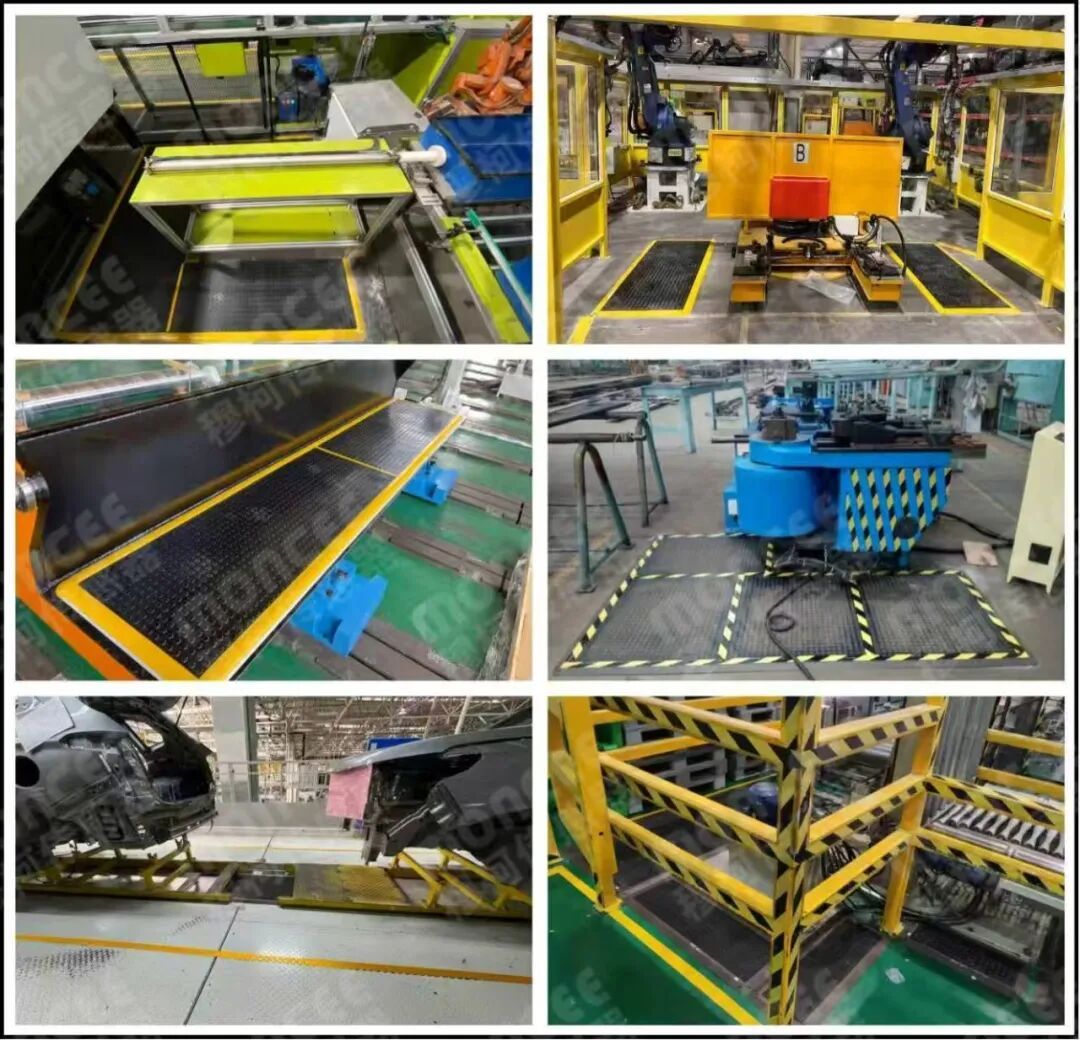
The Core Function of Safety Mat Edge Fixing
The primary purpose of a safety mat edge fixing system is to securely position and stabilize the entire mat.
By using aluminum alloy edge strips, the safety mat can be firmly pressed against and secured to the floor. This provides several important benefits.
First, it firmly restrains the overall position of the mat, preventing displacement or shifting during daily operations.
Second, it holds down the four edges and corners, distributing the external forces generated by foot traffic, vehicle movement, and compression. This helps prevent repeated bending from causing curling, edge lifting, or adhesive failure.
In addition, a properly sealed edge-fixing structure can help prevent cutting fluids, oil, dust, and water from penetrating into the interior of the mat through its edges. This reduces the risk of moisture-related corrosion, short circuits, or malfunction of the internal sensing circuits, further extending the service life of the safety mat and helping maintain the normal operation of the machine's safety circuit.
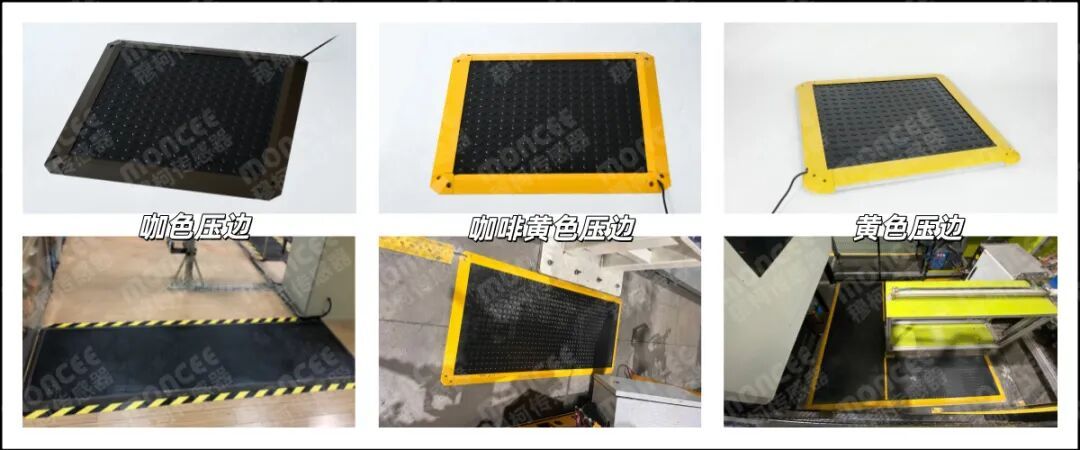
Small Detail, Major Impact on Industrial Safety
When selecting industrial safety protection equipment, do not treat edge fixing as an optional decorative accessory.
For a safety mat to provide long-term, stable, and reliable protection in an industrial environment, a professional edge-fixing design that is secure, durable, sealed, and slip-resistant is an essential detail.
It not only reduces workplace trip hazards but also helps ensure that the safety sensing function remains effective over time—strengthening the factory's overall safety protection system from the smallest installation details upward.



 English
 简体中文
简体中文 Indonesian
 Previous:
 Back to list


