
As AGVs and AMRs become increasingly common in factories, warehouses, and intralogistics systems, reliable environmental perception has become a critical part of mobile robot design. A mobile robot must continuously understand what is around it, identify obstacles along its route, and react appropriately when people, pallets, vehicles, equipment, or other objects enter its operating area.
This is where AGV / AMR / Mobile Robot Cluster LiDAR technology can provide significant value.
For OEM manufacturers and automation integrators, however, selecting a LiDAR sensor is not simply a matter of choosing the longest detection range. The more important questions are whether the sensor provides sufficient coverage, supports configurable detection zones, integrates with the robot controller, and can be efficiently deployed across an entire fleet.
This guide explains the key considerations for selecting LiDAR for AGV and AMR obstacle detection, using the MILS-F30 industrial laser scanning sensor as a practical example.
1. Why Do AGVs and AMRs Need LiDAR?
Unlike fixed industrial machines, mobile robots continuously change their position within the working environment.
An AGV may transport materials between production lines, while an AMR may dynamically navigate around warehouse aisles, workstations, storage areas, and temporary obstacles. In both cases, the robot needs real-time spatial information to support navigation and obstacle avoidance.
LiDAR provides this information by measuring the distance between the sensor and surrounding objects.
For mobile robot applications, LiDAR can help detect:
Workers and pedestrians
Pallets and containers
Forklifts and carts
Production equipment
Temporary obstacles
Walls, racks, and other fixed structures
The result is a sensing layer that allows the mobile robot to better understand its operating environment and make appropriate movement decisions.
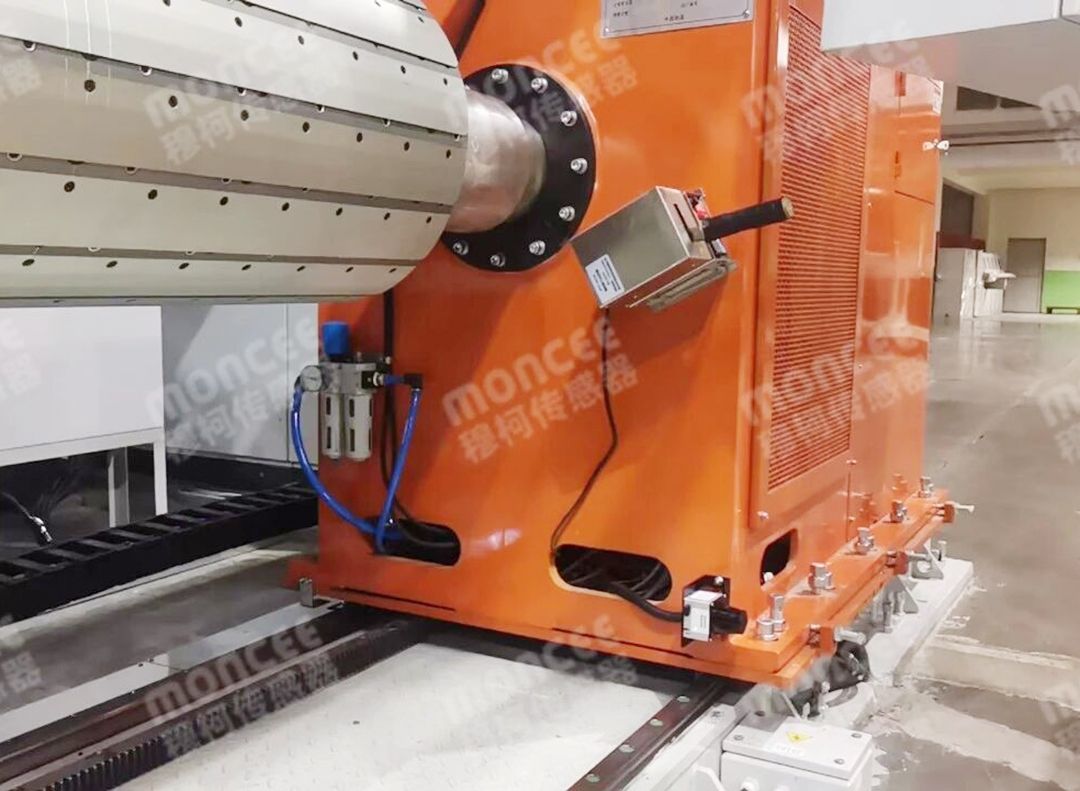
MILS-F30 uses Time of Flight (TOF) technology and provides a 270° scanning field, with a maximum detection distance of 50 m. Its documented detection distance for a 10% reflectivity target is 20 m, while measurement accuracy is approximately ±2 cm under specified conditions.
2. AGV vs. AMR: What Should the LiDAR Detect?
Although AGVs and AMRs use different navigation strategies, their obstacle-detection requirements often overlap.
An AGV may follow a predefined route, while an AMR can dynamically plan its path. However, both need to recognize unexpected objects in front of the vehicle and prevent unnecessary collisions.
The LiDAR selection should therefore begin with the actual operating environment.
For example:
Warehouse AGV:
The priority may be pallet detection, aisle monitoring, and long-range obstacle detection.
Factory AMR:
The priority may be detecting workers, carts, machines, and temporary objects around production lines.
Automated forklift:
The sensing system may need to monitor a larger area because of the vehicle's size, load, and stopping distance.
This application-first approach is more reliable than choosing a sensor based only on its maximum range.
3. Why 270° Scanning Can Be Valuable for Mobile Robots
Mobile robots do not always move in perfectly straight lines.
They turn, reverse, approach loading stations, and operate in confined spaces. A narrow forward-facing detection area may therefore leave important portions of the surrounding environment outside the sensing field.
MILS-F30 provides a 270° scanning angle, giving engineers a broad detection area around the sensor. The default angular resolution is 0.25°, allowing the scanner to generate detailed spatial information for industrial obstacle-detection applications.
For an OEM designer, this can simplify sensor placement and provide greater flexibility when designing the robot's perception architecture.
However, the actual coverage still depends on sensor mounting position, vehicle geometry, load dimensions, and the intended detection plane. LiDAR should therefore be evaluated as part of the complete mobile robot design rather than as an isolated component.
4. Multi-Zone Detection: More Than Simple Obstacle Avoidance
One of the most commercially useful features for AGV and AMR applications is configurable area detection.
A mobile robot does not always need to react to every detected object in exactly the same way.
For example:
A distant object may require monitoring only.
An object entering a closer area may trigger a warning or speed adjustment.
An object entering a critical area may require a stronger control response.
MILS-F30 supports 16 area groups, with three configurable areas per group. The detection areas can be configured as outer, middle, and inner zones. Supported area shapes include rectangles, sectors, and polygons.
This architecture allows OEM engineers to create different detection strategies for different robot operating conditions.
For example, one area group could be configured for normal transportation, while another could be used when the robot enters a narrow aisle or approaches a workstation.
5. Mobile Robot Cluster LiDAR: Designing for Fleet Deployment
The term Mobile Robot Cluster LiDAR becomes particularly relevant when a company is deploying multiple AGVs or AMRs rather than a single prototype.
In a fleet environment, sensor selection affects more than the performance of one robot. It also affects:
Configuration consistency
Commissioning time
Maintenance workload
Spare-parts management
Engineering labor
Deployment scalability
MILS-F30 supports area configuration import and export, allowing a completed configuration to be replicated across other units. This can be valuable when multiple mobile robots share similar mechanical and operational configurations.
For an OEM manufacturer producing hundreds of mobile robots, configuration replication can become a meaningful cost-saving factor.
Instead of treating every LiDAR installation as a completely independent engineering project, standardized configuration templates can help create a more repeatable deployment process.
6. Response Time Must Be Evaluated as a System
For obstacle detection, sensor response is important, but it should not be confused with the complete stopping time of the mobile robot.
The actual response chain may include:
Object detection → LiDAR data transmission → controller processing → control output → drive response → mechanical braking
The MILS-F30 documentation specifies a minimum network transmission interval of approximately 66 ms in active transmission mode. The user's current product parameter reference also identifies approximately 66 ms for the area-detection initial response.
However, the final stopping performance depends on the entire control and mechanical system.
Therefore, OEM engineers should evaluate LiDAR response together with:
Robot speed
Vehicle mass
Payload
Drive response
Brake performance
Controller processing
Detection-zone configuration
This is particularly important when the robot carries heavy loads or operates at higher speeds.
7. Environmental Conditions Matter in Industrial LiDAR Selection
AGVs and AMRs frequently operate in demanding industrial environments rather than controlled laboratory conditions.
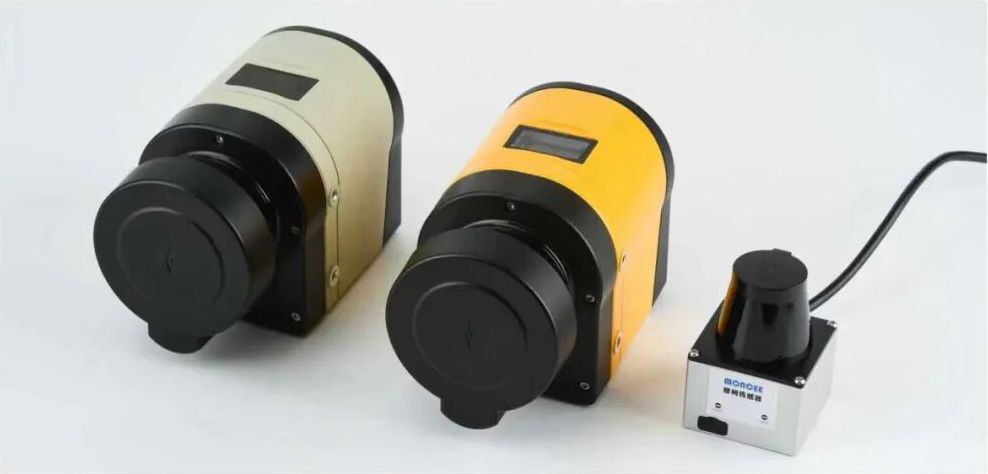
MILS-F30 provides IP65 protection, an operating temperature range of approximately -25°C to +55°C, and resistance to ambient light up to 80,000 lux. The sensor uses a 905 nm Class 1 laser.
The documented maximum detection distance is 50 m, but detection performance varies according to target reflectivity. For a target with 10% reflectivity, the specified detection distance is 20 m.
For commercial projects, this distinction is important. Procurement teams should evaluate performance under the actual operating conditions instead of comparing only headline specifications.
8. Communication and Integration Are Key OEM Requirements
LiDAR is only useful to a mobile robot when its information can be effectively integrated into the vehicle's control architecture.
MILS-F30 supports Ethernet and Type-C interfaces for communication and configuration. It also supports active and passive data transmission modes.
For an OEM project, engineers should therefore evaluate:
Communication interface compatibility
Data-processing requirements
Area-switching methods
Controller compatibility
Configuration and commissioning workflow
Fleet-level maintenance requirements
A LiDAR with suitable integration capabilities can reduce engineering effort and make future product revisions easier.
9. LiDAR Is Not Automatically a Certified Safety Laser Scanner
This distinction is essential for commercial procurement.
A laser scanning sensor can be highly capable at navigation and obstacle detection without automatically being a formally certified Safety Laser Scanner.
MILS-F30 is documented as an industrial laser scanning sensor designed for navigation, obstacle avoidance, and area detection. The supplied documentation does not establish formal safety certification such as a specific IEC 61496 safety type, SIL, or PL rating.
Therefore, if a mobile robot project requires a formally certified safety function, the OEM should separately verify the applicable safety device, certification, and complete safety architecture.
For general navigation and obstacle avoidance, however, an industrial LiDAR can remain an important part of the mobile robot perception system.
10. How Should Businesses Select LiDAR for AGV and AMR Projects?
Before purchasing, OEMs and system integrators should provide suppliers with at least the following information:
AGV, AMR, or automated forklift type
Maximum vehicle speed
Typical payload
Required detection distance
Required scanning angle
Mounting height and position
Indoor or outdoor environment
Target types and reflectivity
Communication interface
Required detection zones
Number of robots to be deployed
For fleet projects, the supplier should also be evaluated on its ability to provide standardized configuration, technical support, integration assistance, and scalable production.
The best LiDAR is therefore not necessarily the sensor with the highest range or lowest unit price. It is the sensor that provides an appropriate balance between detection performance, integration efficiency, configuration flexibility, deployment cost, and long-term maintainability.
Conclusion
AGV and AMR obstacle detection is becoming an increasingly important part of modern factory and warehouse automation.
For individual robots, LiDAR provides environmental perception and obstacle-detection capabilities. For larger deployments, AGV / AMR / Mobile Robot Cluster LiDAR should be evaluated from a fleet perspective, including configuration consistency, communication, commissioning, and maintenance.
MILS-F30 demonstrates how an industrial laser scanning sensor can combine 270° scanning, up to 50 m maximum detection distance, configurable multi-zone detection, multiple area groups, Ethernet communication, and configuration replication for industrial mobile robot applications.
For OEM manufacturers and system integrators, the most important question is not simply:
“How far can this LiDAR detect?”
It is:
“Can this LiDAR provide the sensing performance, integration flexibility, and deployment efficiency required across our entire mobile robot platform or fleet?”
That is the perspective that turns LiDAR selection from a component purchase into a long-term automation investment.



 English
 简体中文
简体中文 Indonesian
 Previous:
 Back to list


