
On a modern construction site, “edge protection” can refer to more than one type of safety technology. Traditional construction edge-protection systems are designed primarily to reduce fall hazards around slabs, roofs, platforms, and other exposed edges. By contrast, a safety-sensitive edge—more commonly described in industrial safety as a Safety Edge or pressure-sensitive safety edge—is an active sensing device that detects physical contact with a moving edge and sends a signal to a control system.
This distinction matters when construction equipment includes automatic doors, lifting platforms, mobile equipment, AGVs, automated machinery, or other powered components. In these applications, a pressure-sensitive Safety Edge can complement physical guarding by detecting an obstruction directly at the moving edge.
Several established manufacturers offer Safety Edge technologies, while specialized manufacturers also provide OEM and custom configurations. The right choice depends less on brand recognition and more on profile geometry, triggering characteristics, electrical configuration, environmental conditions, and the requirements of the equipment being protected.
What Is a Safety-Sensitive Edge?
A Safety Edge is a flexible, pressure-sensitive safety device installed along the edge of a moving component where crushing or shearing hazards may occur.
When a person or object contacts the sensing edge, the flexible structure is compressed. The internal sensing elements change their electrical state, allowing the connected controller to recognize the contact and initiate the configured safety action.
Moncee's documentation describes Safety Edge applications including AGVs, AMRs, tire-forming machinery, elevators, safety doors, machine-tool worktables, electric doors, automated logistics equipment, welding robots, packaging machinery, and other moving industrial equipment.
This makes the technology particularly relevant to construction environments where automated or mobile equipment operates around workers.
However, a Safety Edge should not be treated as a replacement for a construction site's required fall-protection system. It is better understood as a contact-sensitive machine safety component for powered equipment.
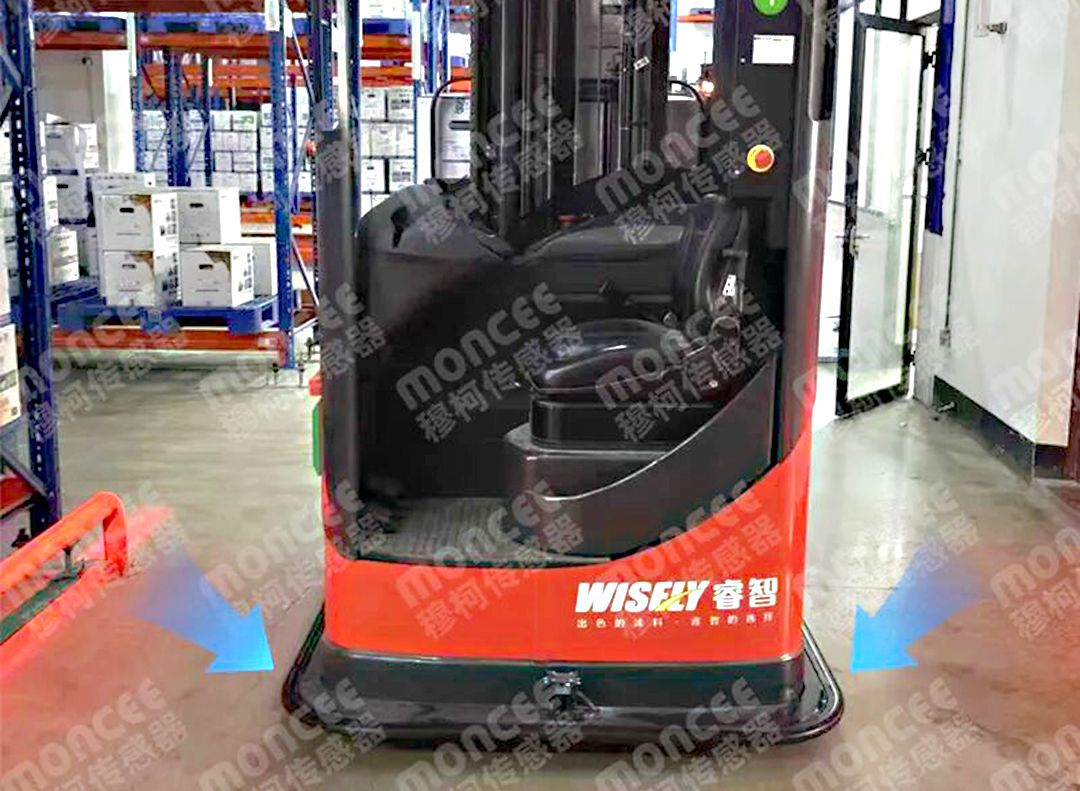
Which Companies Offer Safety Edge Technology?
1. Mayser
Mayser Safety Edges is an established manufacturer of tactile safety technology. Its Safety Edge products are designed to protect against crushing and shearing hazards and are available in normally open and normally closed configurations. The company also offers different profile geometries, customized designs, and versions for industrial automation, logistics, doors, gates, and other applications. (Mayser GmbH & Co KG)
Mayser is particularly relevant when a project requires customized geometry or a specialized sensing profile.
Best suited for: customized machinery, automation equipment, logistics systems, doors, gates, and applications requiring specialized profile configurations.
2. Tapeswitch
Tapeswitch Sensing Edges offers pressure-sensitive sensing edges for applications where contact detection is required.
Its TS-16, for example, is designed for limited-space applications and uses a pressure-sensitive sensing structure with a low-profile design. The product is available with fail-safe wiring and can interface with Tapeswitch safety modules. (Tapeswitch)
For construction equipment with limited installation space, a compact sensing edge can be useful where a larger profile would interfere with the machine structure.
Best suited for: compact machine installations, automated equipment, doors, and applications where installation space is restricted.
3. Moncee
For equipment manufacturers and system integrators seeking a customizable Safety Edge manufacturer, Moncee offers multiple profile configurations.
Its catalog includes different cross-sectional sizes, including compact and larger profiles, with different trigger distances and trigger forces. The standard Safety Edge specifications include EPDM outer material, IP65 protection, -30°C to +85°C operating temperature, and 12 V/24 V rated voltage options. The catalog also provides normally open and normally closed signal configurations.
The product range supports customized cable lengths, with a listed maximum single-piece length of 8 m and series connection of up to six pieces.
For construction-equipment manufacturers, this can be important because the sensing edge often needs to follow a particular machine structure rather than a standardized door profile.
Best suited for: OEM equipment, construction machinery, automated equipment, AGVs, lifting systems, machine builders, and custom Safety Edge projects.
Why Profile Selection Matters on Construction Equipment
A common purchasing mistake is treating every Safety Edge as interchangeable.
In reality, the profile affects the available installation space and the mechanical response of the sensor. Moncee's catalog includes models with different dimensions and corresponding trigger characteristics. For example, some profiles have trigger distances around 2–6 mm, while other designs reach approximately 7–13 mm; trigger-force ranges also differ by model.
For construction equipment, these differences can become important when:
Equipment operates close to workers
Installation space is limited
The moving edge has a curved geometry
The machine has large or heavy moving components
Different levels of contact sensitivity are required
The Safety Edge must integrate with an existing controller
The correct selection should therefore begin with the hazard and equipment geometry, not with a product name alone.
What Should Buyers Check Before Ordering?
A professional procurement process should evaluate both mechanical and electrical requirements.
1. Cross-section and installation space
Measure the available mounting area before selecting the profile. A Safety Edge that cannot be correctly installed cannot provide reliable protection.
2. Trigger Distance and Trigger Force
These parameters determine how the sensing edge responds to applied pressure. The appropriate values depend on the application and equipment design.
3. Signal configuration
Moncee's catalog supports Normally Open (NO) and Normally Closed (NC) configurations, with different cable-exit and wiring options available.
4. Environmental conditions
Construction equipment may encounter dust, moisture, temperature changes, oil, vibration, and mechanical impact. The protection rating and material should therefore be evaluated against the actual operating environment.
For Moncee's standard Safety Edge, the catalog specifies IP65, EPDM outer material, and an operating temperature range of -30°C to +85°C.
5. Custom geometry
Construction machinery rarely follows one universal mechanical design. The Safety Edge may need special bending, cable positioning, or mounting arrangements.
Moncee's documentation provides bending specifications and requires dimensional information for custom-shaped profiles.
Safety Edge vs. Conventional Construction Edge Protection
This distinction is especially important for purchasing teams.
A conventional construction edge-protection system is generally intended to create a physical barrier or fall-protection arrangement around exposed edges. A Safety Edge, on the other hand, is an active sensing component designed to detect contact with a moving machine edge.
Therefore, the two technologies can serve completely different functions.
For example:
Construction slab edge → physical fall protection
Automated lifting platform → Safety Edge for contact detection
AGV chassis → Safety Edge for obstacle/contact detection
Automatic construction-site gate → Safety Edge for closing-edge protection
Using the correct terminology also helps procurement teams communicate accurately with manufacturers and system integrators.
How to Choose the Right Safety Edge Supplier
Rather than selecting a supplier purely by price, construction-equipment manufacturers should evaluate:
Product profile range
Trigger Distance
Trigger Force
Material selection
IP protection
Cable configuration
NO/NC options
Custom bending capability
Controller compatibility
Technical drawings
Sample availability
OEM production capability
Long-term supply consistency
For larger projects, it is also useful to provide the supplier with equipment drawings, installation dimensions, photographs, required cable direction, operating voltage, expected order quantity, and environmental conditions.
This information allows the manufacturer to recommend a suitable profile instead of simply supplying a standard product.
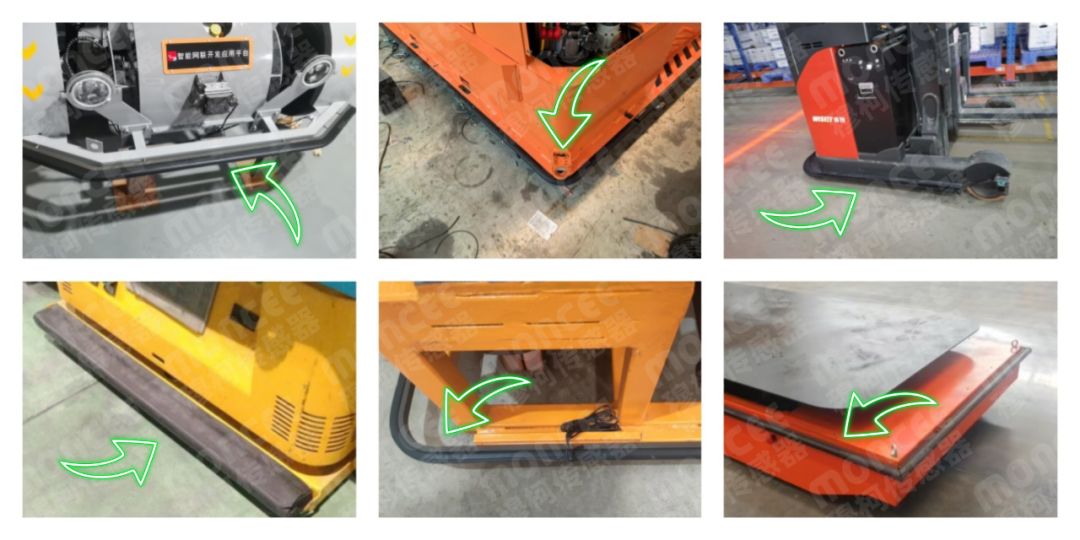
Get a Custom Safety Edge for Your Construction Equipment
The companies above demonstrate that Safety Edge technology is available in different forms, from compact sensing edges to customized profiles and complete safety-edge systems. For construction-related machinery, however, the most important question is not simply “Which brand is best?”
The better question is:
Which Safety Edge configuration matches my equipment, hazard, installation space, and control system?
Moncee's multi-profile Safety Edge range provides an option for OEMs and system integrators that require different profile dimensions, signal configurations, cable arrangements, lengths, and custom bending.
If you are developing or sourcing construction machinery, lifting equipment, AGVs, automated gates, mobile platforms, or other equipment with moving-edge hazards, provide your supplier with the equipment drawing or installation dimensions before ordering.
Send your application requirements, drawings, or photos to a Safety Edge manufacturer to receive a suitable profile recommendation, technical configuration, sample, and quotation.
Note: A pressure-sensitive Safety Edge is a machine-safety component and should not be presented as a substitute for legally required construction-site fall protection or a complete risk assessment. The appropriate protective measures should be determined according to the specific equipment, application, and applicable regulations.



 English
 简体中文
简体中文 Indonesian
 Previous:
 Back to list


