
When purchasing an industrial safety bumper, price is naturally one of the first factors considered by OEMs, machine builders, automation companies, and industrial distributors. However, comparing safety bumpers by unit price alone can lead to the wrong purchasing decision.
Two products may look similar but have very different costs once profile design, length, Trigger Force, Trigger Distance, mounting components, wiring, customization, shipping, and repeat-order requirements are considered.
For this reason, a professional cost comparison should evaluate not only the initial purchase price but also the total value delivered by the industrial safety bumper throughout the equipment lifecycle.
What Determines the Cost of an Industrial Safety Bumper?
The price of an industrial safety bumper is influenced by several technical and commercial factors.
The first is the profile design. Different profiles provide different deformation characteristics and can be selected according to the required Trigger Force and Trigger Distance. Moncee's product documentation specifically recommends considering both parameters when selecting a suitable safety-edge model.
The second factor is length. A short standard product and a several-meter customized safety bumper naturally have different material and production requirements.
The third factor is configuration. Cable length, cable outlet position, mounting components, bending requirements, and other customized features can affect the final quotation.
Finally, order quantity can have a major impact. A prototype, small batch, and recurring OEM production order should not necessarily be evaluated using the same purchasing criteria.
Comparing Standard and Customized Industrial Safety Bumpers
A standard industrial safety bumper is generally the simplest option when the equipment design already matches an available product.
Standard products can reduce engineering time and simplify purchasing, particularly for replacement applications or machines using established dimensions.
However, OEM equipment frequently requires customized solutions.
Customization may involve:
Specific profile dimensions
Custom bumper length
Special bending requirements
Customized cable length
Specific cable outlet locations
Mounting holes or mounting arrangements
Application-specific Trigger Force
Application-specific Trigger Distance
Manufacturer documentation demonstrates that customization is a normal part of the safety-edge market. ABB, for example, offers safety edges in customized lengths, while Rockwell Automation provides Safedge configurations in different profiles and lengths and allows customers to request more specific cable or profile requirements.
Therefore, a customized industrial safety bumper may have a higher initial price than a basic standard model, but it can reduce installation modifications and engineering work.

Low-Cost Industrial Safety Bumpers: When Do They Make Sense?
A lower-priced industrial safety bumper can be attractive for straightforward applications.
If the required length, profile, electrical configuration, and mounting method are already available as a standard product, there may be little reason to pay for unnecessary customization.
However, buyers should verify the technical parameters before choosing the lowest-priced option.
Important questions include:
Is the Trigger Force appropriate?
Is the Trigger Distance suitable?
Does the profile fit the machine?
Is the electrical configuration compatible?
Does the product support the required operating environment?
Can the supplier provide consistent replacement products later?
A product that is inexpensive to purchase but requires additional modification or replacement may ultimately cost more.
Premium Industrial Safety Bumpers: What Are You Paying For?
Higher-priced products may include features or engineering support that are valuable in demanding applications.
For example, Rockwell Automation's Safedge product range includes multiple profiles, different cushion factors, conductive rubber technology, various mounting rail options, active corners, and sealing-lip options. Its product configurations are also available in different lengths.
These features can matter when a machine requires a particular deformation behavior or installation configuration.
Rockwell's technical documentation also explains that the operating force depends on factors including the shape and speed of the object applying force and the deformation distance of the profile. This demonstrates why cost comparisons should not treat every safety edge as technically interchangeable.
The right question is therefore not simply, “Which bumper costs more?” but rather, “Which specifications and services justify the additional cost for this application?”
The Importance of Trigger Force and Trigger Distance
Trigger Force and Trigger Distance are especially important when comparing different industrial safety bumper products.
Trigger Force relates to the compression force required to activate the sensing function, while Trigger Distance describes the compression behavior associated with activation.
These characteristics affect how the product interacts with the machine.
For example, a bumper used on a moving machine component may have different requirements from one installed on an automated door. The machine's operating speed, stopping behavior, and available deformation space all need to be considered.
Rockwell's technical documentation illustrates a force-versus-distance relationship for its Safedge profiles, showing that operating force changes with deformation distance and application conditions.
This is why purchasing based purely on price per meter can be misleading.
Installation Cost Should Be Part of the Comparison
The purchase price is only one component of total cost.
Consider two industrial safety bumpers:
Option A: Lower unit price, but requires additional brackets, modifications, cable adjustments, and engineering work.
Option B: Slightly higher unit price, but arrives in the required length and configuration with a suitable mounting arrangement.
Option A may appear cheaper on the quotation, but Option B may have the lower installed cost.
This is particularly important for OEM production. If an installation modification takes only a few minutes on one machine but must be repeated across hundreds of machines, labor costs can quickly exceed the original product-price difference.
Customization Can Improve Long-Term Cost Efficiency
Customization is sometimes viewed as an additional expense. For OEM manufacturers, however, it can become a cost-saving strategy.
A correctly customized industrial safety bumper can reduce:
Installation time
Manual modification
Additional brackets
Cable rework
Engineering changes
Production interruptions
Replacement complexity
Moncee's published information describes customization of safety-edge cross-sections, lengths, and bending profiles, as well as machining such as drilling and tapping according to customer drawings.
For an OEM producing the same machine repeatedly, these improvements can create significant savings across the production cycle.
Don't Ignore Supplier and Supply-Chain Costs
The supplier itself is another important part of the cost comparison.
A professional evaluation should consider:
Sample availability
Engineering communication
Customization capability
Production capacity
Quality consistency
Lead time
Packaging
Export experience
After-sales support
Repeat-order capability
This is especially important when sourcing from overseas manufacturers.
A supplier offering a competitive unit price but inconsistent lead times may create production delays. In contrast, a supplier capable of maintaining the same customized specification across repeat orders can provide greater value even if its initial quotation is not the lowest.
Cost Comparison for Different Buyer Types
Different buyers should evaluate industrial safety bumper costs differently.
For Machine Builders
Focus on installation compatibility, engineering time, and repeatability. A customized product may provide better overall value.
For OEM Manufacturers
Evaluate total production cost, including repeat-order pricing, product consistency, and long-term supplier support.
For Distributors
Focus on standard product availability, MOQ, product range, logistics, and margin potential.
For System Integrators
Pay particular attention to technical compatibility, Trigger Force, Trigger Distance, wiring, mounting, and documentation.
The cheapest product is not necessarily the most profitable product for any of these customer groups.
How to Request a More Accurate Industrial Safety Bumper Quote
A supplier can provide a much more accurate quotation when the buyer supplies detailed technical information.
Before requesting a quote, prepare:
Machine or equipment drawings
Required bumper length
Profile dimensions
Contact direction
Operating speed
Stopping characteristics
Required Trigger Force
Required Trigger Distance
Cable and wiring requirements
Mounting requirements
Operating environment
Sample quantity
Estimated annual or repeat-order quantity
This information allows the manufacturer to recommend a suitable configuration rather than quoting a generic product.
Why Direct Manufacturer Sourcing Can Be Commercially Attractive
For companies purchasing industrial safety bumpers regularly, direct communication with a specialized manufacturer can provide advantages beyond the product price.
A manufacturer that handles R&D, design, production, sales, and service internally may be able to coordinate customization and production more efficiently.
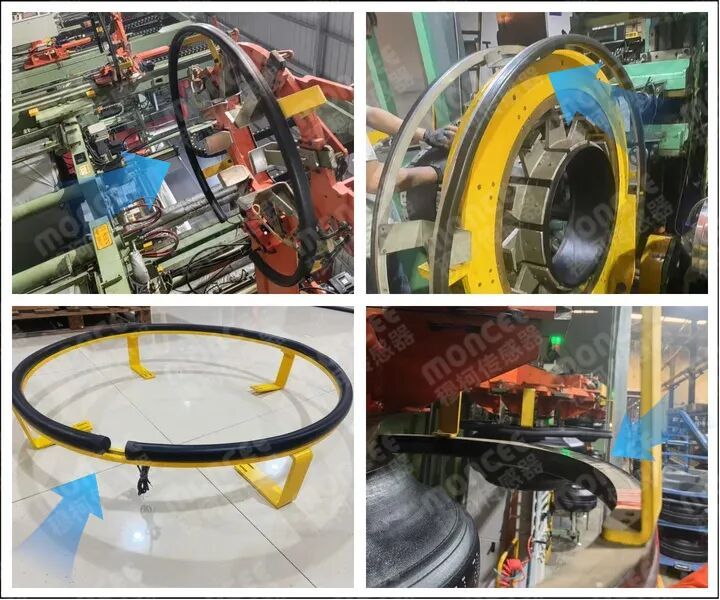
For example, Moncee describes itself as an integrated manufacturer with its own production facility and provides customized safety-sensing solutions for industrial applications. Its published product information also describes applications including AGVs, welding robots, rubber machinery, assembly machinery, and material-handling equipment.
For OEM customers, this type of direct manufacturing relationship can be valuable when moving from sample testing to regular production.
Conclusion: Compare Total Value, Not Just Unit Price
The cost of an industrial safety bumper should never be evaluated by unit price alone.
Standard products may offer the lowest initial cost when they already match the machine's requirements. Customized products may have a higher purchase price but can reduce installation, engineering, and production costs. Premium products may justify additional investment through specialized profiles, mounting options, technical support, and established supply capabilities.
For OEMs and industrial buyers, the best purchasing decision is therefore based on total cost of ownership and application suitability.
When requesting quotations, provide your machine drawings, required dimensions, bumper length, operating speed, contact direction, Trigger Force, Trigger Distance, wiring requirements, and expected quantity.
A capable industrial safety bumper manufacturer can then evaluate the application, recommend the appropriate configuration, provide samples for testing, and support repeat production.
The lowest-priced bumper is not always the lowest-cost solution. The better choice is the product that provides the right technical performance, efficient installation, reliable supply, and competitive long-term value for your equipment.



 English
 简体中文
 Indonesian
 Previous:
 Back to list


