
When a machine has moving doors, covers, access panels, clamps, tooling, or other potentially hazardous moving parts, choosing the right machine guarding edge sensor is an important engineering decision. A safety edge is designed to detect physical contact or pressure and provide a switching signal to the machine control system, helping initiate an appropriate safety response.
However, not every safety edge is suitable for every machine. Profile geometry, trigger distance, trigger force, electrical configuration, environmental conditions, installation method, and required dimensions all influence whether a particular model is a good fit.
This buying guide explains the key factors industrial equipment manufacturers, automation integrators, and maintenance teams should evaluate before purchasing a machine guarding edge sensor.
1. Start With the Machine's Actual Hazard Zone
The first step is not choosing a product model—it is understanding where the safety edge will be installed and what movement it must monitor.
A machine guarding edge sensor can be installed along a moving or closing edge where contact with a person or object needs to generate a control signal. Typical applications include machinery doors, moving covers, automated equipment, material-handling systems, robots, AGVs, and specialized industrial machinery.
Before contacting a supplier, document:
The protected edge length
The direction of movement
The expected contact direction
Available installation space
Whether the edge must remain straight or follow a curve
Machine operating speed
How the machine responds after the sensor is triggered
This information gives the supplier a technical basis for recommending the appropriate safety edge rather than simply supplying a standard-size component.
2. Pay Close Attention to Trigger Distance and Trigger Force
Two of the most important selection parameters are trigger distance and trigger force.
Trigger distance refers to the amount of compression required from the beginning of pressure application until the safety edge detects the pressure. Trigger force is the compression force required to reach that triggering condition.
These characteristics directly influence how the safety edge interacts with the protected machine.
A profile that requires excessive force may not be appropriate for an application where light contact must be detected. Conversely, a profile with characteristics that do not match the machine's movement may create unwanted triggering or poor application performance.
For this reason, avoid selecting a machine guarding edge sensor based only on dimensions or appearance. The sensor's mechanical response needs to correspond to the actual machine movement and stopping characteristics.
3. Choose the Profile Shape for the Application
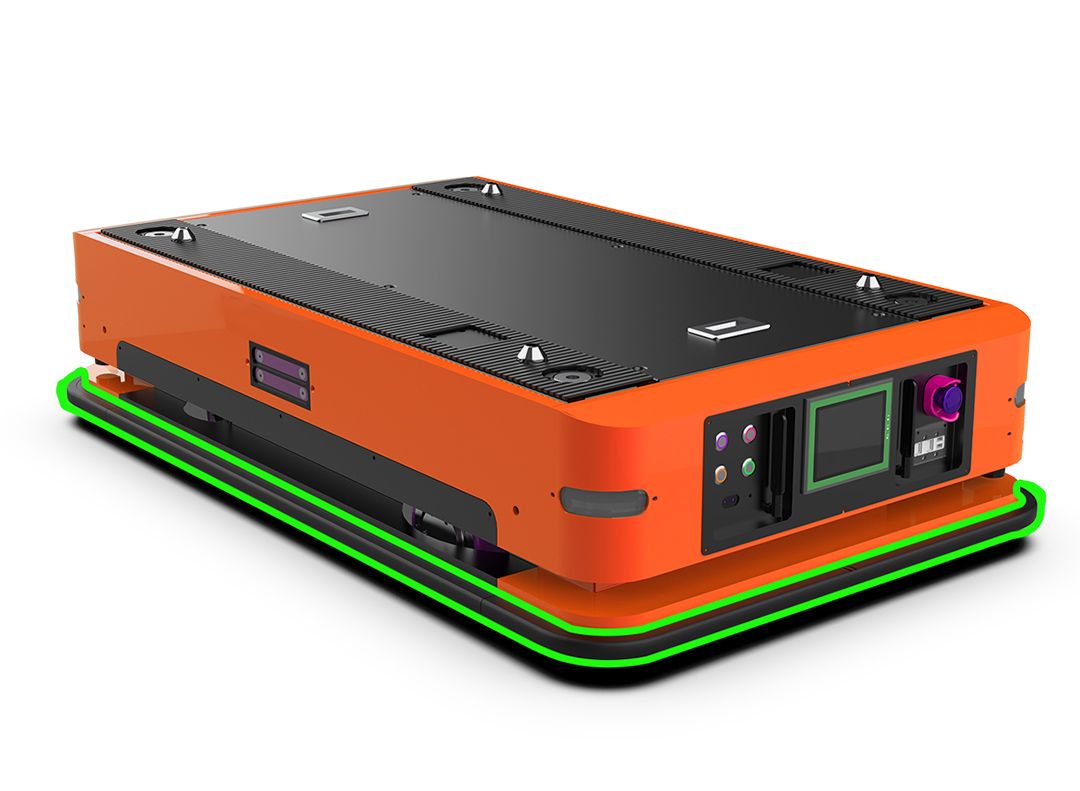
Safety edges are available in different profile geometries because industrial machines have different installation requirements.
A suitable profile needs to provide enough contact area for the intended application while fitting within the machine's available mounting space. Curved installations require additional attention because bending requirements can affect product selection.
For example, AGV and mobile-equipment applications may require a safety edge to follow a curved outer structure. In such cases, provide the supplier with the equipment drawing, CAD data, or minimum bending radius whenever possible.
A professional manufacturer can then recommend a suitable profile instead of asking the customer to modify a standard product after delivery.
4. Check Material and Environmental Requirements
Industrial environments can expose a machine guarding edge sensor to dust, water, temperature changes, mechanical contact, and repeated operation.
The product specifications should therefore be reviewed alongside the actual working environment.
The documented Safety Edge design uses an EPDM outer material and is specified for an operating temperature range of approximately -30°C to 85°C. The product is also rated IP65, making environmental protection an important consideration for industrial applications where water spray or dust may be present.
Nevertheless, IP rating should never be treated as a substitute for application assessment. If the machine operates in an environment involving oils, chemicals, extreme temperatures, heavy contamination, or unusual mechanical exposure, discuss these conditions with the supplier before ordering.
5. Confirm the Electrical Configuration Before Purchasing
Mechanical compatibility is only half of the selection process. The machine guarding edge sensor must also integrate correctly with the control circuit.
The documented Safety Edge supports normally open (NO) and normally closed (NC) signal configurations. The NO version provides a passive dry-contact output and can be connected into a DC24V control circuit. An NC version is also available for applications requiring that configuration.
For more advanced safety architectures, an NO safety edge can also be used with an appropriate safety controller capable of monitoring the sensor and detecting conditions such as wire breakage.
Before ordering, confirm:
NO or NC requirement
Rated control voltage
Current requirements
Cable arrangement
Connection method
Compatibility with the machine's safety controller or relay
Getting these details right before production can prevent unnecessary rewiring and commissioning delays.
6. Consider Length Accuracy and Custom Manufacturing
Machine guarding applications rarely follow a universal dimension.
The documented product specifications define different length tolerances according to overall safety-edge length, while the manufacturer also supports customized cross-sections, lengths, bending profiles, holes, and threaded installation features according to customer requirements.
This can be particularly valuable for OEM projects and automation equipment because the safety edge can be designed around the machine rather than forcing the machine design to accommodate an off-the-shelf component.
When requesting a quotation, provide an engineering drawing whenever possible. Include dimensions, mounting-hole locations, bends, connection positions, and any special installation requirements.
The more complete the drawing, the easier it is for the supplier to confirm feasibility before production.
7. Don't Ignore Mechanical Durability
A machine guarding edge sensor may be activated repeatedly throughout its service life. For this reason, mechanical durability should be evaluated alongside electrical specifications.
The documented Safety Edge is rated for 20,000 operating cycles and includes a terminal tensile-force specification of at least 30 N. These details provide useful reference points when comparing products from different suppliers.
However, the required service life should always be considered in relation to the actual machine cycle frequency. A component used dozens of times per day has very different requirements from one activated continuously in a high-cycle automated production line.
8. Evaluate the Supplier's Engineering Support
For standard applications, purchasing a catalog product may be straightforward. For customized machinery, supplier engineering capability can be much more important than unit price.
A capable manufacturer should be able to discuss profile selection, trigger characteristics, bending requirements, mounting design, wiring configuration, and dimensional customization.
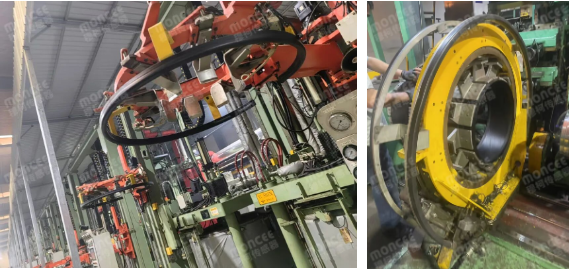
This becomes especially valuable when the safety edge is part of an AGV, robotic system, automated production line, rubber-processing machine, assembly machine, or material-handling system.
The objective is not simply to purchase a sensor. It is to obtain a component that can be integrated into the complete machine design with fewer engineering uncertainties.
9. Prepare These Details Before Requesting a Quote
To obtain a faster and more accurate quotation for a machine guarding edge sensor, prepare the following information:
Required safety-edge length
Profile or cross-section requirements
Straight or curved installation
Minimum bending radius, if applicable
Trigger force and trigger-distance requirements
NO or NC signal preference
Control voltage
Mounting-hole and bracket requirements
Operating temperature and environmental conditions
Estimated order quantity
Machine drawings or CAD files
Providing this information allows the manufacturer to move beyond a generic product recommendation and propose a configuration matched to the actual machine.
Conclusion: Buy for Application Fit, Not Just Product Price
Choosing the right machine guarding edge sensor requires more than comparing dimensions and quotations. The best selection balances mechanical response, profile geometry, electrical configuration, environmental resistance, durability, installation requirements, and customization capability.
For OEMs and industrial automation companies, working directly with a manufacturer that can customize safety-edge profiles and dimensions can simplify integration and reduce the risk of selecting an unsuitable standard component.
If you are developing a new machine, upgrading an existing guard, or sourcing safety edges for production equipment, send the supplier your required length, machine drawing, bending information, trigger requirements, electrical configuration, and working environment. With those details, the right Safety Edge can be evaluated before production—helping you move from a generic component purchase toward a properly matched machine guarding solution.



 English
 简体中文
 Indonesian
 Previous:
 Back to list


