
In industrial production environments, especially around high-risk equipment such as robotic arms, tube bending machines, and injection molding machines, Safety Mats have long served as an “invisible safety barrier” protecting personnel. However, many workshop managers and frontline operators may have the following question: Safety Mats appear to provide full-area coverage, but could there still be areas where protection is insufficient? Today, we will explain the blind spot of Safety Mats and the design logic and safety considerations behind it.
1. Key Conclusion: A 3 cm Protective Blind Spot Exists Along the Edge of the Safety Mat
A 3 cm blind spot does indeed exist near the edge trim of a Safety Mat. When people see the term “blind spot,” they may instinctively worry about potential safety risks. In reality, this blind spot is not a design flaw. Instead, it is a critical design feature that helps ensure long-term stable operation while providing water- and oil-resistant protection. Every detail reflects the rigorous design requirements of industrial safety protection.
To understand the purpose of this blind spot, we first need to understand how a Safety Mat actually works. Only by understanding its operating logic can we fully appreciate why this blind spot is necessary.
2. How Does a Safety Mat Work? It Is a Pressure-Sensitive Safety Sensor, Not an Ordinary Mat
Many people mistakenly think that a Safety Mat is simply an “ordinary floor mat with safety protection.” In fact, it is fundamentally a pressure-sensitive safety device equipped with an internal sensing system. Its operating process can be summarized as a closed loop of “pressure detection → signal transmission → equipment shutdown.”
A Safety Mat is essentially a pressure-sensitive safety sensor. Its core structure consists of upper and lower membrane switches with a pressure-sensitive sensing layer between them, along with built-in electronic components and signal transmission wiring.
During normal operation, when the applied pressure reaches the preset threshold, the two membrane layers immediately close, causing a change in the electrical circuit. The signal is then transmitted through a dedicated cable to the safety controller, which immediately sends an emergency stop command to the equipment. The entire process takes no more than 30 milliseconds, allowing hazardous motion to be interrupted almost instantly.
3. Why Is the 3 cm Blind Spot Necessary? Three Key Functions
The 3 cm blind spot is a component-free area without sensing switches. Its design primarily addresses three key requirements: sealing protection, component protection, and secure installation.
Function 1: Provides Water and Oil Resistance for Harsh Industrial Environments
Industrial workshops inevitably contain oil, water, coolant, and other liquids. If these substances penetrate the Safety Mat, they may corrode the sensing circuits and electronic components, causing sensing failures or incorrect equipment responses. In severe cases, they may even result in short circuits.
The component-free blind spot is specifically reserved as a sealing area. During installation, sealant is applied around the gaps between the upper and lower plates. This seals the blind spot and turns the entire Safety Mat into an enclosed structure, effectively preventing oil, water, and other contaminants from entering the interior.
As a result, the Safety Mat can continue to operate reliably in humid, oily, and otherwise demanding industrial environments.
Function 2: Protects Internal Components and Extends Service Life
During operation, a Safety Mat is frequently subjected to foot traffic, rolling loads, and friction. The edges are particularly vulnerable because they experience relatively frequent mechanical stress and abrasion.
If electronic components were installed directly along the edges, prolonged friction and compression could easily damage them, potentially causing membrane switches to break or wiring to become damaged. This would compromise the safety protection function.
By reserving a component-free blind spot, the core sensing components can remain away from areas subject to frequent friction and compression. This helps maintain normal operation, reduce the probability of failure, and extend the overall service life of the Safety Mat.
Function 3: Facilitates Secure Installation and Improves Protection Reliability
The installation stability of a Safety Mat directly affects its protective performance. If the edges are not securely fixed, the mat may curl or shift during operation. This can affect sensing accuracy and potentially create secondary hazards such as tripping.
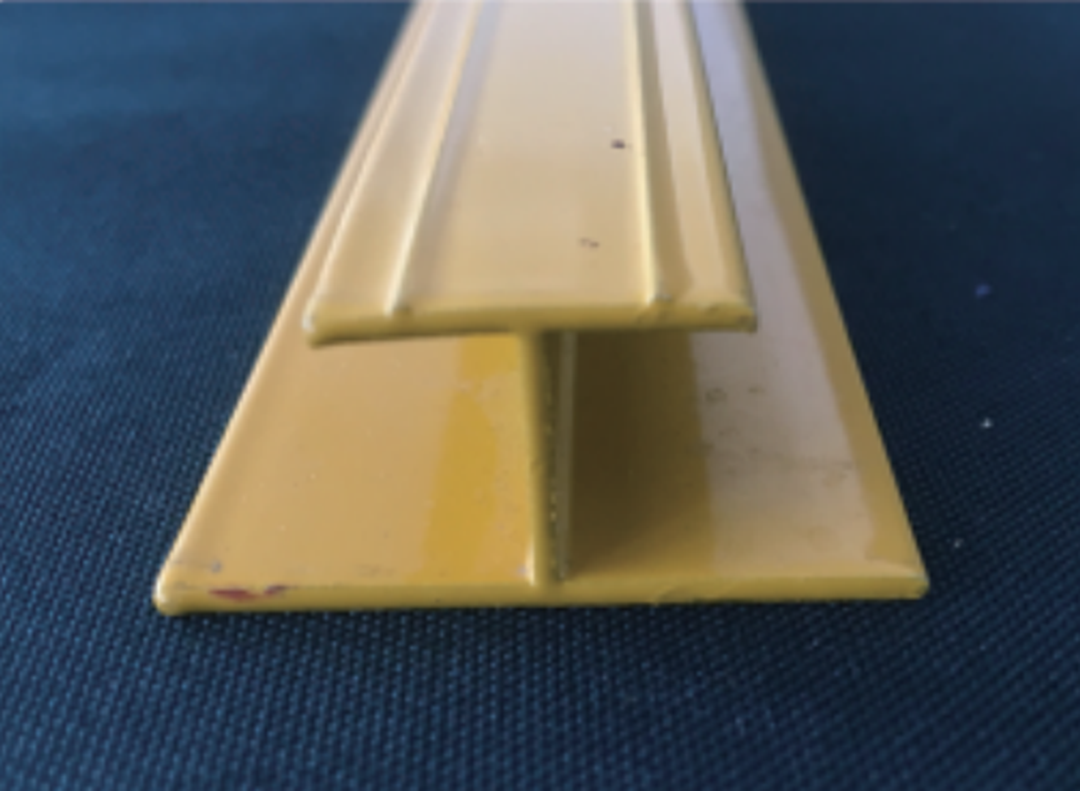
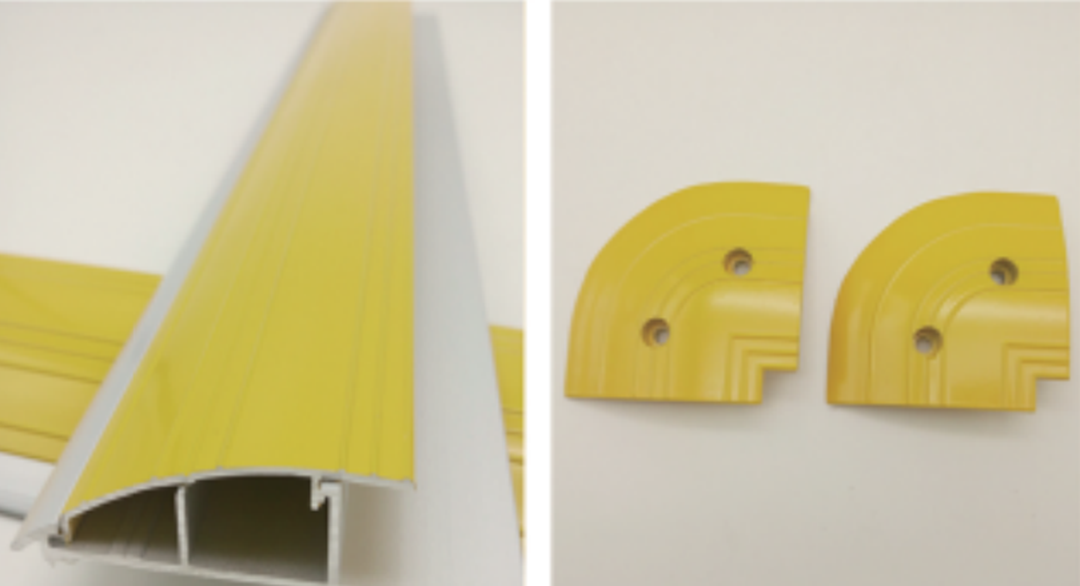
The 3 cm blind spot provides a convenient installation area. In practical installation, the Safety Mat is used together with edge trims and fixing feet, which secure the blind spot underneath the edge trim.
As a result, the blind spot remains concealed and does not interfere with normal operation, while the edge trim firmly secures the entire Safety Mat against the floor. This helps prevent movement and edge lifting.
This installation method not only addresses the presence of the blind spot but also improves the installation stability and overall reliability of the Safety Mat.
4. Safe Installation and Use: Proper Operation for Maximum Protection
After understanding the blind spot and operating principle of the Safety Mat, proper installation and maintenance are essential for ensuring reliable protection.
Install Correctly—Do Not Modify the Mat Without Authorization
Use the matching edge trims and fixing feet, and secure the blind spot underneath the edge trim according to the manufacturer's installation requirements.
Do not cut or modify the dimensions of the blind spot without authorization. Do not drill holes or attach foreign objects to the blind spot, as these actions may compromise the sealing structure and installation stability.
Inspect Regularly and Perform Maintenance Promptly
Regularly inspect the edge sealing of the Safety Mat for signs of detached sealant or cracking.
Check whether the edge trims and fixing feet remain securely fastened and ensure there is no loosening or displacement.
If the sealing has failed or the installation has become loose, contact qualified professionals for repair promptly to prevent moisture, water, or oil from penetrating the interior.
Plan the Coverage Area Properly
Select the appropriate Safety Mat dimensions according to the size of the equipment's hazardous area. Ensure that the core sensing area fully covers the hazardous zone to prevent protection gaps caused by insufficient dimensions.
During installation, avoid floor surfaces with significant protrusions or depressions and ensure that the Safety Mat lies flat and closely conforms to the floor.
Summary
There are no minor details when it comes to industrial safety. Every seemingly “unnecessary” design element is based on careful safety considerations. The 3 cm blind spot of a Safety Mat is not a weakness in its protection, but rather a carefully engineered design that balances protective performance, service life, and environmental adaptability.
As an important component of industrial safety protection, the core value of a Safety Mat lies in using sensing technology and structural design to create a reliable safety barrier for frontline personnel.
What we need to do is understand its design logic, install it correctly, use it properly, and perform regular maintenance. Only then can this “invisible safety barrier” truly perform its intended function and protect every frontline worker.
Finally, a reminder to business managers and frontline operators: industrial safety depends on the details. The better you understand your safety equipment, the stronger your protection becomes.
If you have any other questions about the installation or use of Safety Mats, please feel free to contact us for professional consultation.



 English
 简体中文
简体中文 Indonesian
 Previous:
 Back to list


