
When managing an automated workshop, many factories face a difficult dilemma: if safety protection is too loose, human-machine collaboration can easily lead to collisions, crushing, and other accidents. In the event of a workplace injury or equipment collision, companies may face high compensation and repair costs, as well as safety rectification requirements and even the risk of production-line shutdowns. On the other hand, if protection settings are too strict, equipment may trigger an emergency stop at the slightest disturbance. AGV material transport may be interrupted, industrial robots may repeatedly start and stop, and production-line efficiency can suffer unnecessarily.
Traditional safety fences, safety light curtains, and single-level emergency-stop protection all rely on an all-or-nothing protection strategy, making them increasingly unsuitable for flexible production lines and human-machine collaborative environments. The multi-level zoning protection solution based on LiDAR is becoming a preferred option for upgrading the safety of AGVs and industrial robotic arms.
Its core concept is straightforward: early warning at a distance, deceleration at medium range, and emergency stop at close range. By responding to different levels of risk accordingly, it balances workplace safety with production efficiency.
01 Traditional Safety Protection: What Are the Limitations?
Many factories still rely on infrared light curtains, ultrasonic sensors, and fixed safety fences. However, several limitations become apparent in actual operation:
● Detection blind spots: Sensors have limited detection angles, making it difficult to promptly detect people or materials entering from the side.
● Rigid response mode: The equipment immediately triggers an emergency stop whenever a detection signal is received, without any buffering process, resulting in frequent unnecessary stops.
● Occupied workshop space: Physical safety fences enclose equipment and restrict human-machine collaboration pathways, reducing space utilization.
● High hidden costs: The potential costs associated with collision repairs, workplace injury compensation, and production-line downtime can be difficult to predict.
To overcome these challenges, automated equipment needs the ability to assess risks in stages: predict potential hazards at a distance, slow down at medium range, and initiate emergency avoidance at close range.
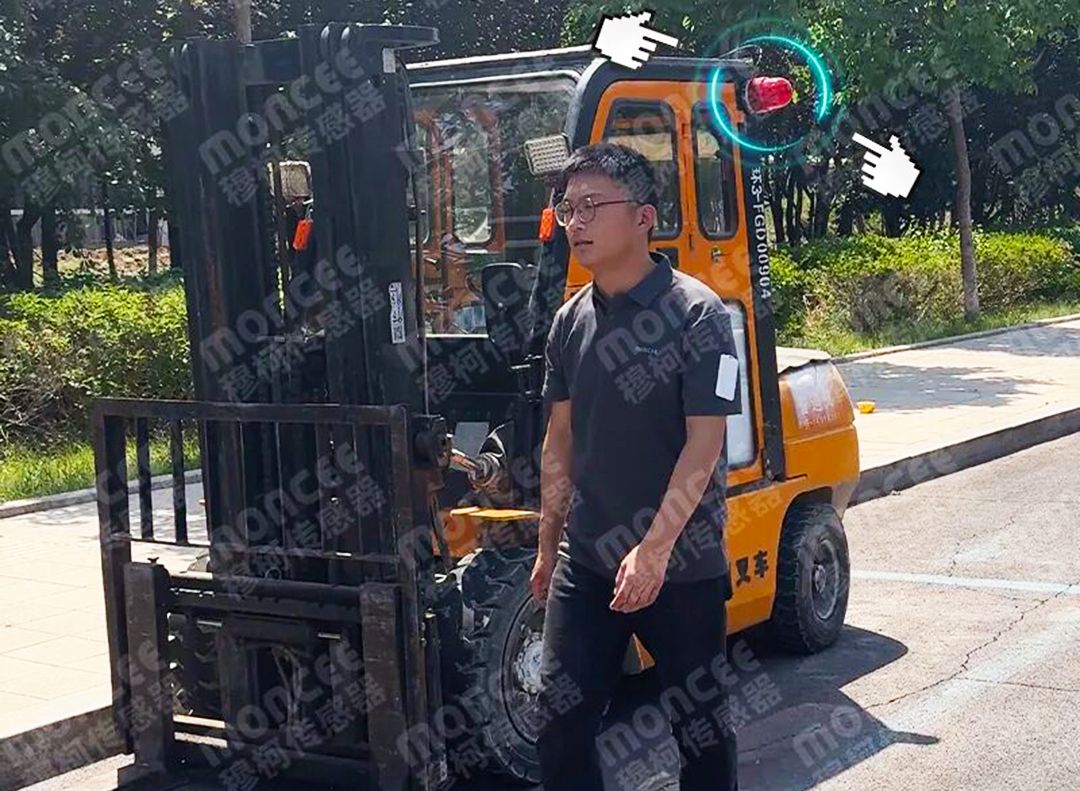
02 Three-Level Protection Zones: Layered Protection for Workshop Safety
Taking the AGV or robotic arm as the center, the protection area can be divided from the outside inward into three zones: the warning zone, multi-level deceleration zone, and emergency-stop zone.
Different zones trigger different equipment responses according to the level of risk.
Level 1: Outer Warning Zone | Risk Prediction Layer
Response: Warning only — no stopping or deceleration
The warning zone is the long-distance monitoring layer and serves as the first line of safety protection.
When a person, material, or other vehicle enters this area, the equipment continues operating at its normal speed while the system activates audible and visual warnings to remind personnel to move away in time.
Value:
Most potential collision risks can be resolved through early warning, reducing unnecessary downtime and production losses at the source.
Level 2: Multi-Level Deceleration Zone | Flexible Buffer Layer
Response: Reduce speed as obstacles approach
The deceleration zone is a key advantage of LiDAR-based multi-level protection.
When an obstacle approaches the safety boundary, the equipment automatically reduces its operating speed and prepares for a potential stop.
Value:
This avoids the inertial impact caused by sudden emergency stops, helping prevent material from tipping over and reducing mechanical wear. At the same time, it provides personnel with sufficient time to move away, achieving a better balance between safety and efficiency.
Level 3: Inner Emergency-Stop Zone | Final Safety Barrier
Response: Millisecond-level emergency stop and equipment lockout
The emergency-stop zone is positioned close to the equipment body and serves as the final safety barrier.
When an obstacle breaks through the deceleration zone and enters the emergency-stop area, the risk of collision becomes imminent. The LiDAR immediately sends a stop signal, cuts off the equipment's power output, and brings all movements to an immediate stop.
Value:
It helps reduce serious safety incidents such as personnel crushing injuries, equipment collisions, and workpiece damage, protecting the fundamental safety of the workshop.
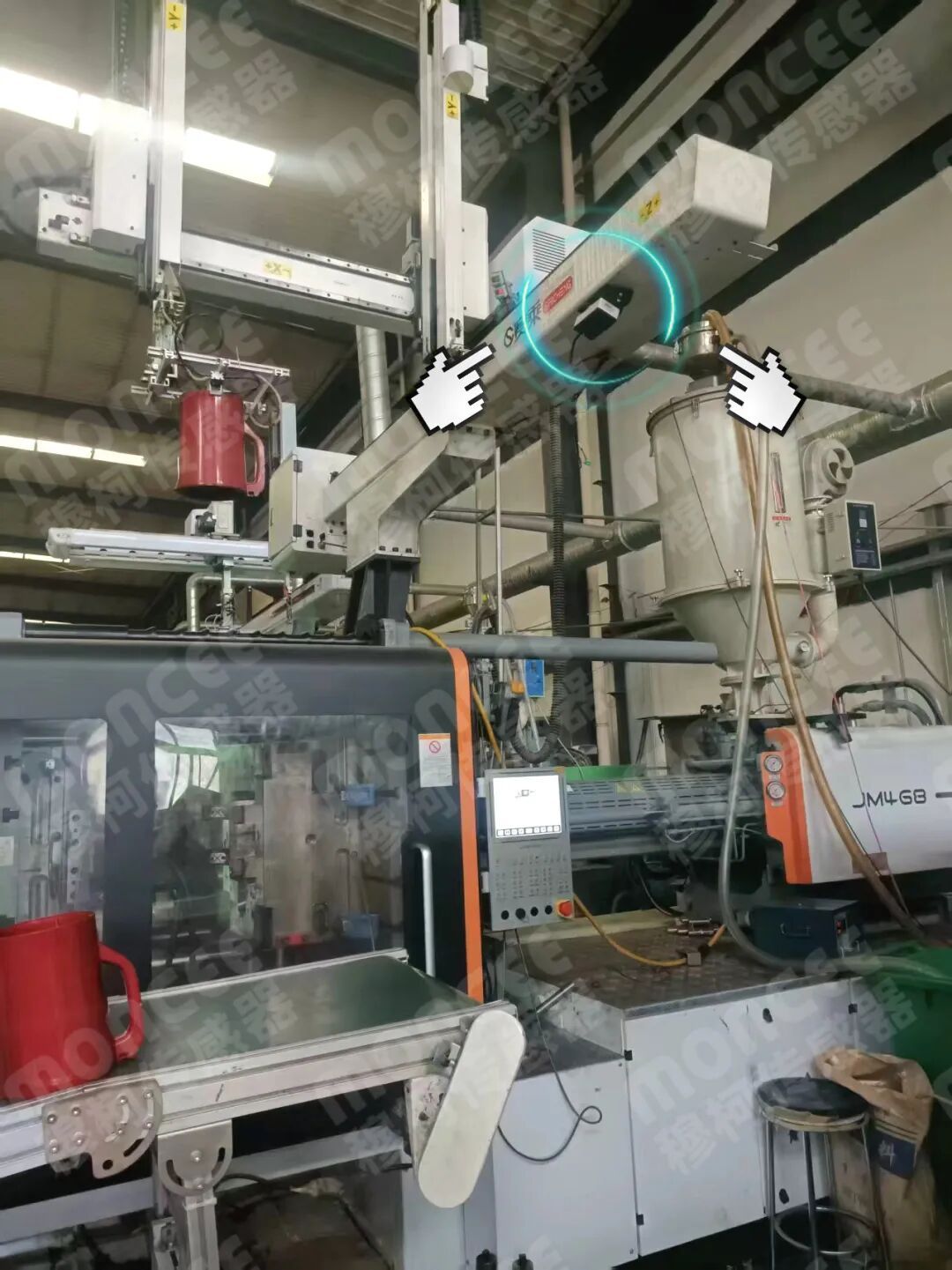
03 Two Main Applications and Their Practical Benefits
AGV Material Transport Vehicles | Warehouses and Workshop Material Handling
AGVs often operate in narrow aisles and mixed human-machine traffic areas, where they may encounter pedestrians suddenly crossing their path or materials temporarily placed along the route.
Multi-level protection process:
Full-speed operation on an open route
→ A person or obstacle appears in the distance, triggering an audible and visual warning
→ A pedestrian approaches the AGV route, and the AGV automatically decelerates
→ A person moves close to the vehicle body, triggering an immediate emergency stop
Practical benefits:
Reduced rear-end collisions, cargo impacts, and unnecessary AGV stops, resulting in smoother material transportation and less need for manual intervention.
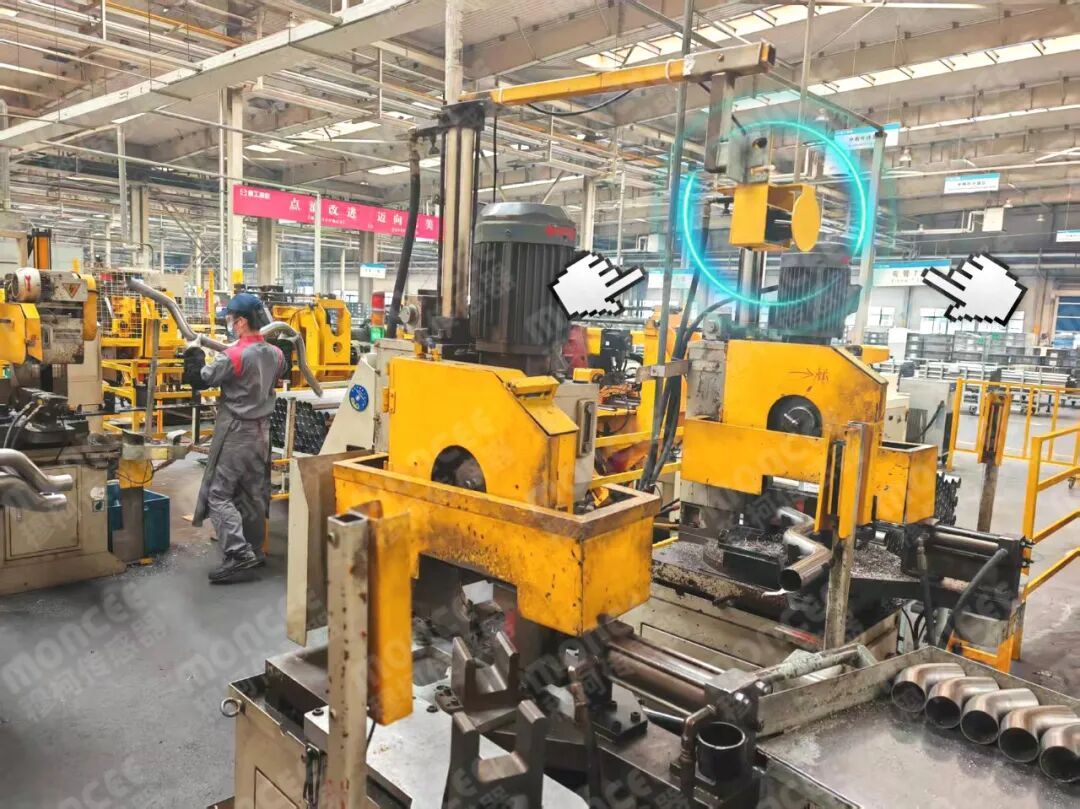
Industrial Robotic Arms | Loading/Unloading, Sorting and Assembly Workstations
Industrial robotic arms can generate substantial torque, creating a high risk of crushing or pinching when operators perform close-range auxiliary work. Traditional safety fences can also restrict the operator's working space.
Multi-level protection process:
Robot operates at high speed
→ Personnel approach the operating radius, triggering a warning
→ Personnel accidentally enter the buffer zone, and the robot automatically slows down
→ Personnel enter the core hazardous area, triggering an instantaneous emergency stop and motion lockout
Practical benefits:
Eliminates bulky physical fencing, enables more flexible human-machine collaboration, frees up workshop space, and protects operators.
Practical Tips to Avoid Common Installation Problems
Many companies find that their LiDAR protection does not perform as expected after installation. In many cases, the problem is caused by inappropriate zoning parameters:
High-speed AGVs: The warning and deceleration zones should be appropriately enlarged to provide sufficient braking distance.
Low-speed, fixed-position robotic arms: The outer protection range can be appropriately reduced to prevent unnecessary deceleration.
Adjustable zoning: Zone radii can be modified later according to actual requirements, allowing the protection system to adapt to changing workshop conditions.
04 Key Benefits for Factories
● Cost reduction and efficiency improvement: Fewer unnecessary stops, higher equipment utilization, and reduced additional costs associated with equipment repairs, material losses, and workplace injury compensation.
● Safety and compliance: Industrial safety LiDAR can meet relevant industrial safety requirements, reduce potential safety hazards, and facilitate safety inspections.
● Flexible adaptation: Protection zones and deceleration parameters can be adjusted through software, making the system suitable for high-speed AGVs, heavy-duty robotic arms, small collaborative robots, and other automated equipment.
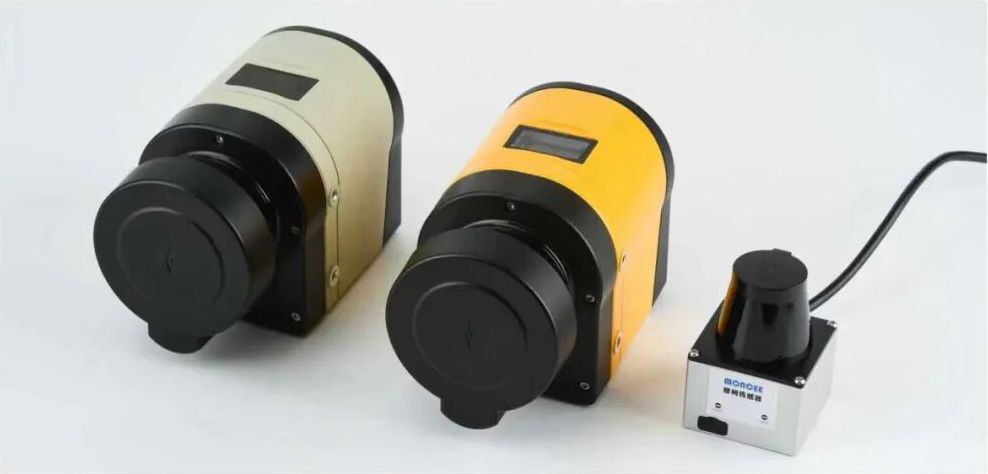
Conclusion
An automated safety protection system should never require a choice between safety and efficiency.
LiDAR's multi-level protection mode uses graded responses to overcome the limitations of traditional all-or-nothing protection. It protects workshop personnel while maintaining stable production-line operation.
As human-machine collaboration becomes increasingly common in smart manufacturing environments, this type of flexible protection solution is likely to become an important direction for safety upgrades involving AGVs and industrial robotic arms.
If you need a customized LiDAR zoning protection solution for your AGV or robotic arm based on your specific workshop conditions, feel free to contact us to discuss the appropriate safety protection.



 English
 简体中文
简体中文 Indonesian
 Previous:
 Back to list


