
Selecting a Machine Safety Light Curtain is often treated as a straightforward specification exercise: choose the required protection height, confirm the beam spacing, check the working distance, and request a quotation.
In practice, that approach can create expensive problems later.
A light curtain may fit the machine physically but still require additional engineering work because its detection capability, installation arrangement, control interface, or environmental protection does not match the actual safeguarding requirement. The result can be redesign, rewiring, commissioning delays, repeated validation, or even replacement of equipment that has already been purchased.
For machine builders, system integrators, and industrial buyers, the better strategy is to match the safety requirement first and the product specification second.
The following framework explains how to evaluate a Machine Safety Light Curtain while controlling compliance-related rework and total procurement cost.
1. Start with the Machine Risk, Not the Product Catalogue
The first question should not be:
“Which light curtain has the highest specification?”
Instead, ask:
“What hazard does the light curtain need to control?”
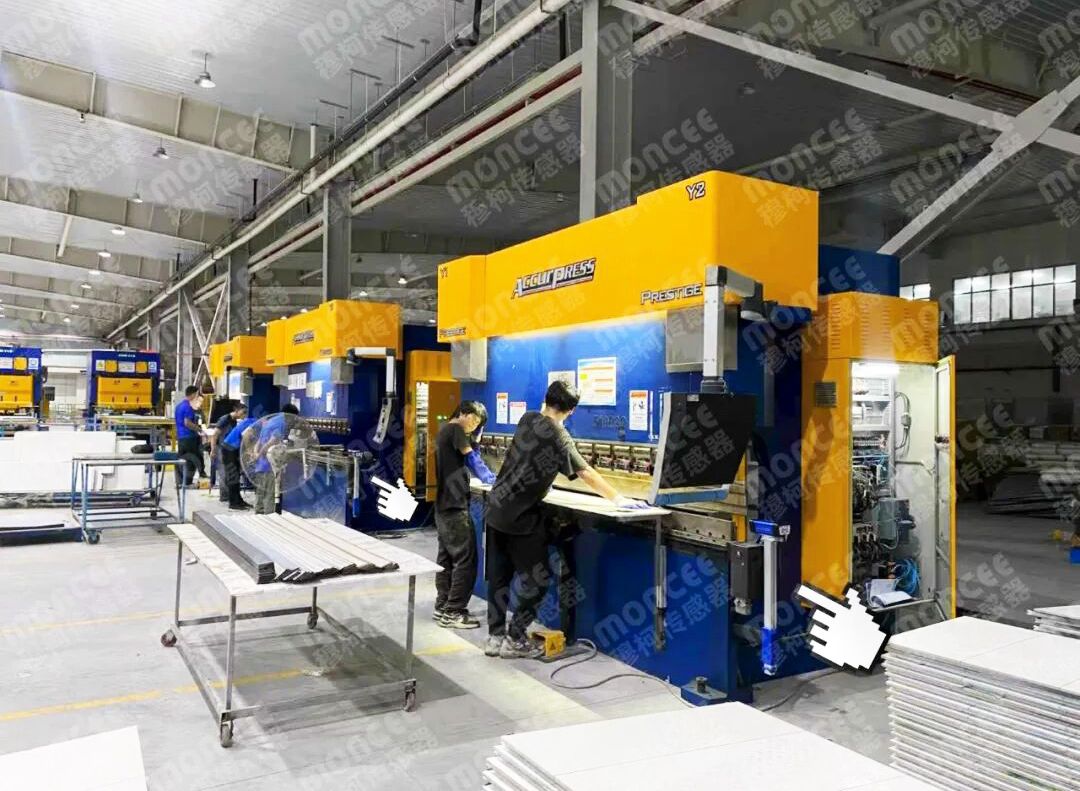
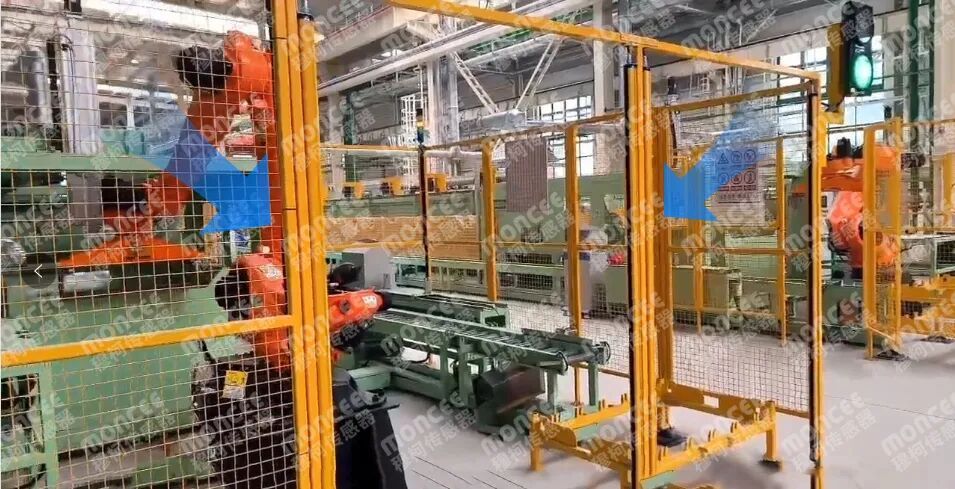
Different machines create different access risks. The GT Series, for example, is designed for applications including presses, punching machines, shearing machines, injection molding machines, cutting equipment, assembly machinery, and automated production equipment.
Before requesting quotations, define:
The hazardous zone
The type of access that must be detected
Required protection height
Required detection capability
Distance between the operator and hazard
Machine stopping characteristics
Control-system interface
Installation environment
This prevents a common procurement mistake: buying a technically capable product that is poorly matched to the actual safeguarding architecture.
2. Match Beam Spacing to the Detection Requirement
Beam spacing is one of the most commercially important specifications because it affects both detection capability and product selection.
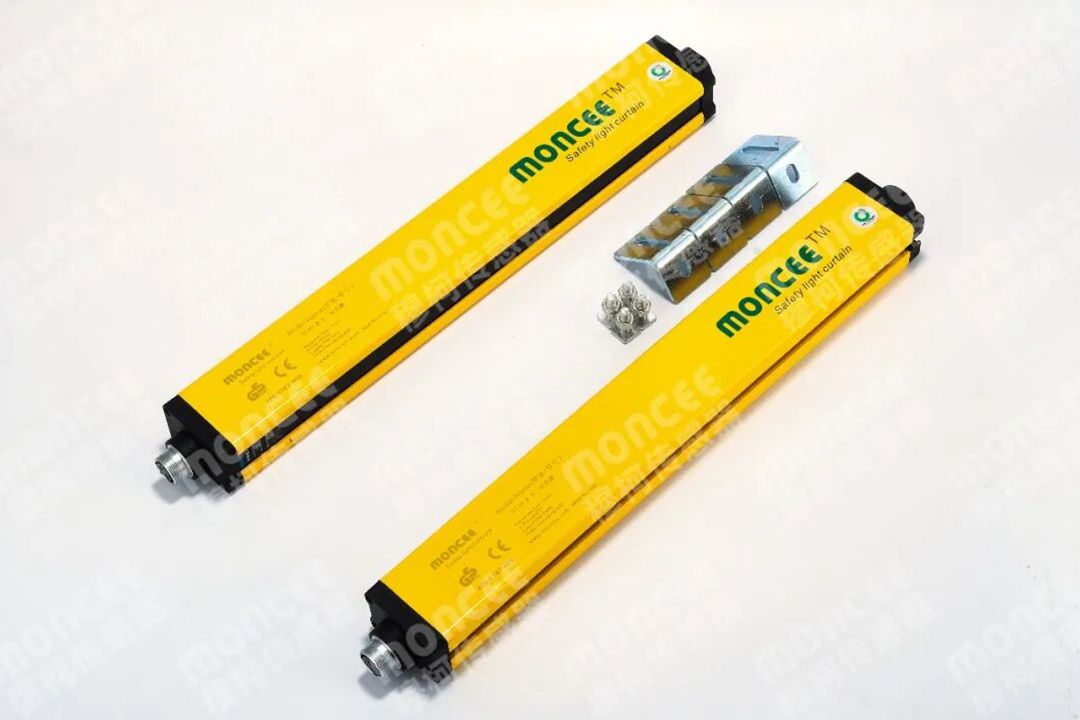
The GT Series provides beam-spacing options of 10 mm, 20 mm, 30 mm, 40 mm, and 80 mm.
However, selecting the smallest available spacing simply because it appears “safer” is not always the best purchasing strategy.
A more appropriate approach is to determine what must be detected and then select the corresponding configuration.
For example:
Smaller spacing may be appropriate when finer intrusion detection is required.
Medium spacing can be suitable for applications where the required detection capability is less demanding.
Larger spacing can be considered where the safeguarding design permits it.
The commercial benefit is significant: avoid paying for specifications that the risk assessment does not require while preventing the opposite problem of selecting insufficient detection capability.
3. Protection Height Must Match the Actual Hazard Area
Another frequent source of rework is choosing a protection height based on the catalogue rather than the machine layout.
The GT Series supports protection heights from 100 mm to 2840 mm, depending on the configuration.
When specifying a Machine Safety Light Curtain, buyers should examine the complete opening rather than simply measuring the machine frame.
Consider:
Where an operator can enter
Whether access is possible above or below the sensing field
Whether material must pass through the protected area
Whether the light curtain is guarding a point of operation or an access opening
Whether additional mechanical guarding is required
A poorly defined protection height can lead to a second engineering cycle after installation. That means additional brackets, wiring, downtime, labor, and potentially a new light curtain.
4. Detection Distance Should Be Selected for the Machine Layout
Detection distance is another specification that should be matched to the actual installation rather than maximized unnecessarily.
The current GT Series working range is up to 20 m. The provided brochure contains an older 24 m figure, so current purchasing documentation should use the updated 20 m specification.
For procurement, calculate the actual distance between transmitter and receiver and leave an appropriate engineering margin.
Avoid two extremes:
Under-specification:
The selected light curtain cannot reliably accommodate the machine layout.
Over-specification:
The buyer pays for unnecessary capability without receiving meaningful operational value.
For OEMs purchasing multiple units, this distinction can become important when multiplied across hundreds of machines.
5. Risk Matching Also Includes the Safety Control Architecture
A Machine Safety Light Curtain is not an isolated component. Its value depends heavily on how it interacts with the machine's safety circuit.
The GT Series can be integrated with dedicated safety controllers including SBC-01, SPC-01, and SR-series controllers. The brochure also shows configurations using PNP/NPN signals for connection with PLC/control systems where the overall safety design permits this arrangement.
This creates an important purchasing question:
Should the project use a dedicated safety controller, or can the light curtain integrate into the existing safety architecture?
The answer should come from the machine's risk assessment and control-system design—not simply from the lowest equipment price.
Selecting the wrong interface can create hidden costs through:
Additional relays
New wiring
PLC modifications
Control cabinet redesign
Additional commissioning
Safety validation work
Therefore, request the wiring diagram and interface requirements before placing a bulk order.
6. Environmental Compatibility Can Determine Long-Term Cost
A safety device installed on industrial machinery must survive the environment in which it operates.
The GT Series specifies IP65 protection, with an operating temperature range of -10°C to +55°C without condensation.
For procurement teams, this means the specification should be compared against the real installation conditions.
Check:
Dust and contaminants
Water exposure
Temperature
Vibration
Installation position
Potential mechanical impact
The brochure specifically highlights anti-light-interference and anti-vibration design features.
The commercial lesson is simple: environmental mismatch can turn a low purchase price into a high lifecycle cost.
7. Compliance Rework Is a Procurement Cost
Many buyers calculate only:
Unit price × quantity
A professional procurement model should also consider:
Product cost + engineering cost + integration cost + commissioning cost + modification cost + downtime risk
This is particularly important for machine builders.
A slightly lower-priced light curtain may become more expensive if it requires:
Custom brackets
Additional control hardware
Cabinet modifications
Repeated wiring
Engineering changes
Additional validation
The GT brochure identifies IEC 61496-1/2 and safety-related certification information for the product line.
However, buyers should not interpret product certification alone as proof that an entire machine is compliant. Final safeguarding performance depends on the complete machine safety design, installation, control architecture, and applicable risk assessment.
8. Use Sample Testing Before Bulk Procurement
For OEM and distributor purchases, sample testing is one of the most effective ways to reduce hidden costs.
Before ordering hundreds of units, evaluate a sample on the actual machine.
Test:
Alignment and installation
Detection performance
Response of the safety circuit
PLC or controller compatibility
Reset behavior
Environmental conditions
Operator workflow
Maintenance accessibility
The brochure also provides commissioning and test procedures, emphasizing verification of the power supply, alignment, indicator status, safety circuit, and light-curtain operation before production.
A successful sample test provides much more procurement confidence than comparing datasheets alone.
9. Turn Technical Selection into a Supplier Negotiation Strategy
Once the technical requirements are defined, buyers gain a stronger position when negotiating with manufacturers.
Instead of asking:
“How much is your safety light curtain?”
Provide a structured RFQ containing:
Machine type
Hazard area
Protection height
Beam spacing
Required working distance
Safety controller/interface
Environmental conditions
Initial quantity
Annual demand
OEM customization requirements
Then ask the manufacturer to provide:
Recommended model
Technical datasheet
Wiring solution
Installation accessories
Sample price
Bulk quotation
Lead time
Certification/documentation package
OEM customization options
This changes the purchasing conversation from price comparison to solution comparison.
Conclusion: Buy the Right Safety Solution, Not Simply the Cheapest Sensor
Choosing a Machine Safety Light Curtain should be viewed as a risk-matching and total-cost decision.
The right product is not necessarily the one with the smallest beam spacing, longest working range, or lowest unit price. It is the configuration that appropriately matches the machine hazard, protection area, control architecture, operating environment, and project requirements without creating unnecessary engineering complexity.
For OEMs, distributors, and system integrators, the most practical next step is to send the manufacturer your machine application and technical requirements before finalizing the model.
Request a model recommendation, sample, technical documentation, wiring solution, and quotation first—then use actual machine testing to validate the configuration before moving to volume procurement.
The technical specifications cited above are based on the provided GT Series Safety Light Curtain brochure; where current product information differs from the brochure, the current specification should take precedence.



 English
 简体中文
简体中文 Indonesian
 Previous:
 Back to list


