
In industrial automation, safety protection often needs to cover more than the machine itself. When operators must work directly beside automated equipment, robots, assembly systems, or material-handling machinery, detecting personnel within a hazardous floor area can become an important part of the overall machine safety strategy.
A Pressure Sensitive Safety Mat provides this type of area detection. Instead of requiring an operator to activate a button or pass through a safety door, the mat responds to sufficient pressure applied to its sensing surface and generates a switching signal for the connected safety system.
For OEM machine builders, automation integrators, distributors, and industrial procurement teams, however, choosing a Pressure Sensitive Safety Mat involves more than comparing dimensions and unit prices. Material construction, load capacity, environmental protection, response time, controller compatibility, installation configuration, and long-term supply capability all influence whether a product is appropriate for a particular machine.
This guide examines these factors from an engineering and procurement perspective, using the SC4 series documentation as the product reference.
What Is a Pressure Sensitive Safety Mat?
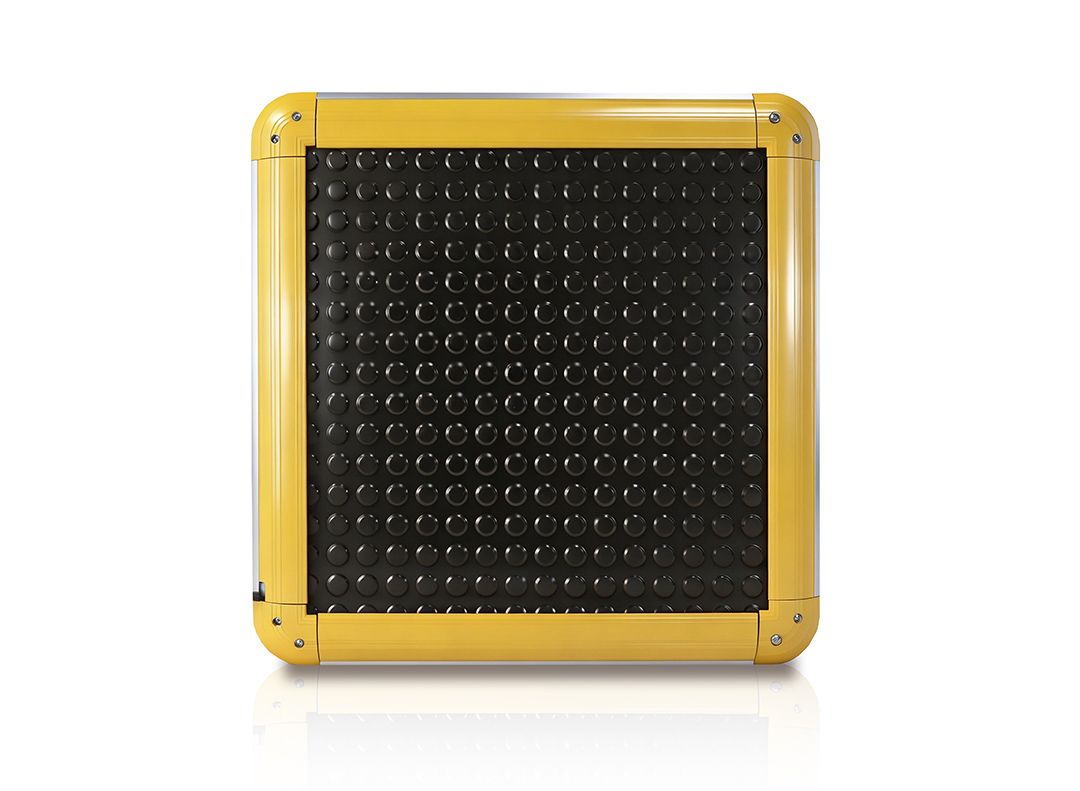
A Pressure Sensitive Safety Mat is a floor-mounted safety device designed to detect the presence or pressure of a person within a predefined area.
When sufficient pressure is applied to the sensing surface, the mat generates a switching signal. When integrated with a dedicated safety mat controller, this signal can be incorporated into the machine's safety circuit.
The SC4 product range includes standard safety mats as well as specialized configurations, including pressure-sensitive wire safety mats, high-performance safety mats, waterproof safety mats, forklift safety mats, and other application-specific designs.
This makes pressure-sensitive technology particularly useful when personnel need to operate close to machinery and conventional guarding alone does not provide the desired access or presence detection arrangement.
Key Specifications Buyers Should Evaluate
Not all Pressure Sensitive Safety Mats are designed for the same working conditions. Before requesting a quotation, OEMs should identify the specifications that directly affect the intended application.
1. Sensing and Trigger Characteristics
The fundamental function is pressure detection.
The SC4 standard safety mat is designed to generate a switching signal when sufficient pressure is detected. The documented adult trigger force is approximately 30 kg, while the specified response time is ≤30 ms.
These parameters should be evaluated together with the machine's safety architecture rather than considered as isolated numbers.
2. Load Requirements
A safety mat installed in an industrial environment may experience considerably greater loads than the force required to trigger it.
For the SC4 standard model, the documentation specifies a dynamic load of 500 kg and static load of 800 kg.
For applications involving concentrated wheel loads or other demanding mechanical conditions, the catalog also provides a high-performance version. Its documentation specifies a PUR construction and a wheel-load condition of 2000 N / 1862 kPa.
This distinction is important when selecting a mat for production areas where carts, equipment, or other loads may pass over the sensing surface.
3. Material and Environmental Conditions
Material selection should reflect the actual production environment.
The SC4 range includes rubber-based constructions as well as PUR and EPM/EPDM-based configurations. The standard safety mat uses a rubber surface and is specified for an operating temperature range of approximately -10°C to +60°C.
For environments involving water or intensive cleaning, a dedicated waterproof version should be considered rather than assuming that a standard model provides the same environmental protection.
The catalog specifically lists the waterproof safety mat with IP67 protection.
This is also why procurement specifications should identify environmental conditions before the supplier recommends a product.
Where Are Pressure Sensitive Safety Mats Used?
The main advantage of pressure-sensitive floor detection is its ability to monitor an area rather than a single access point.
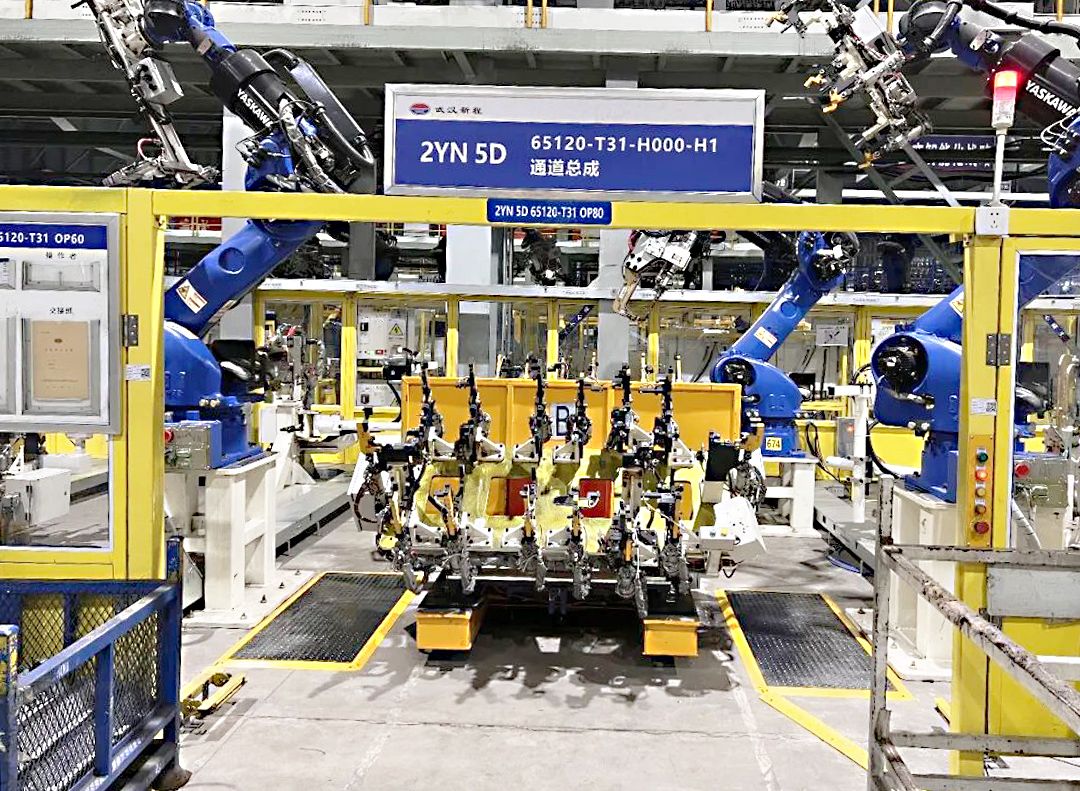
Automated Machinery
Automated production equipment often requires personnel to work around the machine while the system is operating. A Pressure Sensitive Safety Mat can be positioned in designated personnel areas and integrated into the machine safety circuit.
The SC4 catalog shows actual installation examples around industrial equipment and production machinery.
Robot Work Areas
Industrial robots can have extensive movement ranges, making personnel presence within the working area a significant consideration.
A pressure-sensitive mat can be used as part of a layered guarding strategy where workers need controlled access to areas surrounding robotic equipment.
Assembly and Processing Equipment
Assembly stations, processing machinery, and production equipment frequently require operators to stand close to the machine.
In these applications, the mat can monitor the designated standing or access area while allowing the production process to remain practical for the operator.
Material Handling and Forklift Applications
The catalog includes dedicated forklift safety mat solutions using PUR material and application-specific construction.
This illustrates an important purchasing principle: when an application involves unusual loading or mechanical conditions, buyers should investigate whether a specialized product is more appropriate than simply increasing the size or quantity of a standard mat.
Pressure Sensitive Safety Mat Integration: Think Beyond the Mat
A common procurement mistake is treating the safety mat as an independent component.
In a complete application, the mat normally works together with a dedicated safety mat controller. The controller monitors the mat's status and provides the interface required by the machine's safety system.
The SC4 documentation includes dedicated controllers, wiring diagrams, and installation instructions for both individual and multiple safety mats.
For an OEM project, the technical specification should therefore include:
Number of safety mats
Individual mat dimensions
Connection configuration
Controller requirements
Machine safety circuit interface
Cable routing
Reset requirements
Installation structure
Maintenance access
This system-level approach is particularly valuable for machine builders developing a standardized machine platform.
OEM Customization: When Standard Sizes Are Not Enough
For OEM manufacturers, the ideal safety mat is often the one that fits the machine layout without requiring major structural changes.
The SC4 documentation provides a range of standard dimensions and indicates that other dimensions can be customized within the applicable range. The catalog also presents different edge configurations and cable arrangements.
Customization may involve:
Length and width
Surface material
Mat construction
Edge configuration
Cable outlet position
Cable length
Connection configuration
Specialized load requirements
One important product-management update should also be reflected in current procurement materials: the SC4 standard 500 × 250 mm size has been discontinued because its application range was too narrow. Therefore, it should not be presented as a current standard size in OEM quotations or product pages.
For OEM buyers, this demonstrates why current supplier documentation should always take priority over older catalogs or historical product lists.
Replacement Procurement: Match the System, Not Just the Dimensions
Replacing an existing Pressure Sensitive Safety Mat can become complicated when the original product is no longer available.
Simply measuring length and width is not always enough.
A replacement project should verify:
Existing mat dimensions
Mat construction and sensing method
Existing controller model
Wiring and connector configuration
Cable outlet position
Edge/frame configuration
Environmental conditions
Required load capacity
Required response characteristics
The SC4 documentation provides dedicated installation methods for single and multiple mats and emphasizes checking the safety function, wiring integrity, mechanical fixation, and mat condition during maintenance.
For distributors and maintenance contractors, this creates an opportunity to provide a replacement solution rather than simply a replacement component.
How OEM Buyers Should Evaluate Suppliers
For industrial procurement, the lowest unit price does not necessarily represent the lowest total cost.
A more useful supplier evaluation should consider four areas.
Technical capability
Can the manufacturer provide different materials, dimensions, edge configurations, and application-specific designs?
Integration support
Can the supplier provide compatible controllers, wiring information, installation guidance, and technical documentation?
Manufacturing consistency
For OEM projects, the same safety mat may be ordered repeatedly across multiple machine batches. Consistency in dimensions, materials, electrical characteristics, and production quality is therefore critical.
Long-term replacement capability
Machines may remain in service for many years. A supplier capable of supporting replacement orders and customized products can reduce future sourcing risks.
This is particularly important for machine manufacturers and distributors serving multiple industrial customers.
Building a Better Procurement Strategy for Pressure Sensitive Safety Mats
A professional Pressure Sensitive Safety Mat procurement process should begin with the application, rather than with a product number.
First determine where personnel will stand or enter, what loads the mat will experience, and what environmental conditions exist.
Next, select the appropriate construction—standard, pressure-sensitive wire, high-performance, waterproof, forklift-specific, or another specialized configuration.
Finally, confirm controller compatibility, wiring, installation structure, and future replacement requirements.
For OEMs, automation integrators, and industrial distributors, this approach provides a more reliable path from machine safety requirement → product specification → system integration → repeat procurement.
The SC4 series demonstrates that Pressure Sensitive Safety Mats can be configured for a wide range of industrial requirements, from conventional machine guarding to specialized applications involving water, heavy loading, forklifts, and automated production equipment.
Ultimately, the right supplier should provide more than a pressure-sensitive mat. The stronger commercial proposition is a complete, scalable safety mat solution that supports engineering selection, OEM customization, system integration, bulk purchasing, and future replacement.



 English
 简体中文
简体中文 Indonesian
 Previous:
 Back to list


