
In modern factories, safety monitoring is no longer limited to a simple question: “Is there an object in front of the machine?” For automated equipment, AGVs, logistics systems, and industrial workstations, the more important question is:
Where is the object, how close is it to the operating area, and what should the machine do next?
This is where a Protective Field Scanner can provide greater flexibility than a single detection threshold. By dividing the monitored space into multiple configurable zones, manufacturers can create different levels of detection and response according to machine status, operating distance, and application requirements.
MILS-F30, for example, is an industrial laser scanning sensor based on TOF (Time of Flight) ranging technology. Its documentation specifies a 270° scanning angle, maximum detection distance of 50 m, 16 area groups, and three configurable areas within each group. It is designed for navigation and obstacle avoidance while supporting area detection and protection.
For equipment manufacturers and industrial integrators, this multi-zone architecture can be particularly valuable when designing scalable and commercially deployable detection solutions.
1. What Is a Protective Field Scanner?
A Protective Field Scanner continuously scans a predefined area and determines whether an object has entered a configured detection field.
In an industrial application, the scanner can be integrated with the machine's control system to provide different outputs according to the detected zone.
Instead of using one large detection area, engineers can divide the working environment into several fields, such as:
Outer zone: early detection or warning
Middle zone: machine status adjustment or controlled response
Inner zone: more critical obstacle detection
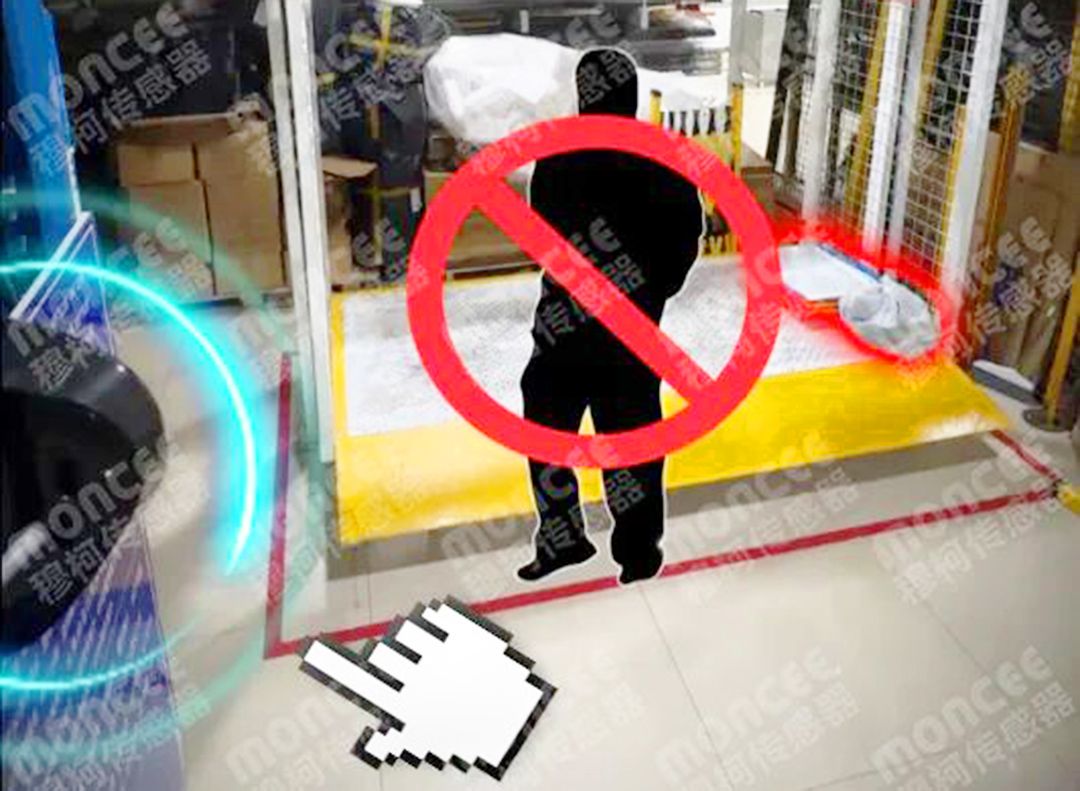
The MILS-F30 architecture directly supports this approach. Each area group contains three areas—outer, middle, and inner. The system provides 16 area groups, allowing different zone configurations to be prepared for different operating conditions.
This makes multi-zone detection more than a technical feature. For OEMs, it can become a practical method for standardizing machine behavior across different operating modes.
2. Why Multi-Zone Detection Matters in Industrial Applications
A machine does not always operate under the same conditions.
Consider an AGV moving through a warehouse. When traveling at normal speed, it may require a relatively large detection field. During low-speed movement or maneuvering, the appropriate detection geometry may be different.
Similarly, an automated production machine may have:
Normal production mode
Material-loading mode
Maintenance mode
Manual intervention mode
Different movement or operating stages
Using only one fixed detection field can limit the flexibility of the overall system.
A multi-zone Protective Field Scanner allows engineers to prepare different area configurations and switch between them according to machine status.
For businesses deploying equipment at scale, this can reduce the need to redesign the sensing architecture every time the operating condition changes.
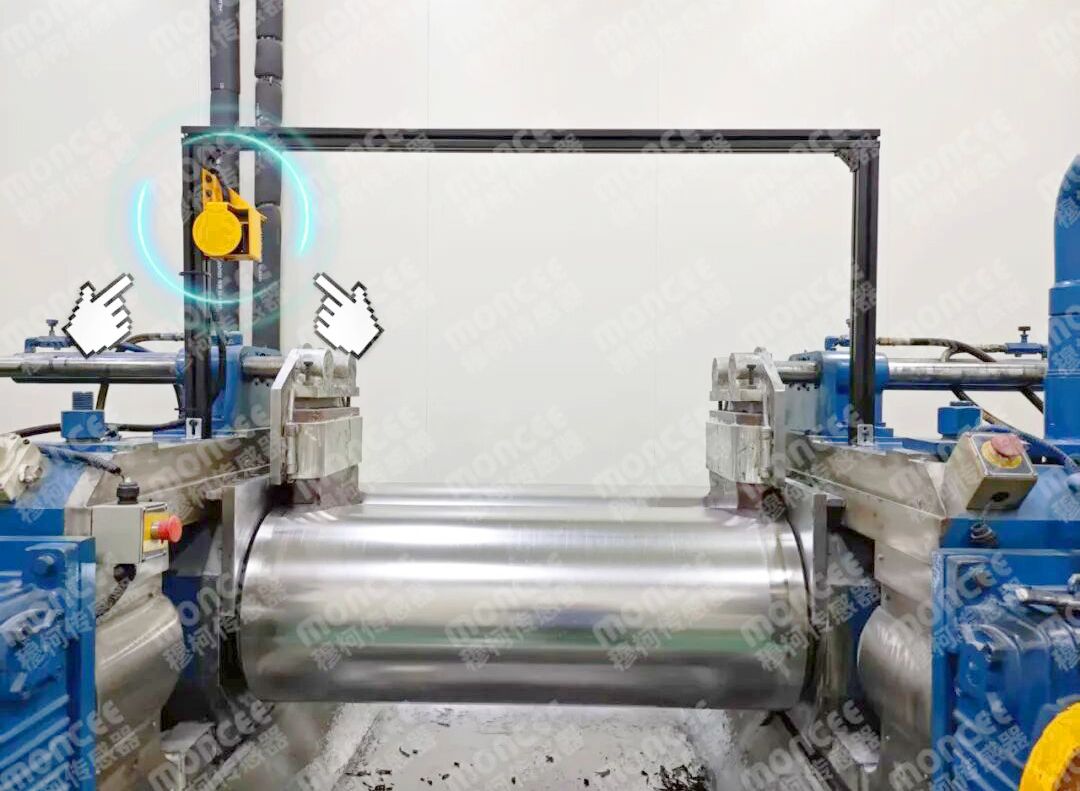
3. MILS-F30: A Practical Multi-Zone Architecture
MILS-F30 provides several parameters that support industrial area monitoring:
| Parameter | Specification |
Scanning angle | 270° |
Maximum detection distance | 50 m |
Detection distance at 10% reflectivity | 20 m |
Angular resolution | 0.25° |
Measurement accuracy | ±2 cm |
Scanning frequency | 15 Hz |
Area groups | 16 |
Areas per group | 3 |
Digital inputs | 4 |
| Protection rating | IP65 |
These specifications provide a combination of wide-area coverage and configurable detection logic.
The four digital inputs can be used to select among 16 area groups. The documentation also specifies that area-group selection can be performed through either I/O signals or the host computer, with the two methods not intended to be used simultaneously.
For OEM applications, this provides a straightforward mechanism for linking the scanner's detection configuration with machine operating states.
4. Design the Protective Field Around the Machine—Not the Sensor
One of the most important principles in industrial scanner deployment is to design the detection field according to the application.
The scanner should not simply be installed and configured to its maximum possible range.
Instead, engineers should first identify:
The hazardous or collision-prone area
The objects that need to be detected
The machine's movement range
The required detection distance
The appropriate mounting position
The machine's response after detection
Only after these factors are established should the scanner's field geometry be configured.
MILS-F30's software supports rectangle, sector, and polygon field shapes, allowing the detection area to be adapted to different industrial layouts. The software also displays coordinate information so that field boundaries can be adjusted precisely.
This is particularly useful when the monitored environment contains equipment structures, production lines, barriers, or irregular operating spaces.
5. From One Detection Field to a Multi-Level Response Strategy
Multi-zone detection becomes commercially valuable when each zone is connected to a clearly defined machine response.
For example:
Outer zone triggered → warning
↓
Middle zone triggered → controlled response
↓
Inner zone triggered → critical machine response
The exact response should be determined by the machine's design and applicable safety requirements. The scanner itself should not be assumed to provide a complete functional-safety system simply because it supports area detection.
For MILS-F30, the documented outputs include separate signals for the inner, middle, and outer detection layers, as well as a device-status output.
This separation gives system integrators more flexibility when designing control logic.
6. Response Time Should Be Evaluated at System Level
Detection speed is an important purchasing criterion, but industrial customers should avoid evaluating it in isolation.
The MILS-F30 documentation specifies a minimum network transmission interval of 66 ms in active transmission mode, with the actual minimum reporting interval depending on the selected communication protocol.
This figure should not automatically be interpreted as the complete machine stopping time.
A real industrial response chain may include:
Target detection → data transmission → controller processing → control output → drive response → mechanical stopping
Therefore, when the scanner is used in applications involving personnel protection or safety-related machine functions, the complete system response must be evaluated.
For commercial projects, this distinction is also important when communicating technical specifications to customers. A scanner's data-transmission interval and the machine's total response time are two different engineering parameters.
7. Flexible Zone Configuration Can Reduce Deployment Costs
For equipment manufacturers, another major advantage of a configurable Protective Field Scanner is the ability to standardize configurations across multiple machines.
MILS-F30 provides an area import/export function. After the first machine has been configured, its field parameters can be saved as a configuration file and transferred to newly installed units. The documentation states that the configuration file can be imported into another device, after which the device can be restarted for operation.
This creates a practical deployment workflow:
Configure one machine → Validate → Save configuration → Replicate → Verify each installation
For OEM manufacturers producing standardized equipment, this can reduce repetitive commissioning work and make field deployment more consistent.
The commercial benefit becomes even more significant when dozens or hundreds of similar machines are installed.
8. Environmental Conditions Also Affect Scanner Selection
Industrial detection equipment may operate in environments very different from laboratories or indoor test facilities.
MILS-F30 is specified with:
IP65 protection
Operating temperature of -25°C to +55°C
Resistance to ambient light up to 80,000 lux
905 nm Class 1 laser
Industrial navigation and obstacle-avoidance capability
The product documentation also describes indoor and outdoor operation and the use of intelligent multi-echo technology for demanding weather conditions.
However, actual field performance should always be validated under the customer's specific environmental conditions.
9. Integration Is a Commercial Decision, Not Just a Technical One
A scanner may have excellent detection performance, but if it is difficult to integrate into the customer's control architecture, the total project cost can increase significantly.
MILS-F30 supports Ethernet and Type-C for configuration and data communication.
Its Ethernet communication architecture also provides separate ports for data transmission and parameter configuration.
For OEMs and system integrators, procurement should therefore consider:
Communication interfaces
Data protocol compatibility
Zone switching methods
PLC/controller integration
Configuration software
Batch deployment requirements
Commissioning and technical support
The cheapest sensor is not necessarily the lowest-cost solution. Engineering time, commissioning effort, integration complexity, and future scalability can have a much larger impact on total project cost.
10. How Businesses Should Evaluate a Protective Field Scanner
When comparing suppliers, industrial buyers should evaluate the scanner from five perspectives:
1. Detection capability
Check scanning angle, range, resolution, accuracy, and environmental performance.
2. Multi-zone flexibility
Determine how many area groups and detection fields can be configured.
3. Machine integration
Confirm available communication interfaces, I/O architecture, and control compatibility.
4. Deployment efficiency
Check whether configurations can be replicated across multiple machines.
5. Safety requirements
Determine whether the product is intended for general obstacle detection, area monitoring, or a formally safety-rated application.
This last point is critical.
A laser scanning sensor with configurable protective fields should not automatically be marketed as a certified Safety Laser Scanner unless the relevant safety documentation and certification support that claim.
Conclusion
The commercial value of a Protective Field Scanner lies not simply in how far it can scan, but in how effectively its detection capabilities can be translated into a configurable, scalable industrial solution.
Multi-zone detection allows manufacturers to move beyond a simple “object detected/not detected” strategy. With different inner, middle, and outer fields, multiple area groups, configurable geometries, and machine-state switching, the sensing system can be adapted to different operating conditions.
MILS-F30 provides a practical example with 270° scanning, up to 50 m detection distance, 16 area groups, three areas per group, configurable field shapes, Ethernet/Type-C communication, and configuration-file replication.
For OEMs, AGV/AMR manufacturers, logistics automation companies, and industrial system integrators, the key question should therefore be:
Can this scanner be configured, integrated, replicated, and maintained efficiently across the equipment we manufacture and deploy?
That is ultimately what turns a Protective Field Scanner from a sensing component into a commercially valuable industrial solution.



 English
 简体中文
简体中文 Indonesian
 Previous:
 Back to list


