
In automated manufacturing, a Photoelectric Safety Sensor is not simply a device that detects whether an operator has entered a hazardous area. Its real value lies in how reliably and predictably it interacts with the machine’s safety control system.
A sensor that responds appropriately but is poorly integrated can still create production problems. Incorrect output configuration, unsuitable beam spacing, difficult alignment, incompatible controllers, excessive wiring complexity, or an incorrectly designed protective field can all create hidden costs after installation.
For machine builders, OEMs, system integrators, and industrial procurement teams, Photoelectric Safety Sensor selection should therefore focus on the entire detection-and-response chain, rather than a single specification.
This guide explains how to evaluate response time, detection capability, and integration factors when selecting a safety photoelectric sensor for industrial equipment.
1. Response Time Should Be Evaluated as a System, Not a Single Number
Response time is often one of the first specifications engineers ask about.
However, for a machine safety application, the actual protection process is more complex:
Detection → Safety Signal → Safety Controller → Machine Stop Command → Mechanical Stop
The total time required for the machine to reach a safe state is therefore not necessarily the same as the response time of the photoelectric safety sensor itself.
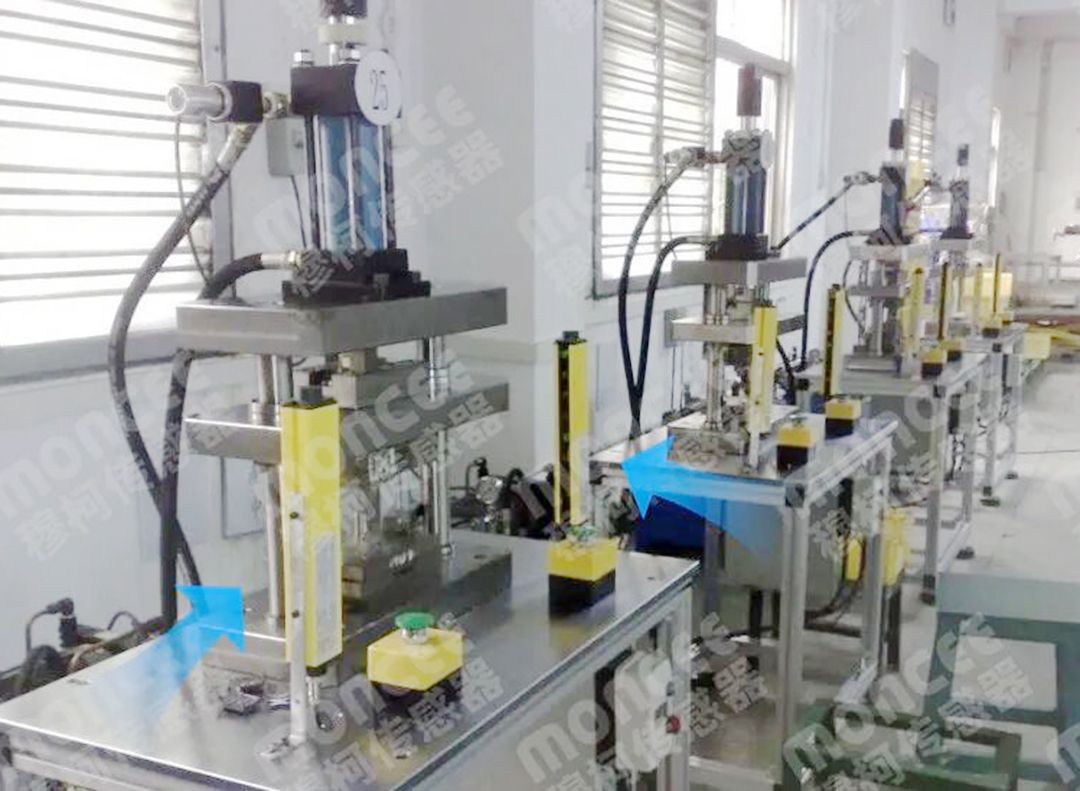
This distinction is particularly important when evaluating a safety light curtain for high-speed machinery.
The GT Series Safety Light Curtain brochure specifies compatibility with dedicated safety controllers including SBC-01, SPC-01, and SR Series.
For example, the documented controller parameters include response times of approximately 15 ms for SBC-01 and ≤20 ms for SPC-01. These are controller specifications, not a standalone response-time claim for the GT light curtain.
Therefore, during procurement, ask suppliers to clarify:
Light curtain detection/response characteristics
Safety controller response time
Machine control response
Mechanical stopping time
Required safety distance
This provides a much more useful engineering basis than comparing one response-time figure between different suppliers.
2. Detection Accuracy Starts with Beam Spacing
For a Photoelectric Safety Sensor using multiple optical beams, Beam Spacing is directly related to what the protective field can detect.
The GT Series offers beam spacing options of:
10 mm, 20 mm, 30 mm, 40 mm, and 80 mm.
A smaller beam spacing can provide a denser detection field, but choosing the smallest available spacing is not automatically the correct solution.
The selection should be based on the machine's actual hazard and access pattern.
For example:
A stamping machine may require close monitoring around a point-of-operation hazard.
An automated assembly machine may require a larger protective opening.
A production line may need to distinguish between personnel access and material transfer.
A machine with frequent workpiece movement may require careful consideration of how the protective field interacts with normal production.
The key question is not:
“Which sensor has the smallest beam spacing?”
It is:
“What detection capability does this machine actually require?”
This approach can prevent unnecessary specifications while maintaining an appropriate protective field.
3. Protection Height Must Match the Real Access Route
Detection accuracy also depends on the Protection Height.
The GT Series provides protection heights from approximately 100 mm to 2840 mm, depending on the model.
A common procurement mistake is selecting a sensor based only on the physical dimensions of the machine.
Instead, engineers should analyze the possible paths through which personnel could reach the hazardous area.
Consider:
Can an operator reach over the protective field?
Can someone enter from the side?
Is access possible underneath the detection area?
Does material need to pass through the opening?
Is the light curtain protecting the entire access point or only one section?
The protective field should be designed around the actual access risk, not simply the machine's external dimensions.
4. Avoid Hidden Integration Risk by Confirming Output Type
One of the most frequently overlooked issues in sensor procurement is the electrical interface.
A Photoelectric Safety Sensor may be technically suitable but still create integration problems if its output does not match the machine's control architecture.
The GT Series documentation provides configurations involving NPN/PNP outputs, and the brochure includes wiring examples for connection to PLC/control systems as well as safety controllers.
Before placing an order, confirm:
NPN or PNP output requirement
PLC input compatibility
Safety controller compatibility
Wiring configuration
Connector type
Cable length
Reset requirements
Signal logic after beam interruption
These details appear small during purchasing, but discovering an incompatibility after the machine has been assembled can result in additional wiring, programming, engineering, and commissioning work.
5. Don't Treat Detection Distance as an Isolated Specification
The GT Series has a current working range of up to 20 m for applicable configurations. The older brochure contains a 24 m figure, but that specification is outdated and should not be used for current GT Series selection.
For procurement, however, maximum working range is not the only consideration.
If a machine requires only a few meters of detection distance, an unnecessarily large maximum range may provide little practical benefit.
Instead, evaluate the actual installation:
Emitter ↔ Protective Area ↔ Receiver
Then confirm whether there is sufficient space for:
Mechanical mounting
Alignment
Cable routing
Maintenance access
Future machine modifications
This reduces the risk of choosing a sensor that appears suitable on paper but becomes difficult to install on the actual machine.
6. Environmental Conditions Can Affect Detection Stability
Industrial equipment rarely operates in ideal conditions.
Dust, vibration, temperature changes, and strong ambient light can all become relevant during sensor selection.
The GT Series is specified with IP65 protection and an operating temperature range of approximately -10°C to +55°C without condensation. The brochure also describes anti-light-interference and anti-vibration design features.
Before procurement, engineering teams should evaluate the actual environment:
Is there dust or airborne material?
Is the machine exposed to vibration?
Are there coolant or oil-related conditions?
Is the ambient temperature within the specified range?
Are there strong light sources near the sensor?
A technically correct sensor can still become a poor choice if the environmental conditions are ignored.
7. Installation Hardware Is Part of the Integration Cost
A Photoelectric Safety Sensor does not operate independently of its mounting structure.
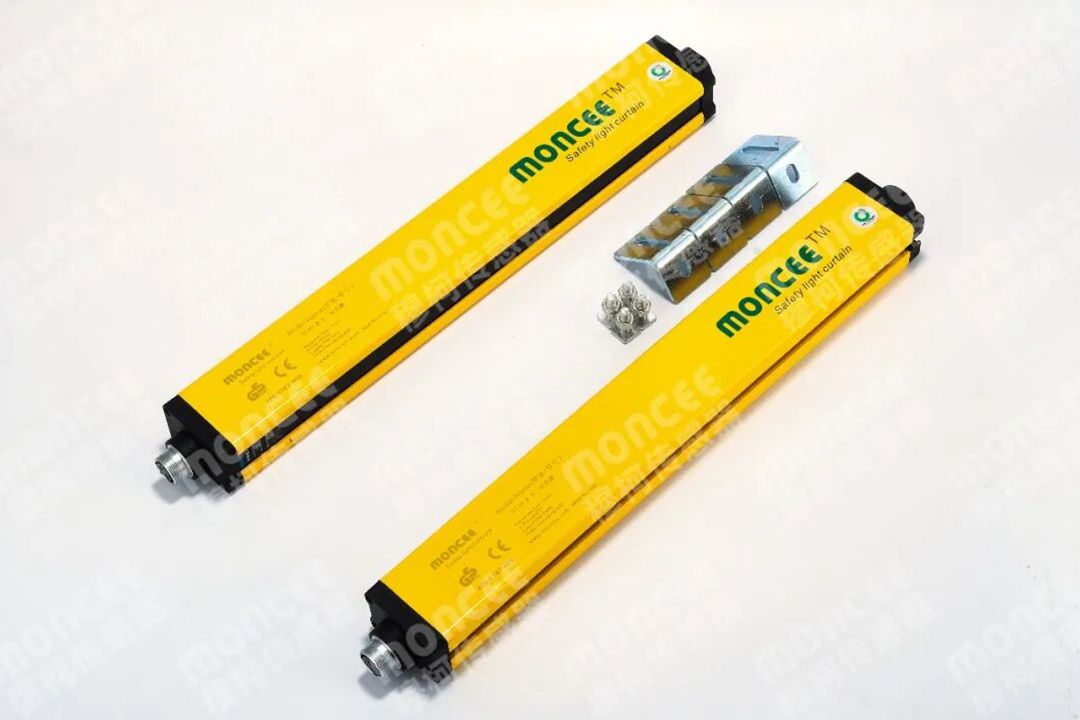
The GT Series provides mounting solutions including BL rear sliding brackets, HL two-end buffer brackets, LD-1500 floor stands, and GTE tube brackets.
This matters because installation quality directly affects alignment and maintenance.
Procurement teams should therefore consider:
Sensor + Controller + Wiring + Mounting + Commissioning
rather than evaluating only the sensor's unit price.
A supplier capable of providing the complete installation solution can reduce the amount of engineering coordination required between different vendors.
8. Test Integration Before You Scale the Purchase
For OEM projects and automated production lines, sample testing can significantly reduce procurement risk.
Before committing to a large order, test the proposed Photoelectric Safety Sensor on the actual machine or a representative setup.
Verify:
Detection performance
Beam spacing suitability
Protection height
Working distance
Output compatibility
Controller integration
Alignment stability
Machine stop behavior
Reset operation
Installation and maintenance convenience
The GT brochure also provides commissioning and test-operation guidance, emphasizing correct power supply, alignment, indicator status, safety circuit verification, and testing before normal production.
This makes sample validation particularly valuable for projects involving multiple identical machines.
9. Use Total Integration Cost to Compare Suppliers
The lowest sensor quotation does not necessarily represent the lowest project cost.
A more practical procurement model is:
Total Cost = Product + Controller + Wiring + Mounting + Engineering + Commissioning + Potential Rework
A supplier that can support model selection, electrical integration, mounting, documentation, sample testing, and OEM customization may reduce downstream engineering work.
For machine manufacturers and system integrators, this can be particularly important when the same safety architecture will be replicated across multiple machines.
Instead of asking only:
“What is your unit price?”
ask:
“Can you provide a complete safety sensor solution for our machine?”
That question shifts supplier evaluation from simple component purchasing toward solution-based procurement.
Conclusion: Optimize the Entire Detection Chain
Selecting a Photoelectric Safety Sensor for industrial automation requires more than comparing detection range or response-time figures.
A reliable selection process should connect:
Hazard Analysis → Detection Requirement → Beam Spacing → Protection Height → Response Chain → Output Interface → Controller → Environment → Installation → Commissioning
Response time and detection capability are important, but they only create value when the entire system is correctly integrated.
For OEM machine builders, automation companies, and industrial distributors, working with a manufacturer that can provide technical selection, safety controller matching, wiring solutions, mounting accessories, sample testing, OEM customization, and volume supply can make procurement more efficient while reducing hidden integration risks.
Request a Photoelectric Safety Sensor Solution
If you are sourcing a Photoelectric Safety Sensor for industrial machinery, send your supplier the following information:
Machine type
Hazardous area
Required protection height
Required beam spacing
Working distance
PLC or safety controller configuration
Output requirement: NPN/PNP
Operating environment
Initial quantity
Estimated annual demand
Based on these details, Moncee can support model recommendation, technical datasheets, wiring solutions, safety controller matching, mounting accessories, sample testing, formal quotation, OEM customization, and long-term supply cooperation.
This approach allows buyers to evaluate not only the sensor itself, but the complete safety integration solution before moving to volume procurement.



 English
 简体中文
简体中文 Indonesian
 Previous:
 Back to list


