
When machinery, automatic doors, AGVs, lifting equipment, or other moving systems create crushing, shearing, trapping, or collision hazards, a conventional physical guard may not always provide the most practical solution. In applications where a moving edge itself presents a hazard, a safety-sensitive edge can provide an additional layer of contact-based protection.
A safety-sensitive edge—also commonly called a Safety Edge, sensitive safety edge, or pressure-sensitive safety edge—is designed to detect physical contact or pressure and send a signal to a control system. When properly integrated with the machine's control architecture, the signal can initiate a stop or reverse action. The term “safety-sensitive edge” is also used by current manufacturers for rubber mechanical-contact and resistive safety-edge products. (CAME)
For companies searching for where to buy safety-sensitive edge sensors for workplace safety, the key question is not simply which supplier has the lowest price. The more important considerations are profile geometry, triggering characteristics, electrical configuration, environmental conditions, customization capability, and technical support.
What Is a Safety-Sensitive Edge Sensor?
A safety-sensitive edge is a flexible sensing device installed along the edge of a moving component.
In a typical construction, the sensor consists of an outer insulating or elastic profile, an internal sensing element, and a mounting profile. When an object or person applies pressure to the sensing edge, the internal conductive elements respond and generate an electrical signal. The connected controller analyzes this signal and can initiate the programmed safety action. Moncee's product documentation describes the Safety Edge as a flexible, bendable strip or profile designed for moving components with crushing and shearing hazards.
This makes the technology particularly useful when the hazardous area is located directly along a moving edge.
Where Are Safety-Sensitive Edge Sensors Used?
A major advantage of Safety Edge technology is its flexibility across different industrial applications.
The Moncee catalog identifies applications including:
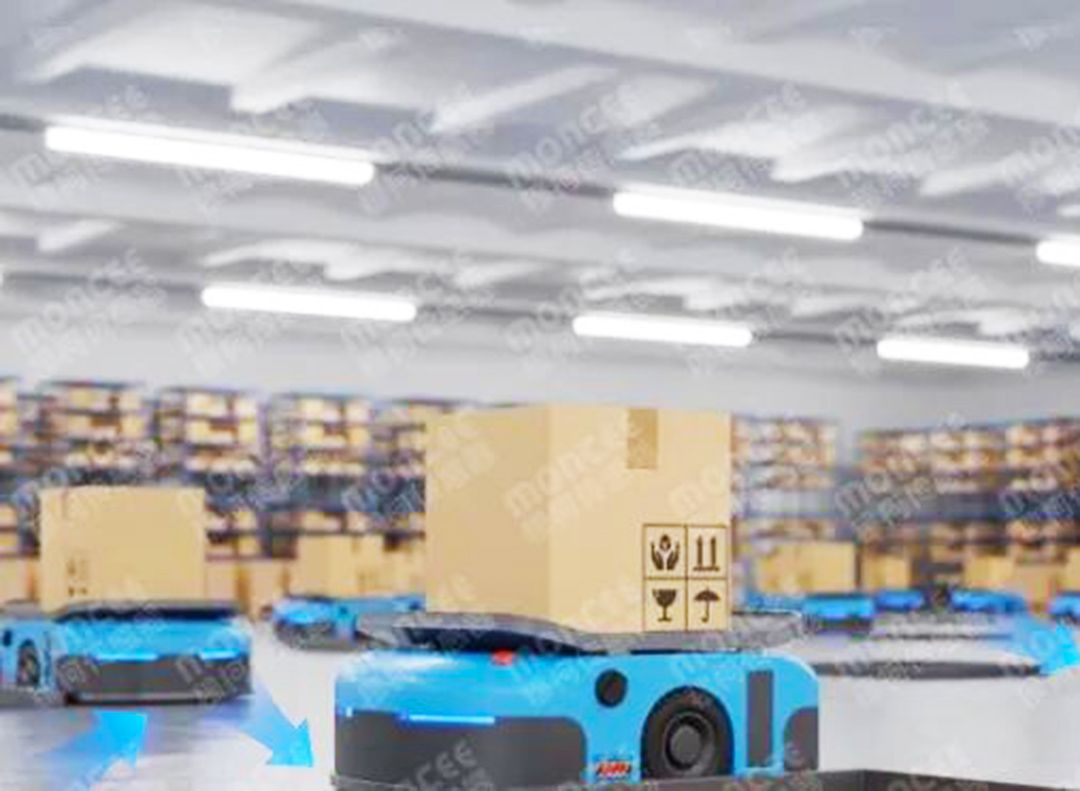
AGVs and AMRs
Automated logistics and warehousing
Tire forming machines
Elevators and lifting equipment
Safety doors
Machine-tool worktables
Electric doors
Automotive doors and trunks
Welding robots
Rubber machinery
Assembly machinery
Material-handling equipment
Packaging machinery
Stamping and pressing equipment
These applications share a common characteristic: a moving component can come into contact with a person, product, or obstacle.
Safety-sensitive edges are therefore not limited to one type of machine. They can be configured according to the available installation space and the mechanical requirements of the application.
Where Can You Buy Safety-Sensitive Edge Sensors?
There are several possible purchasing routes.
1. Buy Directly From a Safety Sensor Manufacturer
For OEM machine builders and industrial equipment manufacturers, purchasing directly from a manufacturer can simplify technical communication and customization.
A direct manufacturer can typically discuss the complete application rather than supplying only a standard sensor. This is particularly useful when you need a specific cross-section, customized length, cable outlet, bending configuration, or electrical connection.
For example, Moncee's Safety Edge catalog provides multiple cross-sectional profiles and supports customized product length and lead-wire configurations.
2. Purchase Through an Industrial Automation Distributor
Distributors may be useful when you need products from established international brands or require local purchasing and technical support.
However, buyers should verify whether the distributor can provide the complete Safety Edge system—including the sensor, mounting components, controller interface, and technical documentation—or only the rubber sensing profile.
3. Work With a System Integrator
For complex machinery, a System Integrator may be appropriate when the Safety Edge needs to be incorporated into a larger safety-control architecture.
This approach can be particularly relevant for automated production lines, AGVs, logistics systems, and machines involving multiple safety devices.
The Safety Edge itself should not be viewed as an independent replacement for machine risk assessment or the complete safety-control system. The Moncee documentation specifically notes that the Safety Edge works together with a controller to form a flexible emergency-stop system and that the reliability of the control circuit is important.
What Should You Check Before Ordering?
Finding a supplier is only the first step. Before requesting a quotation, prepare the technical information needed for accurate product selection.
Profile Size and Shape
Safety-sensitive edge sensors are available in different cross-sections.
Moncee's catalog lists profiles ranging from compact sections such as 21 × 21 mm and 24 × 21.5 mm to larger profiles such as 40 × 100 mm and 54 × 56 mm.
The correct profile depends on installation space, required sensing area, mechanical structure, and trigger characteristics.
Trigger Distance and Trigger Force
Two important specifications are Trigger Distance and Trigger Force.
The catalog lists different combinations depending on the profile. For example, several models have a trigger distance of 2–6 mm and a trigger force of 8–25 N, while larger profiles can have a trigger distance of 7–13 mm and a trigger force of 20–50 N.
These parameters should be selected according to the machine's movement, stopping characteristics, installation geometry, and risk assessment—not simply according to the physical dimensions of the sensor.
Electrical Configuration
The electrical interface also needs to match the machine control system.
Moncee's documentation provides Normally Open (NO) and Normally Closed (NC) configurations, with options including single-ended wiring, double-ended wiring, and resistor-end configurations. It also illustrates series connection and controller integration.
If you are purchasing for an OEM project, provide the supplier with the required signal type and controller information before ordering.
Environmental Requirements
Environmental conditions can directly influence product selection.
The Moncee Safety Edge specification lists:
EPDM outer material
Maximum working voltage: 36 V
Maximum current: 30 mA
Rated voltage: 12 V / 24 V
Operating temperature: −30°C to +85°C
NO/NC signal configurations
IP65 protection rating
Standard 1 m lead wire, with customization available
20,000 actuation cycles
These are catalog specifications for the documented product range and should be matched against the actual operating environment before selection.
Why Custom Safety Edge Solutions Matter for OEM Buyers
Standard products are not always sufficient for machine manufacturers.
A moving door, AGV, lifting platform, or automated machine may have a curved edge, limited installation space, unusual cable routing, or a non-standard required length.
For this reason, customization can be an important purchasing criterion.
The Moncee catalog documents customized Safety Edge lengths and several lead-wire configurations. It also specifies that a single Safety Edge should not exceed 8 m, while the documented product configuration allows up to six Safety Edges in series. The catalog also identifies inactive zones at both ends.
Providing your supplier with a drawing or photograph of the installation area can significantly reduce communication errors during product selection.
Buy the Sensor or the Complete Safety Solution?
For workplace safety applications, purchasing a Safety Edge based only on its appearance or price can create integration problems later.
Before placing an order, confirm:
Application: What machine or moving component will the Safety Edge protect?
Profile: What cross-section fits the installation area?
Length: What sensing length is required?
Trigger Distance: How much compression is appropriate?
Trigger Force: What force is required for activation?
Signal: Do you need NO or NC?
Controller: How will the Safety Edge connect to the control system?
Environment: What temperature, moisture, dust, and mechanical conditions are present?
Cable: Where should the cable exit and what length is required?
Customization: Does the supplier support special profiles, lengths, bending, and wiring?
A supplier capable of answering these questions can provide much more value than a vendor simply offering a generic rubber edge.
Request a Safety-Sensitive Edge Quote for Your Application
If you are looking to buy safety-sensitive edge sensors for workplace safety, start with your actual machine requirements rather than searching by price alone.
For OEM manufacturers, automation companies, distributors, and system integrators, Moncee Safety Edge offers multiple profile configurations, customized lengths, different wiring options, and technical specifications for industrial applications. The company documentation positions Safety Edge as part of an integrated safety-control solution for moving equipment.
To receive a more accurate recommendation and quotation, send the supplier your machine photos or drawings, installation dimensions, required Safety Edge length, moving speed, operating environment, preferred NO/NC configuration, and controller requirements.
Need a custom safety-sensitive edge sensor for your machine? Contact Moncee with your application details. Our team can help evaluate the required profile, trigger characteristics, length, wiring configuration, and provide a suitable Safety Edge solution for your OEM or industrial automation project.
Note: A Safety Edge is a contact-sensing component within a machine safety system. Final application suitability, stopping performance, controller architecture, and required protective measures should be determined through the appropriate machine risk assessment and system design.



 English
 简体中文
简体中文 Indonesian
 Previous:
 Back to list


