
In modern industrial production, machine safety is no longer limited to physical barriers and emergency-stop devices. As automation increases, operators often need to work directly beside automated machinery for material loading, adjustment, inspection, and maintenance. This creates a practical requirement for safety systems that can monitor access to hazardous areas without unnecessarily restricting normal operation.
A Safety Floor Mat provides a floor-level solution for this type of application. When configured as a foot-activated safety device, the mat establishes a pressure-sensitive safety zone around designated hazardous areas. When an operator steps onto the protected surface, the mat detects the applied pressure and generates a switching signal. The signal can then be processed by an appropriate safety controller and connected to the machine's safety circuit.
For OEM machine manufacturers, automation integrators, and industrial equipment distributors, the value of a Safety Floor Mat is therefore closely related to its ability to fit the machine layout, operating environment, and overall safety architecture.
What Is a Safety Floor Mat?
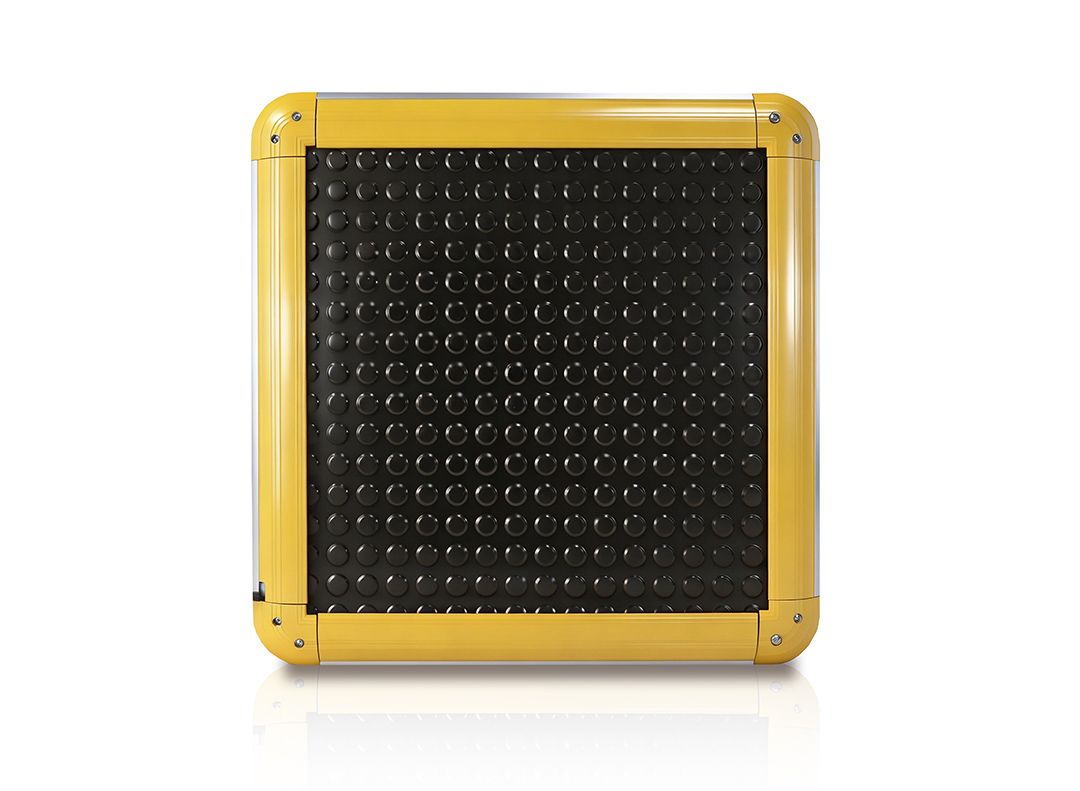
A Safety Floor Mat is a pressure-sensitive safety device designed for installation on the floor around machinery or other designated hazardous areas.
Its operating principle differs fundamentally from that of a safety fence. A safety fence uses a physical barrier to restrict personnel access. A Safety Floor Mat, by contrast, creates a defined sensing area and detects the presence of a person when sufficient pressure is applied to its surface.
The mat itself primarily performs the detection and switching function. It does not independently determine whether a machine should stop. The switching signal is normally integrated with a safety controller and the machine's safety circuit, which then carries out the appropriate safety response according to the system design.
This distinction is important for OEM engineering teams. When specifying a Safety Floor Mat, the product should be evaluated as one component of a complete machine safety solution rather than as an isolated stopping device.
The SC4 safety mat platform is designed around pressure detection and dedicated controller integration for industrial applications.
Why Use a Safety Floor Mat Around Industrial Equipment?
Many automated machines require regular human interaction even when their primary production processes are automated.
Operators may need to:
Load or unload materials
Monitor production
Adjust machine settings
Perform inspections
Clear process-related issues
Conduct maintenance activities
A fixed guarding structure can restrict physical access, but it may also make routine operator activities less convenient. A floor-mounted sensing solution can provide another way to define a protected zone while preserving access to designated working areas.
This is particularly relevant to automated production equipment and robotic work areas, where personnel may periodically approach the machine.
The basic operating sequence is:
Operator enters the protected floor area → pressure is detected → Safety Floor Mat generates a switching signal → safety controller processes the signal → machine safety circuit responds.
The final machine response depends on the design and safety architecture of the equipment.
Applications for Machine Operators and Automated Equipment
Safety Floor Mats can be considered for a range of industrial applications where personnel and machinery operate in close proximity.
Automated Machinery
Automated production equipment frequently requires operator intervention even when the production process itself is highly automated. A pressure-sensitive floor zone can be positioned around selected access areas according to the machine's safety design.
Robotic Equipment
Industrial robots may have substantial operating envelopes. A floor-based sensing area can be incorporated into the safeguarding strategy around areas where operators may approach the equipment.
Material Handling Equipment
Material-handling environments can impose additional mechanical demands on safety mats. Applications involving carts, industrial vehicles, or forklifts require careful evaluation of load capacity and construction.
Specialized Industrial Machines
Different machines may require different dimensions, materials, and environmental resistance. A safety mat designed for one application should not automatically be assumed to be suitable for another.
This is one reason OEM-oriented suppliers need to offer more than a fixed catalog of standard products.
Key Specifications for Safety Floor Mat Selection
Commercial buyers should evaluate several technical parameters before placing an OEM or bulk order.
Trigger Force
Trigger force determines the pressure required to activate the sensing function. The standard SC4 safety mat specifies an adult trigger force of approximately 30 kg.
For machine manufacturers, this specification should be considered together with the expected operator behavior and application environment.
Response Time
The SC4 standard safety mat specifies a response time of ≤30 ms.
However, the response of the complete machine safety system depends on more than the mat itself. Safety controller processing and the machine's own stopping characteristics also contribute to the overall response.
Load Capacity
A Safety Floor Mat installed in an industrial environment must withstand regular mechanical loading while maintaining its sensing function.
The standard SC4 model is specified with:
Dynamic load: 500 kg
Static load: 800 kg
Applications involving heavy equipment or concentrated wheel loads should be reviewed separately to determine whether a particular configuration is appropriate.
Environmental Conditions
Industrial floors can expose safety mats to repeated mechanical wear, oil, industrial fluids, and other contaminants.
SC4 product configurations are designed with considerations such as wear resistance, tear resistance, tensile performance, and resistance to certain industrial substances.
The standard model has an operating temperature range of approximately -10°C to +60°C.
Protection Rating
Protection requirements should be matched to the actual installation environment.
For the current product configuration:
Standard Safety Mat: IP65
Waterproof Safety Mat: IP67
This distinction should be retained during product selection and quotation. Buyers should confirm the protection rating of the specific model rather than applying one IP rating to the entire product range.
Standard Sizes and Custom Manufacturing
For OEM customers, dimensions are often one of the most important purchasing considerations.
The SC4 range includes standard sizes such as:
500 × 500 mm
1000 × 500 mm
1000 × 750 mm
1000 × 1000 mm
1500 × 1000 mm
2000 × 1000 mm
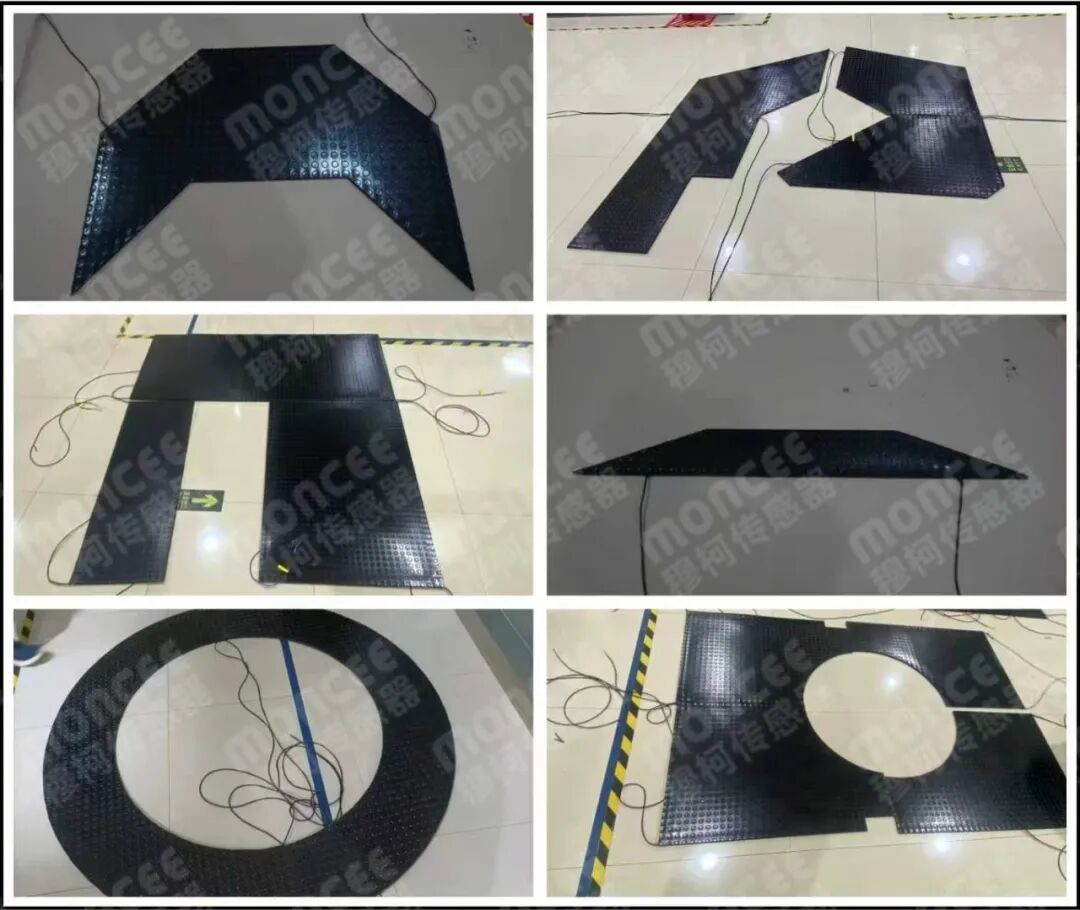
Customized dimensions can also be considered within the manufacturer's available production range.
One important product revision should be noted: the 500 × 250 mm SC4 standard size has been discontinued because its application range was relatively narrow. It should therefore not be presented as a current standard option in future quotations or product content.
Custom manufacturing becomes particularly valuable when an OEM machine has an irregular footprint, multiple operator access points, or a specially shaped protective area.
Multiple mats can also be configured together to create a larger sensing zone where required.
Why Customization Matters for OEM Buyers
For an OEM machine manufacturer, purchasing a safety mat is not simply a matter of selecting a length and width.
The supplier may need to understand:
The machine's overall dimensions
The hazardous-area layout
Operator access points
Expected mechanical loads
Floor and environmental conditions
Required cable configuration
Safety controller arrangement
Required protection rating
Quantity and repeat-order requirements
A supplier capable of handling these requirements can provide greater value than a supplier offering only standard stock dimensions.
For repeat OEM projects, consistent dimensions, stable specifications, reliable production capacity, and technical communication are particularly important because the same safety mat may need to be incorporated into multiple machine models.
What Should Industrial Buyers Look for in a Supplier?
When sourcing Safety Floor Mats for commercial projects, buyers should assess the supplier from both technical and manufacturing perspectives.
Important capabilities include:
Standard and customized dimensions
Application-specific product selection
Material and construction options
Cable and wiring configuration
Multi-mat integration
Safety controller compatibility
Installation guidance
Inspection and maintenance support
OEM production capability
Stable supply for recurring orders
Installation should also be treated as part of the overall solution. The product documentation includes guidance relating to mat fixing, cable connections, edge components, and post-installation safety-function testing.
For distributors and OEM customers, this technical support can help reduce engineering communication costs and simplify repeat procurement.
Building a Commercially Practical Machine Safety Solution
A Safety Floor Mat can provide a flexible method for detecting personnel presence around industrial equipment while maintaining access for normal machine operation.
Its function should be clearly understood: the mat establishes a pressure-sensitive zone and outputs a switching signal when activated. The actual stopping or prevention of hazardous machine operation depends on the coordination of the safety controller and the equipment's safety circuit.
For OEM machine builders and industrial buyers, the most effective sourcing approach is therefore to evaluate the Safety Floor Mat as part of the complete machine safety system.
The SC4 platform provides standard and customized configurations for industrial applications, with options for different dimensions and multi-mat arrangements. Combined with appropriate controller integration and application-specific engineering, it can support a range of automated machinery and industrial equipment projects.
For OEM manufacturing, machine safety upgrades, automation integration, and bulk purchasing, buyers can provide the machine layout, required protective area, operating environment, load requirements, and quantity forecast to a professional Safety Floor Mat manufacturer. This allows the supplier to evaluate the application and develop a product configuration that is technically appropriate and commercially suitable for long-term procurement.



 English
 简体中文
简体中文 Indonesian
 Previous:
 Back to list


