
In automated equipment, industrial doors, material-handling systems, and other machinery with moving components, preventing crushing, shearing, and trapping hazards requires more than simply adding a sensor. The sensing device must match the mechanical structure, movement direction, available installation space, and required response characteristics of the equipment.
A pressure-sensitive safety edge is designed for this purpose. It provides a flexible sensing interface along the edge of a moving component and can detect physical contact when the sensing profile is compressed. When properly integrated with a suitable safety control system, the Safety Edge can initiate a stop or other predefined protective response.
However, not every application requires the same profile. Different moving parts demand different dimensions, mechanical characteristics, and installation configurations. Understanding the available safety edge profiles is therefore an important step when designing or upgrading machine safety systems.
What Is a Pressure-Sensitive Safety Edge?
A pressure-sensitive safety edge is a flexible safety sensing component generally consisting of an outer insulating layer, an internal conductive sensing structure, and a mounting profile. When external pressure is applied to the sensing area, the internal switching structure changes state and sends a signal to the connected control system.
Compared with rigid safety devices, a Safety Edge can follow the contour of equipment and protect long or irregular contact zones. This makes it suitable for applications where a moving component approaches a fixed surface or where a physical contact event needs to be detected along an edge.
Typical applications include:
Automated industrial doors
AGV and AMR equipment
Automated machinery
Material-handling systems
Packaging machinery
Machine tools
Tire and rubber machinery
Moving mechanical covers and access structures
The profile must be selected according to the actual mechanical requirements rather than simply choosing the smallest or largest available model.
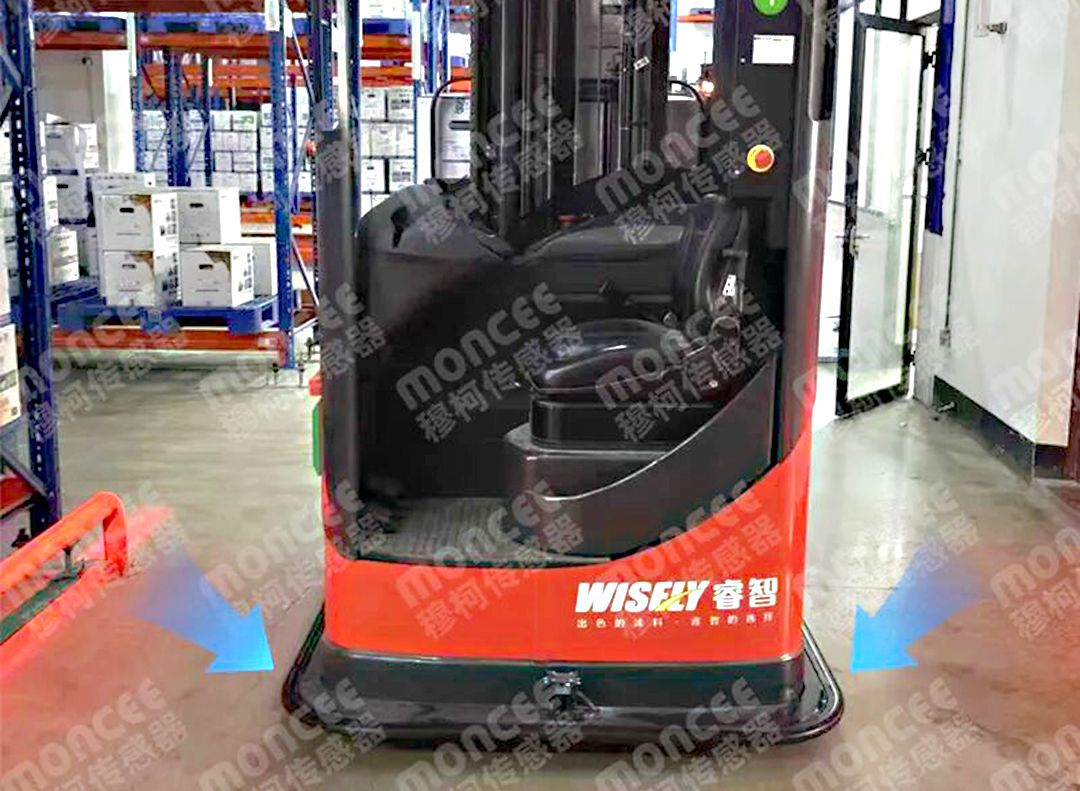
Compact Safety Edge Profiles for Space-Limited Equipment
Compact profiles are useful when installation space is restricted. Many automated machines have covers, doors, slides, or moving assemblies where only a limited amount of space is available for a protective sensing component.
A smaller pressure-sensitive safety edge can provide protection without significantly increasing the overall dimensions of the machine. This can be particularly important for compact automation equipment, robotic mechanisms, and machine enclosures.
For example, the product documentation includes a compact profile dimension of approximately 25 × 45 mm. A profile in this size range can be considered where the available mounting area is relatively narrow while sufficient sensing coverage is still required.
When selecting a compact profile, engineers should evaluate:
Available installation height and width
Required sensing area
Direction of mechanical movement
Expected contact conditions
Cable routing
Mounting profile compatibility
A compact design should not be selected solely because it occupies less space. The sensing characteristics and mechanical integration must also match the application.
Medium-Size Profiles for General Industrial Applications
Medium-sized safety edge profiles provide a practical balance between installation dimensions and sensing coverage. They are suitable for many industrial machines where more physical protection is required than a compact profile can provide.
The documentation includes a profile size of approximately 40 × 60 mm, representing a larger configuration suitable for applications with greater available installation space.
Medium profiles can be considered for:
Industrial machine doors
Automated access panels
Material-handling mechanisms
Moving machine guards
Larger automated equipment
Mechanical assemblies with wider contact zones
For industrial OEMs and system integrators, this type of profile can simplify standardization across different equipment models. A single general-purpose profile may be adaptable to multiple machine configurations while still allowing different lengths and cable arrangements.
Large Profiles for Greater Contact Coverage
Some moving parts require a larger sensing profile because of their physical dimensions or the nature of the hazard. Larger profiles can provide a more substantial sensing structure and may be appropriate where the protected edge has greater mechanical exposure.
One of the documented profile dimensions is approximately 54 × 56 mm. This larger configuration can be considered for equipment where installation space is available and a larger sensing interface is appropriate.
Large profiles may be useful on:
Large industrial doors
Heavy moving structures
Large automated machinery
Wide access panels
Material-handling equipment
Applications with significant moving-edge exposure
The key consideration is not simply profile size. Engineers should evaluate the complete relationship between the profile, moving component, stopping distance, mounting structure, and safety control system.
Why Profile Geometry Matters
The cross-sectional geometry of a safety edge directly affects how the component can be integrated into a machine.
A profile must fit securely onto the intended mounting surface while leaving the sensing area exposed to the potential contact zone. If the geometry is unsuitable, the edge may be difficult to install, may interfere with nearby machine components, or may not provide the intended sensing coverage.
This is why safety edge selection should begin with the mechanical design.
Before ordering a pressure-sensitive safety edge, engineers should determine:
Where the sensing edge will be installed.
How the moving part approaches the protected area.
How much installation space is available.
What length of sensing edge is required.
Where the cable should exit.
What Trigger Force is appropriate.
What Trigger Distance is required.
How the Safety Edge will connect to the safety control system.
This approach helps avoid treating the Safety Edge as an isolated component. Instead, it becomes part of the complete machine safety architecture.
Trigger Force and Trigger Distance Are Important Selection Parameters
Profile dimensions are only one part of the selection process. Two other important parameters are Trigger Force and Trigger Distance.
Trigger Force describes the force required to activate the sensing function. Trigger Distance relates to the amount of deformation or movement associated with activation.
These characteristics should be considered together with the machine's operating conditions. A moving door, machine cover, or automated mechanism may have a different contact behavior from a lightweight access panel.
Engineers should therefore consider:
Moving speed
Mechanical mass
Available stopping distance
Direction of contact
Expected contact location
Required response from the control system
The correct pressure-sensitive safety edge should be selected according to the actual application rather than based on physical dimensions alone.
Different Cable and Lead-Out Configurations
Cable routing is another practical consideration when integrating a Safety Edge into moving equipment.
Depending on the machine design, the cable may need to exit from a particular location to avoid interference with moving components, hinges, mounting brackets, or protective covers.
The product documentation supports different cable and lead-out configurations, allowing the safety edge to be adapted to different equipment layouts.
This is particularly valuable for OEM projects where the same basic safety edge may need to be installed on multiple machine models. Instead of redesigning the entire mechanical structure around a fixed cable arrangement, the sensing component can be configured to better suit the equipment.
Custom Lengths for OEM Applications
Industrial safety applications rarely have identical dimensions. One machine may require a short sensing edge, while another may need a much longer protected section.
For this reason, customized lengths can be important when purchasing pressure-sensitive safety edges for production equipment.
Custom-length solutions can help manufacturers:
Match the exact protected area
Reduce unnecessary excess material
Simplify installation
Improve cable management
Standardize safety components across machine models
Support OEM equipment configurations
For system integrators, providing the required length and cable configuration at the ordering stage can also reduce modifications during installation.
How to Choose the Right Safety Edge Profile
A practical selection process can be divided into five steps.
Step 1: Measure the installation area.
Determine the available width, height, and mounting space.
Step 2: Analyze the movement.
Identify the direction, speed, and travel path of the moving component.
Step 3: Define the protected zone.
Determine exactly where contact must be detected.
Step 4: Check sensing requirements.
Evaluate Trigger Force, Trigger Distance, profile dimensions, and required sensing length.
Step 5: Confirm system integration.
Check cable configuration, wiring requirements, and compatibility with the machine's safety control architecture.
This process helps engineers select a profile based on the actual application rather than relying on a generic safety edge specification.
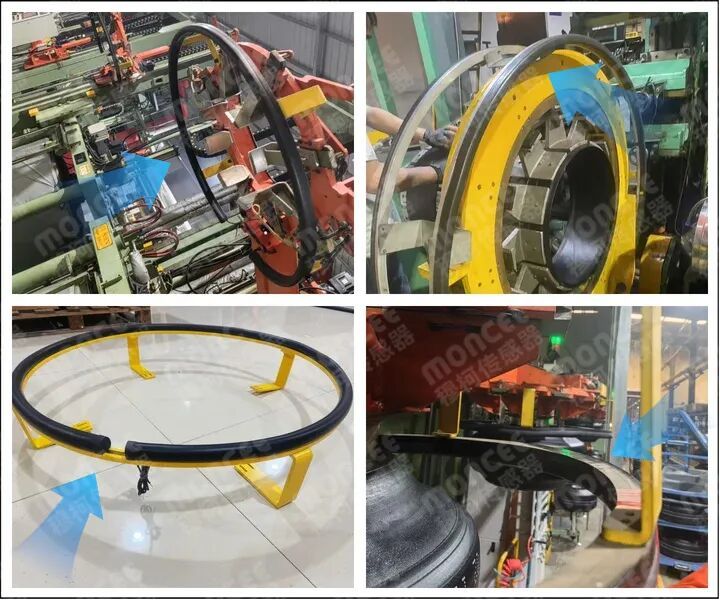
Working With a Safety Edge Manufacturer
For OEMs and industrial automation companies, purchasing a standard component is not always enough. Mechanical dimensions, cable locations, sensing length, and installation conditions can vary significantly between projects.
Working directly with an experienced Safety Edge manufacturer can simplify the selection process. The manufacturer can evaluate the application requirements and help determine a suitable profile, length, and configuration.
For projects involving AGVs, AMRs, automated doors, machine tools, packaging equipment, material-handling systems, or other moving machinery, providing basic technical information in advance can make the quotation and engineering process more efficient.
Useful information includes:
Machine or equipment type
Installation dimensions
Required Safety Edge length
Moving direction
Approximate operating conditions
Cable exit requirements
Trigger Force requirements
Trigger Distance requirements
Required wiring configuration
Conclusion
Selecting the right pressure-sensitive safety edge is fundamentally a mechanical and application-engineering decision. Compact, medium, and large profiles provide different options for integrating safety sensing into moving parts, while customized lengths and cable configurations allow the product to adapt to specific machine designs.
For equipment manufacturers and system integrators, the best starting point is to evaluate the protected area, available installation space, movement characteristics, Trigger Force, Trigger Distance, and connection requirements together.
If you are developing a new machine or upgrading an existing safety system, Moncee can support your project with different Safety Edge profile dimensions, lengths, and configuration options. Provide your application requirements, mounting dimensions, and cable arrangement, and our technical team can help identify a suitable pressure-sensitive safety edge solution for your equipment.
Request a sample, technical consultation, or quotation to begin developing the right Safety Edge configuration for your machine.



 English
 简体中文
简体中文 Indonesian
 Previous:
 Back to list


