
When designing an automated machine, the challenge is not simply to add a safety device. The real objective is to create a safety system that works naturally with the machine's operating process, operator access points, production layout, and control architecture.
This is where a Safety Sensor Mat can become an important part of an OEM machine design.
Installed on the floor around selected operating zones, a Safety Sensor Mat detects pressure from personnel entering a defined area and provides a switching signal to the machine's safety system. This approach is particularly useful where operators must repeatedly approach, load, unload, inspect, or interact with machinery.
For OEM manufacturers, however, selecting the right mat is only the beginning. The greater value comes from integrating the product correctly, selecting an appropriate configuration, and establishing a repeatable solution that can be used across multiple machine models.
Designing the Safety Zone Around the Machine
One of the first questions an engineer should ask is not "Which safety mat should we buy?" but rather:
Where does the machine require personnel detection?
The answer depends on the machine's operating process.
A robotic workcell may require protection around the robot's working area. A loading station may need detection directly in front of the machine. An automated production system may require several separate detection zones corresponding to different operator positions.
This makes Safety Sensor Mat particularly suitable for applications where the operator's normal working position is located close to potentially hazardous equipment.
Instead of treating the mat as a generic floor accessory, OEM engineers can incorporate it into the machine layout from the beginning.
The resulting design can take into account:
Operator working positions
Loading and unloading points
Machine access areas
Robot operating zones
Material handling routes
Maintenance access
Available floor space
This application-driven approach can produce a more practical safety arrangement than selecting a standard product only after the machine layout has already been finalized.
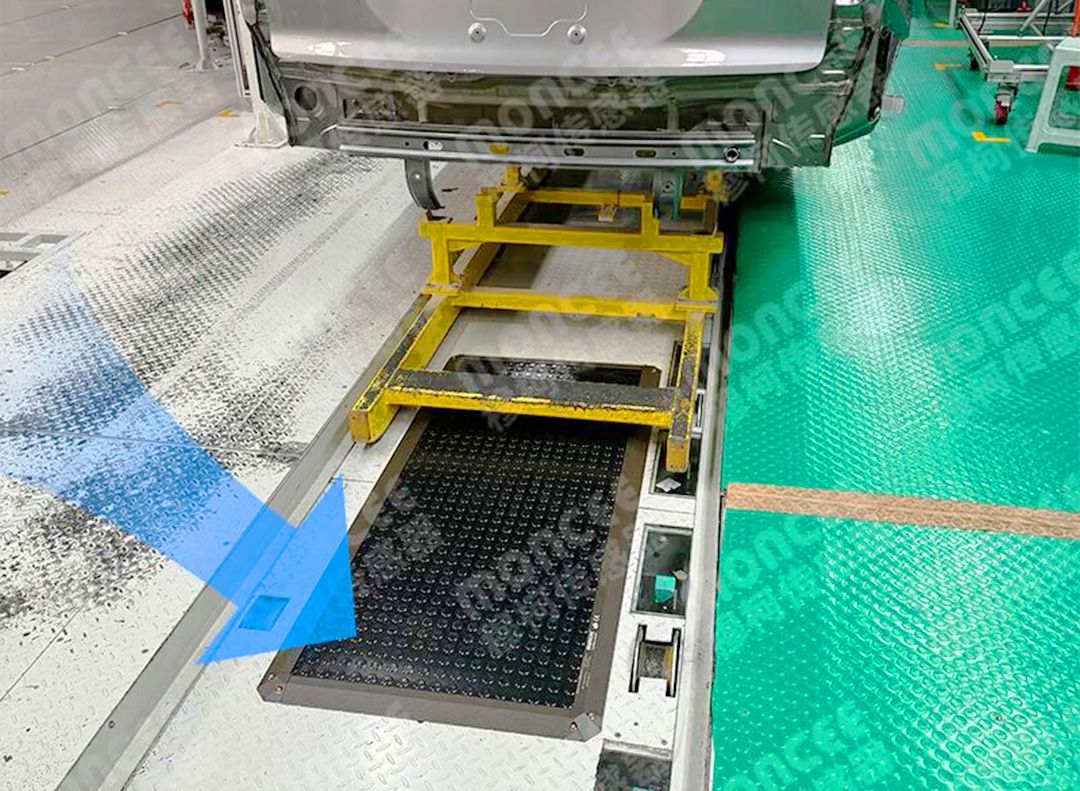
Safety Sensor Mat as Part of the Machine Control Architecture
Another important design consideration is the relationship between the sensing device and the machine's control system.
The Safety Sensor Mat is primarily a signal-generating component. When the defined pressure condition is detected, it changes its switching state.
The subsequent machine response is determined by the safety control architecture.
In a typical OEM design, the signal from the mat is connected to a suitable safety controller, which works together with the machine's safety circuit. The resulting safety function can then be used to initiate the required machine response.
This distinction is commercially important because it prevents an incorrect assumption that the mat itself independently performs the complete machine shutdown function.
For machine builders, it also means that the Safety Sensor Mat should be evaluated together with the electrical design rather than as an isolated mechanical component.
Installation Planning Can Affect Product Selection
A Safety Sensor Mat may appear straightforward to install, but the installation environment can significantly influence the final configuration.
Before ordering, OEM engineers should consider the available floor area, the desired detection coverage, the position of nearby equipment, cable routing, and the relationship between individual mats when multiple units are installed.
For larger machines, several mats can be combined to create a broader detection area. This can be more practical than attempting to find one unusually large product for every machine configuration.
A modular approach also gives machine builders greater flexibility when developing equipment with several different footprints.
For example, an OEM may use one configuration for a compact machine and a larger multi-mat arrangement for a higher-capacity version of the same machine family.
Choosing Between Standard and Customized Dimensions
Standard dimensions can simplify purchasing and shorten the engineering process because the product configuration is already established.
The current standard dimensions include:
500 × 500 mm
1000 × 500 mm
1000 × 750 mm
1000 × 1000 mm
1500 × 1000 mm
2000 × 1000 mm
However, machine designs do not always follow standard dimensions.
For OEM projects, customized dimensions can therefore be considered within the manufacturer's specified production range. This can be particularly useful when the machine has an unusual footprint or when the desired detection area cannot be efficiently covered using a single standard mat.
When replacing an existing installation or developing a new machine, buyers should therefore verify the current product configuration rather than automatically specifying an older size.
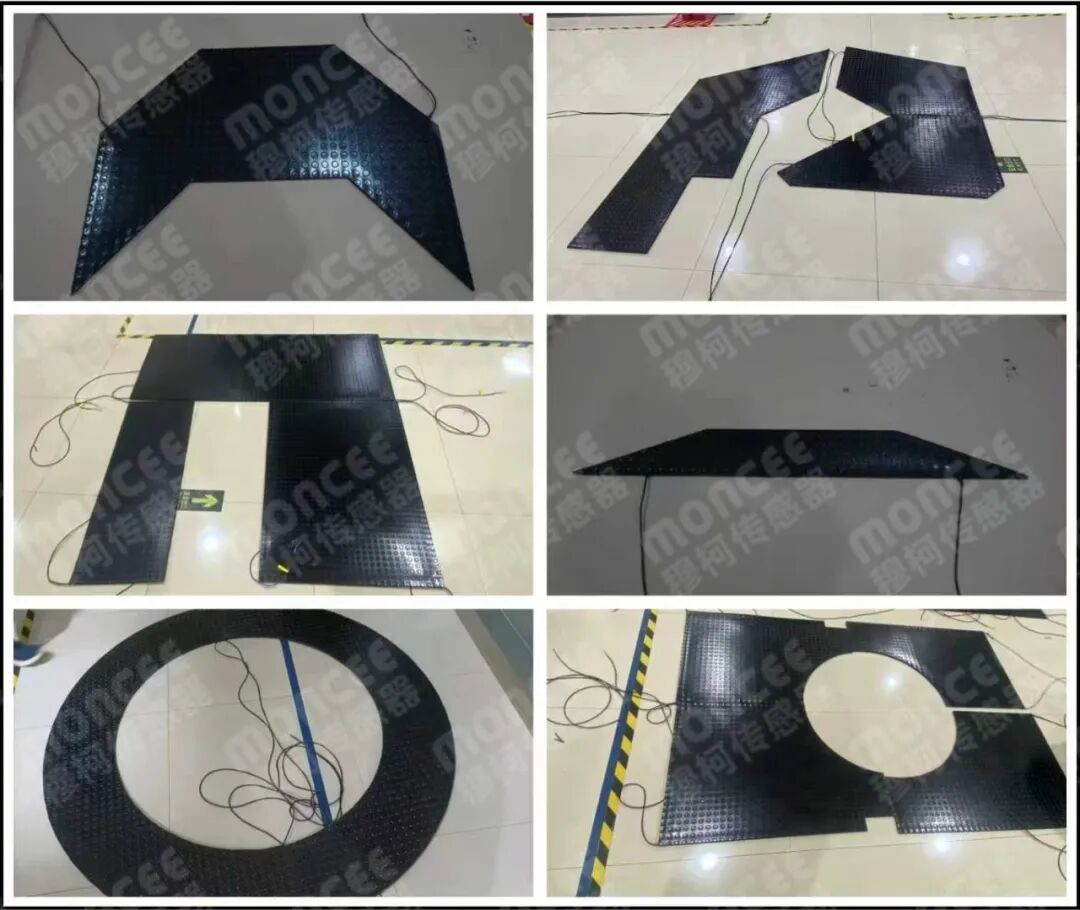
Specialized Applications Require a Different Selection Approach
Not every Safety Sensor Mat project is a conventional robotic-cell application.
The product documentation also covers specialized configurations such as forklift safety mats and car wash machine safety mats.
These applications demonstrate why the intended operating environment should be communicated to the manufacturer before quotation.
A car wash machine, for example, has very different environmental requirements from a dry indoor automation cell. The documented car wash configuration uses an approximately 800 × 200 mm format with a PUR surface, approximately 30 kg trigger force, and response time of ≤30 ms.
The point for OEM buyers is that application information can be as important as dimensional information when determining the appropriate product configuration.
Rather than sending only a requested size to a supplier, providing the equipment type and operating environment can help the manufacturer identify the relevant product option.
Environmental Protection Should Be Selected at the Project Stage
Floor-mounted safety equipment can encounter substantially different environmental conditions depending on the industry.
For the product range covered here, the Standard Safety Mat is specified at IP65, while the Waterproof Safety Mat is specified at IP67.
For OEM production, this distinction should ideally be resolved during the engineering stage.
A machine intended for a relatively dry indoor production environment may have different requirements from equipment operating in an environment where water or cleaning processes are present.
Selecting the appropriate protection level during product development can also prevent unnecessary redesign when the machine is later deployed to a different customer or industrial environment.
Why OEMs Should Think Beyond the Initial Purchase
For an individual replacement order, product price may appear to be the primary purchasing consideration.
For an OEM, the situation is different.
A safety component may be purchased repeatedly over several production cycles. As a result, consistency, availability, documentation, customization capability, and supplier communication can become just as important as the initial unit price.
OEM buyers should consider whether the supplier can support:
Repeat production
Multiple machine configurations
Standard and custom dimensions
Multi-mat installations
Application-specific configurations
Technical documentation
Long-term replacement requirements
Bulk purchasing
A supplier capable of supporting these requirements can become part of the machine builder's sourcing strategy rather than simply a one-time component vendor.
Standardizing Safety Sensor Mats Across Machine Models
One of the strongest commercial advantages of a flexible Safety Sensor Mat solution is the possibility of standardization.
Suppose an equipment manufacturer produces several versions of the same machine platform. Rather than developing an entirely different safety approach for each model, the engineering team may establish a common product family consisting of several standard mat configurations.
A compact machine could use a single 500 × 500 mm mat, while a larger machine could use multiple 1000 × 500 mm or larger mats.
This approach can simplify:
Engineering: fewer safety components need to be evaluated repeatedly.
Purchasing: standard configurations can be ordered in volume.
Inventory: commonly used models can be stocked for production and replacement.
After-sales service: replacement requirements become easier to identify.
OEM customization: additional configurations can be introduced when a machine requires a different footprint.
For manufacturers producing equipment at scale, this type of standardization can have a meaningful impact on procurement efficiency.
Building a Better OEM Sourcing Specification
When requesting a quotation for Safety Sensor Mat, OEM buyers can improve the sourcing process by providing more than a product name.
A useful inquiry should include:
Required mat dimensions or approximate detection area
Machine type and application
Operator access points
Indoor or outdoor operating environment
Expected loading conditions
Whether multiple mats are required
Required protection level
Electrical integration requirements
Estimated order quantity
Whether the project requires recurring supply or customized production
Providing these details allows the manufacturer to respond with a configuration that is better matched to the application rather than simply quoting the nearest standard size.
A Practical OEM Solution for Machine Safety Projects
The role of a Safety Sensor Mat extends beyond detecting pressure under an operator's feet. For machine builders, it can become a configurable component within a broader machine safety strategy.
Its value is particularly clear when the machine requires defined floor-based detection zones, regular operator access, multiple sensing areas, or a product configuration that can be standardized across a series of machines.
With standard sizes, custom dimensions, multi-mat configurations, specialized application options, and IP65/IP67 product choices, the Safety Sensor Mat range can support different OEM requirements without forcing every machine design into exactly the same physical arrangement.
For manufacturers, integrators, distributors, and industrial procurement teams, the next step is to match the mat configuration to the actual machine.
Provide the machine type, required detection area, dimensions, environmental conditions, integration requirements, and expected quantity when requesting a quotation. These details give the supplier a practical basis for recommending the appropriate Safety Sensor Mat configuration and preparing an OEM or bulk-supply proposal.



 English
 简体中文
简体中文 Indonesian
 Previous:
 Back to list


