
When purchasing an industrial Safety Mat, price is naturally one of the first factors considered by OEMs, machine builders, automation integrators, and industrial distributors. However, comparing Safety Mat prices is not as simple as comparing the unit price of two products that appear similar.
Dimensions, construction, protection level, customization, quantity, application requirements, and long-term supply conditions can all affect the final quotation. For buyers ordering Safety Mats for industrial machinery, understanding these cost factors can make supplier communication more efficient and help avoid unexpected costs during production or replacement.
This guide explains what typically influences Safety Mat price, how bulk orders are quoted, and what information buyers should provide when requesting a supplier quotation.
What Determines Safety Mat Price?
The first point to understand is that an industrial Safety Mat does not have one universal price.
A small standard Safety Mat and a large customized Safety Mat may have very different production requirements. Likewise, a standard industrial application may require a different configuration from equipment operating in a wet or frequently cleaned environment.
The main quotation factors normally include:
Safety Mat dimensions
Product construction and materials
Protection level
Required technical performance
Standard or customized configuration
Quantity
Special application requirements
Packaging and shipping requirements
Long-term OEM supply arrangements
For this reason, buyers should evaluate the complete specification instead of selecting a supplier solely according to the lowest initial unit price.
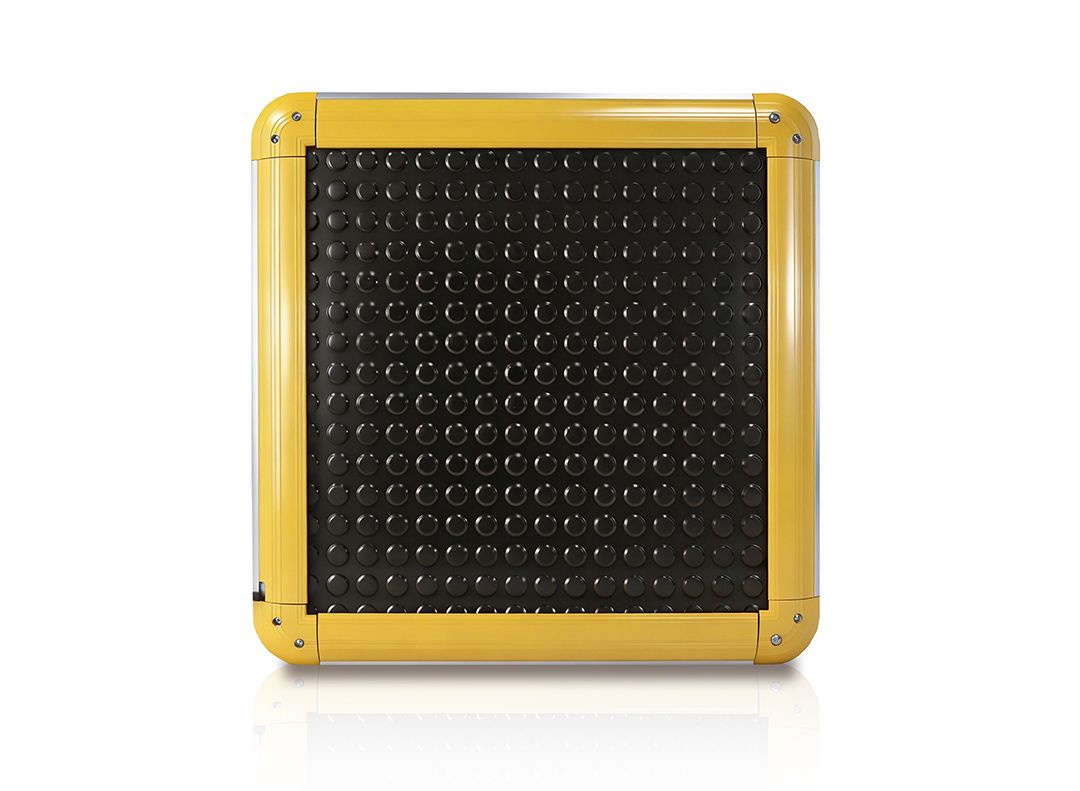
1. Size Is One of the Most Direct Cost Factors
Safety Mat dimensions have a direct influence on material consumption and production requirements.
Standard SC4 Safety Mat dimensions include:
500 × 500 mm
1000 × 500 mm
1000 × 750 mm
1000 × 1000 mm
1500 × 1000 mm
2000 × 1000 mm
These standard dimensions can be useful for OEMs because they provide established options for common machine layouts and can simplify repeat purchasing.
When the required working area does not match a standard dimension, customized sizes may also be available within the manufacturer's specified range.
For buyers, the practical question is therefore not simply "What is the price per mat?" but rather "What size and configuration actually meet the machine's safety-zone requirements?"
Selecting an unnecessarily large Safety Mat can increase the project cost, while selecting one that is too small may leave part of the intended detection area uncovered.
2. Technical Specifications Also Influence the Quotation
Price should always be considered together with the required performance.
For example, the standard SC4 Safety Mat is specified with an adult trigger force of approximately 30 kg and a response time of ≤30 ms. Its documented load performance includes approximately 500 kg dynamic load and 800 kg static load.
These specifications are relevant when evaluating whether a particular Safety Mat is appropriate for an industrial machine.
A supplier quotation should therefore identify the product specification rather than providing only a price figure.
For OEM procurement, it is useful to confirm:
Trigger force
Response time
Dynamic load
Static load
Operating temperature
Dimensions
Protection rating
Output configuration
Installation requirements
This approach makes quotations from different suppliers easier to compare on a like-for-like basis.
3. Protection Level Can Change the Product Configuration
The operating environment is another important cost consideration.
A standard Safety Mat has an IP65 protection rating. For applications requiring greater protection against water ingress, a Waterproof Safety Mat with an IP67 rating may be more appropriate.
The difference is commercially important because buyers should not automatically request the highest available protection level for every machine.
Instead, the required protection level should be determined by the actual environment.
For example, equipment installed in a normal indoor manufacturing area may have different requirements from machinery exposed to frequent washing, water, or other wet operating conditions.
Specifying the environmental requirement at the quotation stage helps suppliers recommend the appropriate configuration and reduces the risk of changing the product after an order has already been placed.
4. Customization Can Affect the Final Safety Mat Price
OEM projects frequently involve non-standard machine layouts.
A customized Safety Mat may be required when:
The machine has an unusual operator access area;
Standard dimensions do not match the required coverage;
Multiple mats must be combined;
The installation space has specific dimensional restrictions;
The equipment requires a specialized configuration.
Customization may affect production planning, tooling, material usage, inspection, packaging, and lead time.
However, customization does not necessarily mean that an entire product must be developed from scratch. For many OEM projects, the more efficient approach is to start with an established Safety Mat platform and adapt the dimensions or configuration to the machine application.
This is why buyers should provide the required dimensions and application information before asking for a final price.
5. Multi-Mat Projects Should Be Quoted as a Complete Solution
Large machine guarding areas may require several Safety Mats installed together rather than one oversized product.
A multi-mat configuration can provide flexible coverage for larger operator or access zones while allowing the machine layout to be divided into practical sections.
For purchasing departments, this means the quotation should consider the complete configuration, including the number of mats and their individual dimensions, rather than evaluating each unit independently.
The supplier should also confirm the installation and connection arrangement so that the purchasing team understands exactly what is included in the quotation.
For OEM production, standardizing a repeatable multi-mat configuration can also make future orders easier to process.
6. Special Applications May Require Different Pricing
Not every Safety Mat application is a conventional factory-floor installation.
The product documentation includes specialized configurations for applications such as forklift safety and car wash machines.
For example, a documented car wash Safety Mat configuration uses an approximately 800 × 200 mm format with a PUR surface, an approximately 30 kg trigger force, and a response time of ≤30 ms.
Applications with unusual environmental or mechanical requirements may therefore need to be quoted separately.
When requesting a price, buyers should describe the actual application instead of simply specifying "industrial Safety Mat." This allows the supplier to determine whether a standard product or specialized configuration is more appropriate.
7. Quantity Has a Major Role in Bulk Ordering
For OEMs and distributors, purchasing quantity can significantly affect the commercial structure of a quotation.
A supplier may quote differently for:
One sample unit;
Small engineering batches;
Trial production quantities;
Regular monthly orders;
Large OEM production orders;
Long-term annual purchasing agreements.
Bulk purchasing can provide opportunities for more efficient production and packaging arrangements. However, buyers should ask suppliers to clearly separate sample pricing, batch pricing, and long-term supply pricing.
For recurring orders, it can also be useful to discuss forecast quantities rather than negotiating every individual purchase order independently.
8. What Should Be Included in a Supplier Quote?
A professional Safety Mat quotation should provide more than a single unit price.
For OEM procurement, buyers should ideally request:
Product model;
Safety Mat dimensions;
Quantity;
Technical specifications;
Protection rating;
Customization details;
Packaging;
Lead time;
Sample availability;
Bulk-order pricing;
Replacement or repeat-order conditions;
Shipping terms.
This information creates a clearer commercial comparison between suppliers and reduces the possibility of hidden differences between apparently similar quotations.
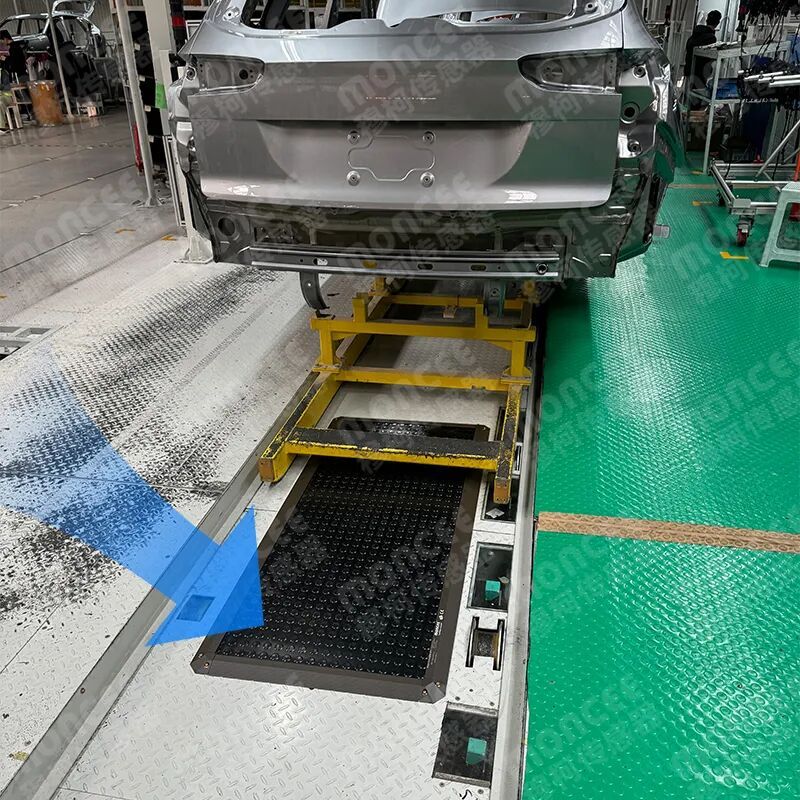
9. Choosing a Supplier for Long-Term Purchasing
For industrial buyers, the lowest initial Safety Mat price is not necessarily the only commercial consideration.
If a machine manufacturer purchases the same Safety Mat repeatedly, consistency becomes increasingly important. Stable dimensions, specifications, production capability, replacement availability, and communication can all influence the total purchasing experience.
This is particularly relevant for OEMs supplying multiple machine models.
A supplier capable of supporting standard products, customized dimensions, multi-mat configurations, and specialized applications can provide greater flexibility as equipment requirements change.
For distributors, consistent product specifications and repeat-order support are similarly important because customers may need replacement Safety Mats months or years after the original installation.
Get a Safety Mat Quote Based on Your Actual Requirements
The most effective way to obtain an accurate Safety Mat price is to provide the supplier with the complete application requirements rather than asking only for a unit price.
For a quotation, prepare the required Safety Mat dimensions, quantity, operating environment, protection level, application type, and any special customization requirements. If the Safety Mat will be integrated into an automated machine, also provide relevant information about the safety controller and machine safety circuit.
Based on these details, the supplier can determine whether a standard Safety Mat, Waterproof Safety Mat, customized size, multi-mat configuration, or specialized solution is appropriate.
For OEMs, automation integrators, machinery manufacturers, and industrial distributors, this quotation-based approach makes purchasing more transparent and creates a better foundation for long-term supply.
If you are sourcing Safety Mats for industrial machinery, provide your required dimensions, application, quantity, and working environment to obtain a project-specific quotation. Standard models and customized configurations can be evaluated according to your equipment requirements, helping you move from a basic product-price comparison toward a practical, repeatable OEM purchasing solution.



 English
 简体中文
 Indonesian
 Previous:
 Back to list


