
When an engineer searches for “where to buy industrial safety bumpers near me,” the goal is usually more specific than simply finding a nearby supplier. For industrial automation projects, purchasing a safety bumper involves finding a product that fits the equipment, meets the required sensing characteristics, integrates with the control system, and can be supplied reliably for production.
Industrial safety bumpers, safety edges, and pressure-sensitive sensing profiles are used on equipment such as AGVs, AMRs, automated doors, material-handling systems, packaging machinery, machine tools, and other moving industrial equipment. The right supplier should therefore provide more than a standard product listing. Technical selection, configuration, customization, samples, and ongoing supply can all be important.
What Is an Industrial Safety Bumper?
An industrial safety bumper is a pressure-sensitive protective component designed to detect physical contact or compression. When the bumper is actuated, it can provide a signal to an appropriate control system so that the machine can initiate a predefined response.
In many industrial applications, the bumper or Safety Edge combines a flexible outer structure with an internal sensing mechanism and a mounting profile. This allows the sensing component to be positioned along an edge or surface where contact may occur.
Typical applications include:
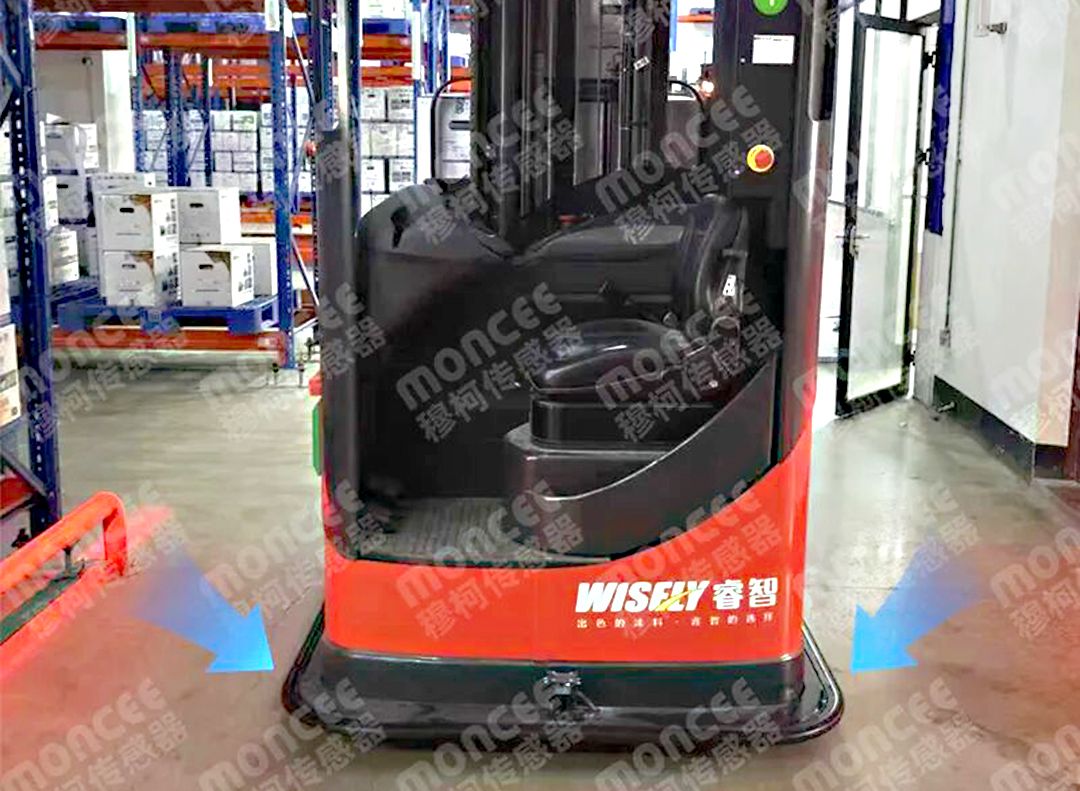
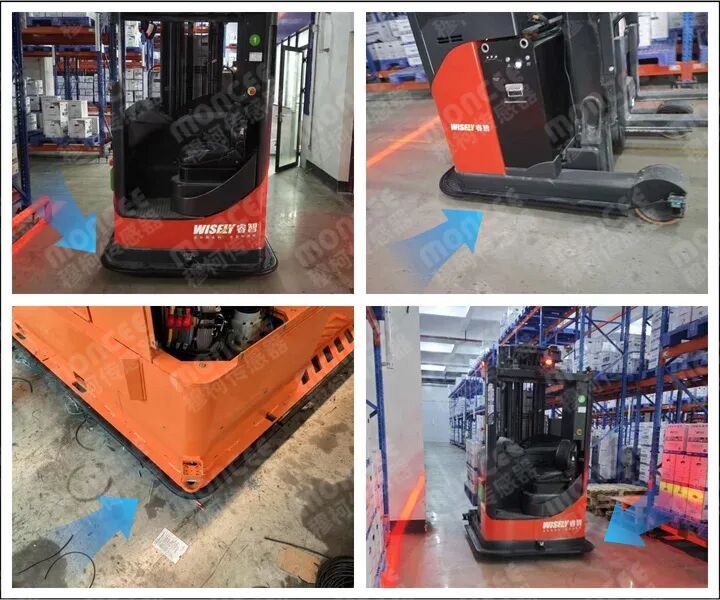
AGV and AMR collision detection;
Automated industrial doors;
Moving machine components;
Material-handling equipment;
Packaging machinery;
Automated production equipment;
Machine guarding applications.
Because every machine has different dimensions and operating conditions, selecting an industrial safety bumper should begin with the application rather than simply searching for the nearest seller.
Is Buying Locally Always the Best Option?
A local supplier can offer advantages such as easier communication, faster shipping, and convenient technical support. However, industrial buyers should distinguish between local availability and technical suitability.
A nearby distributor may have a standard safety bumper in stock, but that product may not match the required profile, Trigger Force, Trigger Distance, length, cable configuration, or mounting structure.
For OEM applications, this can create additional engineering work. The machine may need to be redesigned around the available product rather than selecting a product that was originally designed for the machine.
For this reason, many industrial buyers search for “near me” but ultimately choose a manufacturer or specialized supplier that can provide the required technical configuration, even when production is located in another region.
What Should You Check Before Buying?
Before requesting a quotation, prepare the basic information about the application.
First, determine where the industrial safety bumper will be installed. Is it on the front of an AGV, around an automated door, along a machine edge, or on another moving component?
Next, consider the physical dimensions. The required length, profile size, mounting structure, and available installation space can significantly affect product selection.
Two technical characteristics deserve particular attention:
Trigger Force
Trigger Force refers to the force associated with activating the sensing function. The appropriate value depends on the equipment, contact conditions, mechanical structure, and intended application.
A bumper intended for a compact automated vehicle may have different requirements from one installed on a large industrial door or machine.
Trigger Distance
Trigger Distance describes the sensing displacement associated with actuation. It should be considered together with the machine's movement, stopping behavior, and available deformation space.
For an OEM project, evaluating Trigger Force and Trigger Distance during the design stage can help avoid problems during installation and commissioning.
Check the Electrical Configuration
Mechanical compatibility is only part of the purchasing decision.
The industrial safety bumper also needs to work with the machine's control architecture. Buyers should confirm the required wiring configuration, cable arrangement, connection method, and compatibility with the intended safety controller or control system.
Depending on the product and application, different NO/NC configurations or cable arrangements may be available.
For system integrators, providing the control-system requirements to the supplier before ordering can help prevent unnecessary modifications after delivery.
Look for Custom Industrial Safety Bumpers
If your application requires a specific length, profile, mounting arrangement, or cable configuration, a customizable product can be more practical than a generic off-the-shelf bumper.
Customization is particularly valuable for OEM manufacturers producing:
AGVs and AMRs;
Automated doors;
Logistics equipment;
Packaging machines;
Material-handling machinery;
Industrial automation systems;
Special-purpose machines.
A professional manufacturer can review the installation area and application requirements before recommending a suitable configuration.
For larger projects, this also makes it easier to establish a repeatable product specification for future production orders.
Local Supplier or Direct Manufacturer?
When searching for “where to buy industrial safety bumpers near me,” industrial buyers should compare several purchasing models.
A local distributor may be suitable when standard products are required quickly. However, a direct manufacturer can be more appropriate when the project requires customization, technical consultation, samples, or repeated OEM supply.
Working directly with a manufacturer can also simplify communication between the engineering and purchasing teams. Instead of explaining technical requirements through several supply-chain levels, customers can provide equipment drawings and application information directly to the product engineering team.
For international OEM customers, this can be especially useful when the project requires multiple product lengths, different configurations, or continuing production support.
Ask the Supplier These Questions
Before placing an order, ask the supplier:
Which industrial safety bumper profile is suitable for the application?
What Trigger Force is available?
What is the Trigger Distance?
Can the product be supplied in the required length?
Is custom profiling available?
What mounting options are available?
Which cable and wiring configurations can be supplied?
Can samples be provided for testing?
Can the product be customized for OEM production?
What information is required to prepare a quotation?
A supplier that can answer these questions clearly is generally better positioned to support an engineering project than a seller that only provides a basic product price.
Why Work With a Specialized Safety Edge Manufacturer?
An industrial safety bumper is a functional component within a machine, not simply a rubber or plastic protective strip.
A specialized manufacturer can help customers consider the relationship between profile design, sensing characteristics, mounting structure, electrical connection, and machine operation.
For OEMs and system integrators, this technical support can be valuable from the initial sample stage through product customization and volume production.
The most efficient purchasing process is often to provide the supplier with the machine drawing, installation dimensions, expected contact direction, operating conditions, wiring requirements, and estimated order quantity.
Where to Buy Industrial Safety Bumpers Near Me?
If you are searching for an industrial safety bumper supplier near you, start by identifying the technical requirements of your machine rather than choosing solely according to geographical distance.
A reliable purchasing decision should consider product configuration, Trigger Force, Trigger Distance, mounting method, electrical requirements, customization capability, sample support, and long-term supply capability.
For AGV, AMR, industrial door, machinery, and automation projects, a manufacturer capable of supporting both standard and customized Safety Edge solutions can provide a more practical purchasing route than a generic industrial parts supplier.
If you are currently sourcing an industrial safety bumper, provide your equipment type, installation dimensions, required bumper length, operating conditions, expected contact direction, wiring requirements, and target quantity. With this information, a professional Safety Edge manufacturer can evaluate the application, recommend a suitable configuration, arrange samples, and provide a quotation for your project.



 English
 简体中文
 Indonesian
 Previous:
 Back to list


