
For machine builders, automation companies, distributors, and industrial equipment manufacturers, purchasing an Industrial Safety Mat is often part of a larger equipment project rather than a simple one-time product purchase. The right manufacturing partner needs to provide more than a standard safety mat. OEM customers may require specific dimensions, multiple configurations, application-specific designs, stable repeat production, and reliable support for future orders.
Choosing an Industrial Safety Mat manufacturer with suitable production and customization capabilities can therefore simplify equipment development, procurement, and long-term supply management.
Why Work Directly With an Industrial Safety Mat Manufacturer?
Working with a manufacturer can give OEM and wholesale buyers a more direct route to product specifications and production planning.
Instead of selecting from a fixed catalog, customers can discuss their actual machine requirements, installation area, quantity, and application conditions with the manufacturer. This is particularly useful when standard products need to be adapted to a specific machine design.
A suitable manufacturer should be able to support several stages of the purchasing process, including:
Standard Industrial Safety Mat selection
Custom dimensions
Multi-mat configurations
Application-specific solutions
Sample and initial orders
Wholesale purchasing
Bulk production
Repeat orders and replacement requirements
For companies supplying machinery to different customers or markets, this manufacturing relationship can also help establish standardized safety mat specifications across multiple machine models.
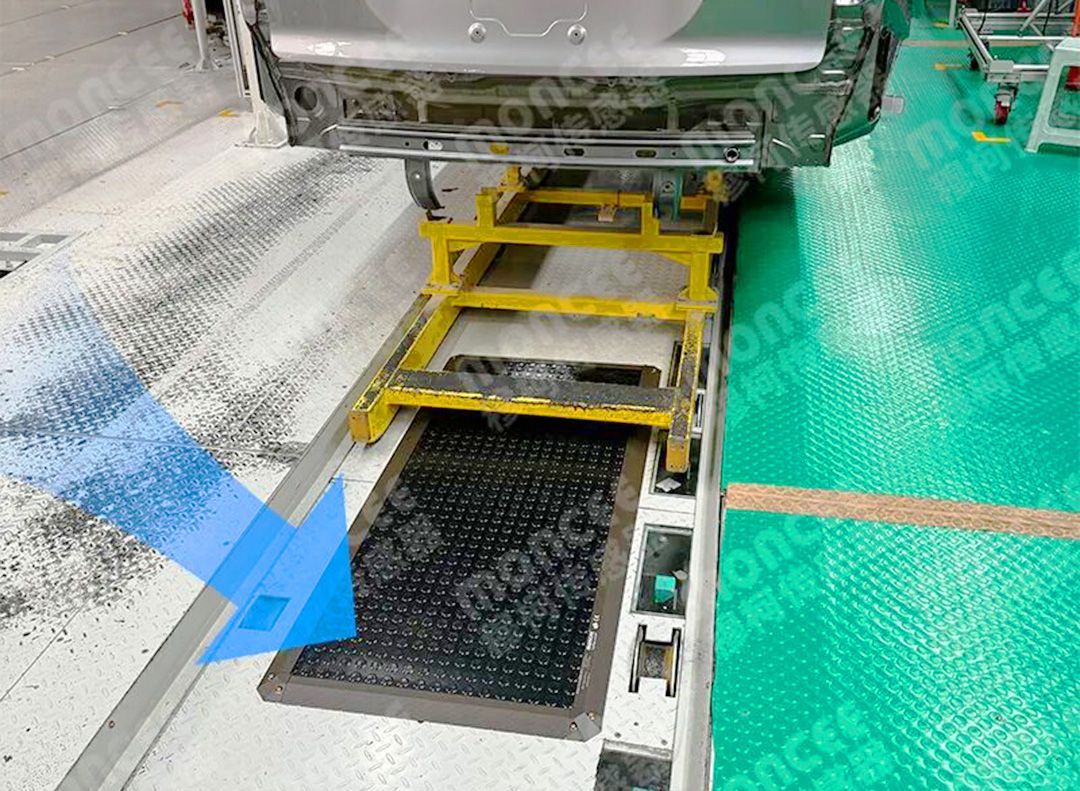
Standard Industrial Safety Mat Sizes for OEM Projects
Standard dimensions are important for OEM customers because they can shorten the product selection process and simplify repeat purchasing.
The SC4 Industrial Safety Mat is available in several standard dimensions, including:
500 × 500 mm
1000 × 500 mm
1000 × 750 mm
1000 × 1000 mm
1500 × 1000 mm
2000 × 1000 mm
These options allow machine designers to select a suitable detection area without immediately moving to a custom production request.
However, the physical layout of industrial equipment is not always standardized. When the available installation space or hazardous area does not correspond to a standard size, custom dimensions can be considered according to the manufacturer's available production range.
This gives OEM customers a practical balance between standardization and design flexibility.
OEM Customization Should Start With the Machine Design
An Industrial Safety Mat should be selected according to the machine rather than treated as an independent accessory.
Before requesting an OEM quotation, machine builders can provide basic information such as:
Required mat dimensions
Installation location
Hazardous area to be monitored
Machine type
Operator working area
Environmental conditions
Required protection level
Estimated order quantity
Multi-mat requirements
Integration requirements
With this information, the manufacturer can evaluate whether a standard model is appropriate or whether a customized configuration would be more suitable.
This approach is particularly valuable during new machine development, because the safety mat dimensions and installation area can be considered alongside the machine layout rather than being added after the mechanical design has already been finalized.
Technical Specifications Matter in Bulk Purchasing
For wholesale and bulk buyers, technical specifications should be confirmed before the purchase order is finalized.
The SC4 Industrial Safety Mat has an adult trigger force of approximately 30 kg and a response time of ≤30 ms. Its stated dynamic load is approximately 500 kg, while the static load is approximately 800 kg. The standard operating temperature range is approximately -10°C to +60°C.
These parameters provide an important technical reference for OEM engineering teams when determining whether a product configuration fits the intended operating environment.
For repeat purchasing, maintaining a defined specification is also useful. Once an OEM has approved a particular configuration for a machine model, the same technical requirements can be used as the reference for subsequent production orders.
Choose the Protection Level According to the Working Environment
Industrial equipment may operate in very different environments, so protection requirements should be considered before placing a bulk order.
The standard Industrial Safety Mat provides IP65 protection. For applications requiring a higher level of water protection, a Waterproof Safety Mat with IP67 protection is available.
For manufacturers supplying equipment to different industries, selecting the appropriate protection level during the product-development stage can help avoid unnecessary changes after production.
For example, a standard configuration may be appropriate for a general factory environment, while equipment exposed to more demanding cleaning or wet conditions may require a waterproof configuration.
Multi-Mat Solutions for Larger Machine Areas
Large automated equipment may require a safety detection area that cannot be covered by one mat. In such cases, multiple Industrial Safety Mats can be arranged together to cover the required floor area.
For OEM projects, the important issue is not simply the number of mats purchased. The complete configuration should be considered, including:
Number of mats
Individual dimensions
Physical arrangement
Total detection area
Connection requirements
Installation method
Safety controller integration
Machine safety circuit
The Industrial Safety Mat itself primarily provides a switching signal when its pressure-sensitive area is activated. The subsequent machine shutdown or prevention of operation depends on how that signal is integrated with the safety controller and the machine's safety circuit.
This distinction is important for engineering teams when designing the complete machine safety architecture.
Specialized Industrial Applications
An experienced Industrial Safety Mat manufacturer may also support configurations developed for specific equipment.
Forklift-related applications are one example where the safety mat may need to be selected according to the movement and operating area of the equipment.
Car wash machinery is another specialized application. A documented configuration for this type of equipment uses an approximately 800 × 200 mm mat with a PUR surface, an adult trigger force of approximately 30 kg, and a response time of ≤30 ms.
Specialized applications demonstrate why OEM customers may benefit from communicating directly with a manufacturer. Rather than forcing a general-purpose product into an unsuitable application, the customer can discuss the actual operating requirements and identify an appropriate configuration.
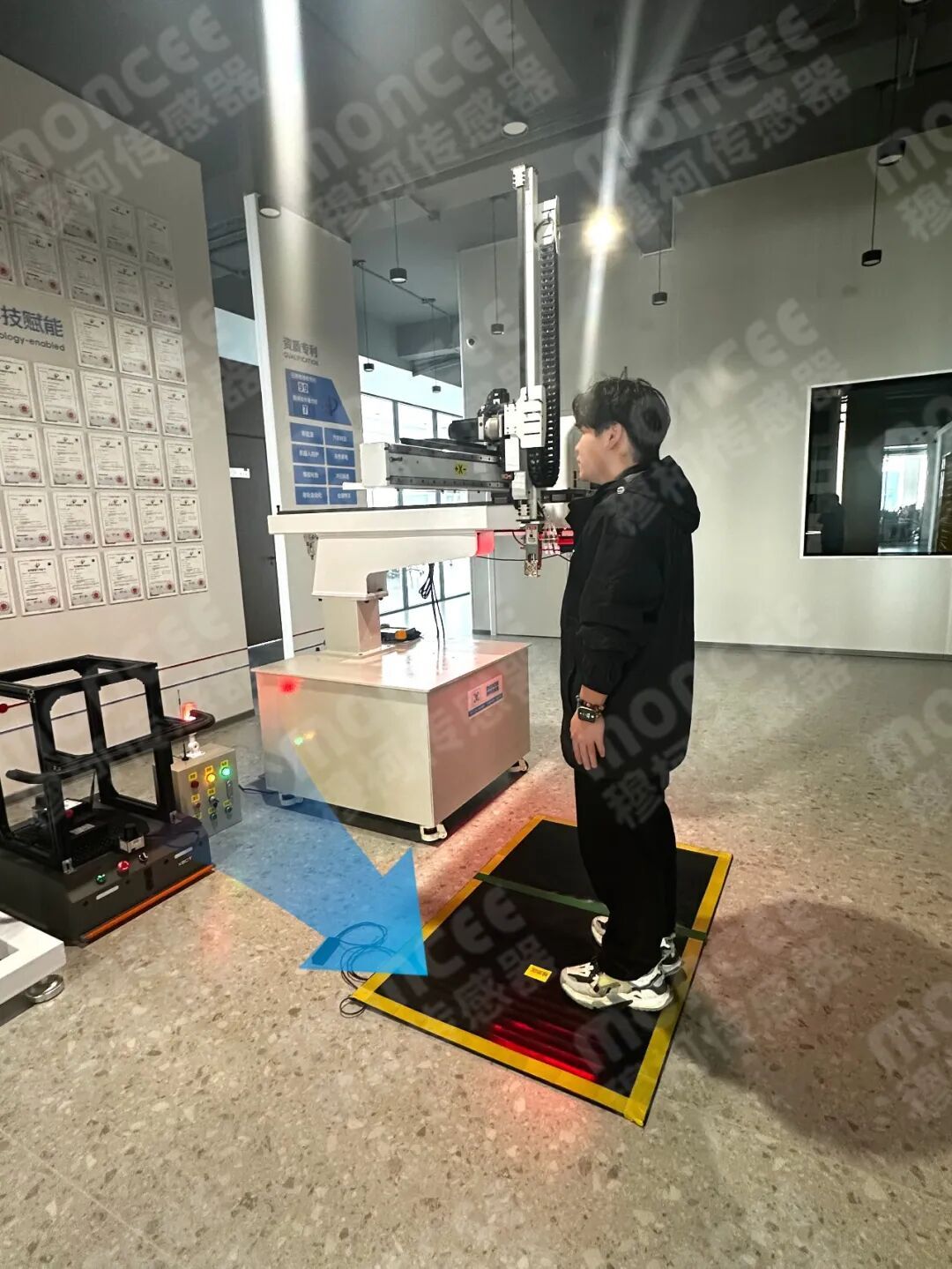
Wholesale and Bulk Orders Require Production Planning
For distributors and OEM customers, wholesale purchasing is not simply about ordering a larger quantity.
Bulk orders may involve multiple machine models, different dimensions, scheduled production batches, or long-term replacement requirements. A manufacturer should therefore understand the customer's purchasing pattern rather than treating every order as an isolated transaction.
A practical bulk-order process can include:
Confirming the approved product specifications
Determining standard and custom dimensions
Confirming the required protection level
Reviewing multi-mat configurations when necessary
Establishing the required quantity
Planning production according to the purchasing schedule
Maintaining the agreed specifications for repeat orders
This approach can make procurement more predictable for companies with recurring Industrial Safety Mat requirements.
Building a Long-Term OEM Supply Program
For machine manufacturers, the most useful supplier relationship is often one that continues beyond the first purchase.
After a safety mat configuration has been evaluated and approved, the OEM can use that specification as a standard purchasing reference. Future orders can then follow the established model, while replacement requirements can be managed using the same product information.
For companies producing similar machines in volume, this can reduce repeated technical evaluation and simplify communication between engineering, purchasing, production, and suppliers.
It also creates a clearer basis for forecasting future demand and arranging wholesale or bulk orders.
Find the Right Industrial Safety Mat Manufacturing Solution
Whether you are purchasing a small initial batch or planning long-term OEM supply, the most efficient starting point is to provide the manufacturer with your actual project requirements.
You can send the required dimensions, quantity, machine type, installation area, operating environment, protection level, and any custom or multi-mat requirements.
Based on these details, an Industrial Safety Mat manufacturer can evaluate the appropriate standard or customized configuration and provide a quotation for your project.
If you are looking for an Industrial Safety Mat manufacturer for OEM production, wholesale purchasing, or bulk orders, contact us with your application requirements. We can discuss suitable product configurations, custom dimensions, and long-term supply solutions for your industrial equipment projects.



 English
 简体中文
 Indonesian
 Previous:
 Back to list


