
In modern manufacturing environments, machine guarding is no longer limited to fixed barriers, safety fences, or access doors. Where operators need to work close to automated equipment, a Machine Safety Mat can provide an additional layer of protection by detecting a person’s presence within a defined floor area and transmitting a safety signal to the machine control system.
For machine builders, automation integrators, maintenance teams, and industrial distributors, selecting a Machine Safety Mat is not simply a matter of choosing a suitable size. The more important questions are how the mat fits the machine layout, how it interfaces with the safety circuit, whether its construction matches the operating environment, and how easily an existing mat can be replaced without disrupting production.
Based on the SC4 Safety Mat product documentation, this article examines these considerations from a machine guarding and industrial procurement perspective.
What Is a Machine Safety Mat?
A Machine Safety Mat is a pressure-sensitive safety device designed to monitor a defined floor area around machinery. When sufficient pressure is applied to the sensing surface, the mat generates a switching signal that can be processed by a dedicated safety mat controller.
This makes the technology particularly useful when personnel must stand, operate, load, unload, inspect, or maintain equipment within an area that may otherwise present a mechanical hazard.
The SC4 series is designed around this operating concept. Its product range includes standard safety mats as well as specialized versions for demanding environments and specific equipment applications. The catalog also shows applications involving automated industrial equipment, robots, welding equipment, assembly machinery, material handling, and other production equipment.
Unlike a conventional floor covering, the Machine Safety Mat forms part of the machine's safety architecture. Therefore, the mat, controller, wiring, mechanical installation, and machine safety circuit need to be considered as one system.
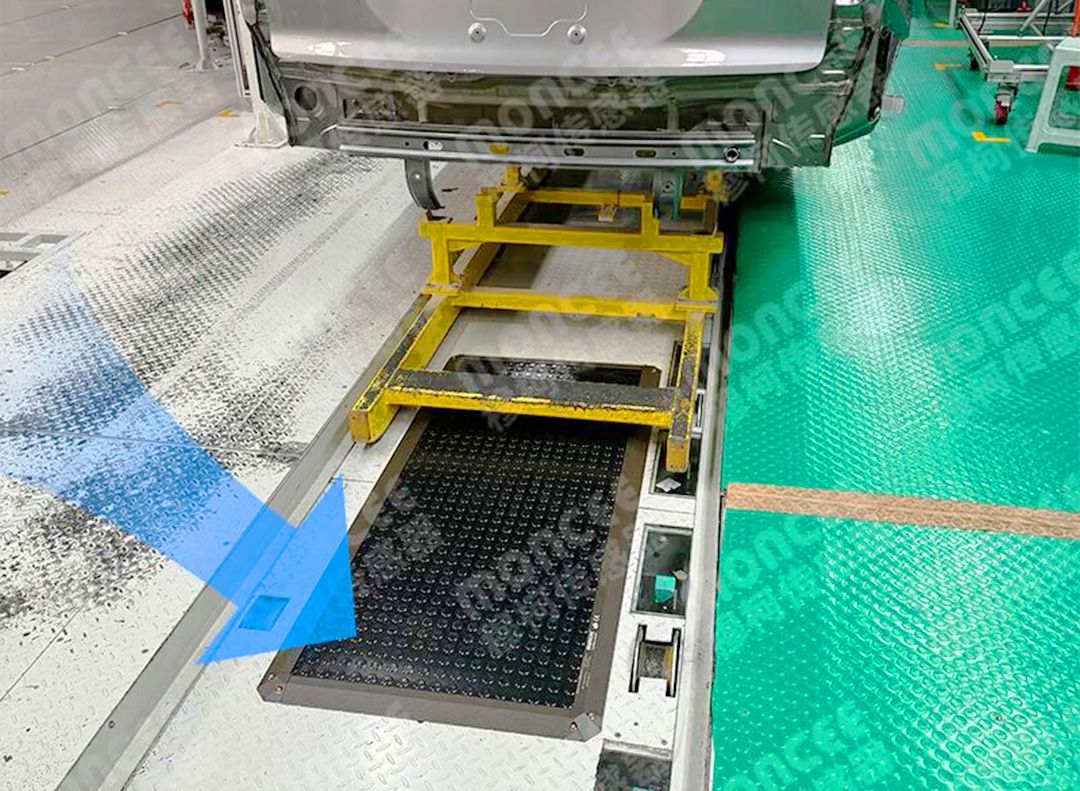
Machine Guarding Applications for Safety Mats
The most suitable application is generally an area where personnel presence itself should cause the machine to enter a safer state.
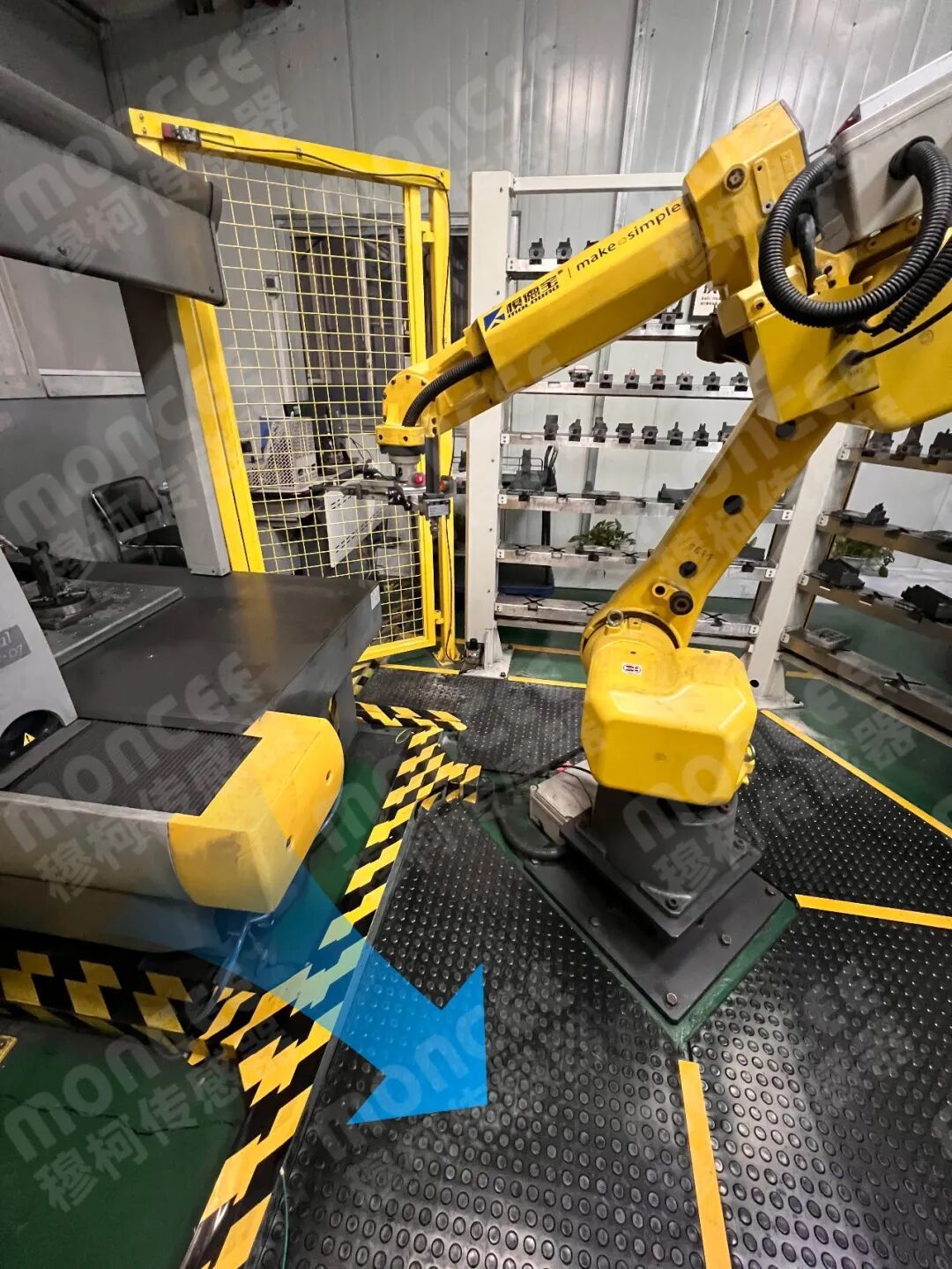
1. Robot and Automated Equipment Areas
Industrial robots can create hazardous zones because of their speed, movement range, and automatic operation. A Machine Safety Mat can be installed within or around an operating area where personnel access needs to be monitored.
The SC4 catalog specifically illustrates applications around automated industrial equipment and areas where personnel work close to machinery.
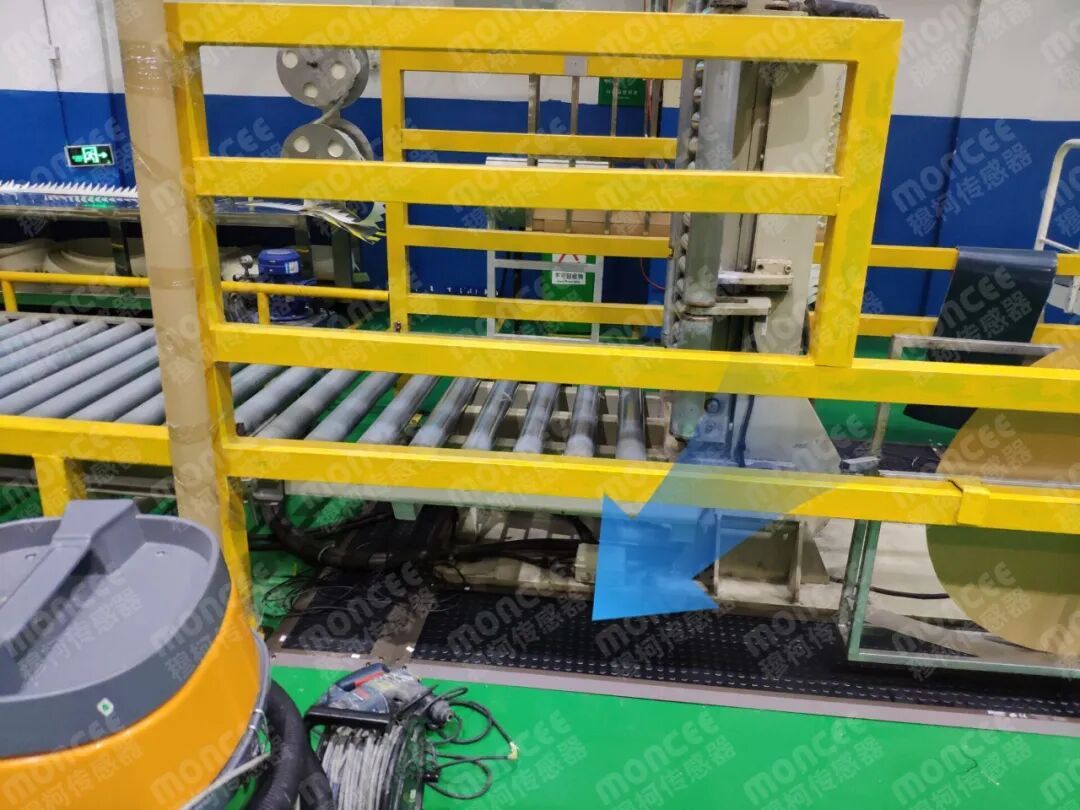
2. Assembly and Production Stations
Assembly machines often require operators to remain close to equipment during production. Instead of relying exclusively on physical barriers, a safety mat can monitor the operator's working position.
This approach can be particularly useful when frequent access is an inherent part of the production process.
3. Material Handling Equipment
Safety mats can also be integrated around material-handling areas where personnel and machinery operate in close proximity. The catalog includes forklift-specific safety mat solutions, demonstrating how the sensing structure can be adapted to different operating requirements.
4. Specialized Machine Applications
The SC4 range also includes specialized products such as forklift safety mats, car-wash-machine safety mats, seat safety mats, and armored safety mats. This is important for OEM buyers because a specialized configuration may be more appropriate than modifying a standard product for an application it was not designed to address.
Machine Safety Mat Integration: The Controller Matters
One of the most frequently overlooked aspects of a Machine Safety Mat project is the controller.
The mat detects pressure, but the machine generally requires an electrical safety interface capable of evaluating the mat's status and controlling the corresponding safety circuit. The SC4 documentation provides dedicated safety mat controllers for this purpose.
One controller configuration operates on DC24V, supports dual-channel operation, provides self-checking functions, and has a specified response time of ≤20 ms. The documentation also provides wiring examples for both single-mat and multi-mat configurations.
For machine builders, this means the purchasing specification should not stop at:
"We need a safety mat."
Instead, the project should define:
Mat dimensions and sensing area
Mat type and material
Required environmental protection
Number of mats
Wiring arrangement
Controller configuration
Machine safety circuit interface
Reset requirements
Installation and maintenance access
This system-level approach reduces the risk of purchasing a technically suitable mat that cannot be efficiently integrated into the machine.
Choosing the Right Construction for the Environment
Not every Machine Safety Mat should be selected solely according to dimensions.
The SC4 catalog includes several constructions intended for different environments. The standard safety mat uses a rubber-based surface construction, while other versions use PUR or specialized EPM/EPDM-based materials.
For example, the catalog specifies an IP65 protection level for the standard safety mat, while the waterproof safety mat is specified at IP67. These should not be treated as interchangeable specifications.
For environments involving water, cleaning processes, oils, chemicals, or heavy mechanical exposure, buyers should therefore select the appropriate model rather than assuming that every Machine Safety Mat provides the same environmental protection.
The high-performance version is another example. Its documentation specifies PUR construction and a wheel-load condition of 2000 N / 1862 kPa, making it more suitable for applications where the mat may experience concentrated mechanical loading.
Replacement Solutions: More Than a Simple Size Match
Replacing an existing Machine Safety Mat may appear straightforward: measure the old mat and order another one with the same dimensions.
In practice, replacement projects require additional checks.
First, the sensing technology and electrical configuration must be compatible with the existing safety controller. Second, the cable outlet position and connection arrangement may affect installation. Third, the surrounding frame or pressure edge may need to match the existing mechanical structure.
The SC4 documentation provides different edge profiles and installation configurations, as well as wiring diagrams for different numbers of mats.
For replacement projects, procurement teams should therefore provide the supplier with:
Existing mat dimensions
Machine or application type
Controller model, if available
Existing wiring configuration
Environmental conditions
Required load characteristics
Photos or drawings of the installation area
This information allows the supplier to determine whether a standard replacement is appropriate or whether a customized solution is required.
Custom Machine Safety Mats for OEM Machine Builders
OEM machine manufacturers frequently face a different challenge from end users: the safety mat has to fit the machine rather than the machine being redesigned around the mat.
The SC4 standard documentation provides several regular dimensions, while also indicating that other dimensions can be customized within the applicable range. Current standard-size selection should be confirmed with the supplier because product configurations may change over time. The previously listed 500 × 250 mm SC4 standard size has been discontinued and should not be treated as a current standard option.
For OEM projects, customization can involve more than length and width. Buyers may need to specify the material, edge configuration, cable arrangement, connection method, and specialized construction.
This is where working directly with a manufacturer can provide greater value than purchasing a generic safety mat from a general industrial supplier.
What Industrial Buyers Should Evaluate Before Ordering
A professional Machine Safety Mat procurement process should evaluate the complete solution rather than comparing unit prices alone.
Consider these five factors:
1. Application compatibility
Is the mat intended for robot areas, assembly machinery, material handling, automated equipment, or a specialized machine?
2. Environmental requirements
Will it encounter water, oil, chemicals, cleaning procedures, or heavy mechanical loading?
3. Safety system integration
Does the mat work with the required controller and machine safety circuit?
4. Mechanical configuration
Are the dimensions, edge profiles, cable outlet, and installation method suitable?
5. Supply capability
Can the supplier support customized dimensions, repeat orders, replacement requirements, and consistent production for future machines?
The final factor is especially important for OEMs and distributors. A safety component may be installed on one machine today but become part of a standardized machine platform tomorrow. A supplier capable of maintaining consistent specifications across repeated orders can therefore become a long-term manufacturing partner rather than simply a component vendor.
Machine Safety Mat as a Complete Machine Guarding Solution
A Machine Safety Mat is most effective when it is treated as an integrated machine guarding component rather than an isolated floor sensor.
The SC4 range demonstrates how different mat constructions, specialized configurations, edge systems, controllers, wiring methods, and installation approaches can be combined for different industrial requirements. The product documentation also provides installation, inspection, and maintenance guidance, emphasizing that the safety function should be checked regularly and damaged components should be replaced promptly.
For machine manufacturers, system integrators, and industrial distributors, this creates a practical sourcing strategy: select the sensing technology according to the machine risk, configure the mat according to the physical environment, integrate it with the appropriate controller, and establish a reliable replacement and supply channel.
If you are sourcing Machine Safety Mats for an OEM machine, automated production line, or bulk procurement project, providing the application, dimensions, environment, and controller requirements to the manufacturer is the most efficient starting point for obtaining a suitable technical proposal.
Note: This article is written as original content based on the supplied SC4 product documentation and is intentionally structured differently from the previously produced Safety Mat / Safety Protection Mat articles. No third-party article text has been reproduced. Actual safety-system design, validation, and compliance should be determined according to the specific machine, risk assessment, applicable standards, and final technical documentation.



 English
 简体中文
简体中文 Indonesian
 Previous:
 Back to list


